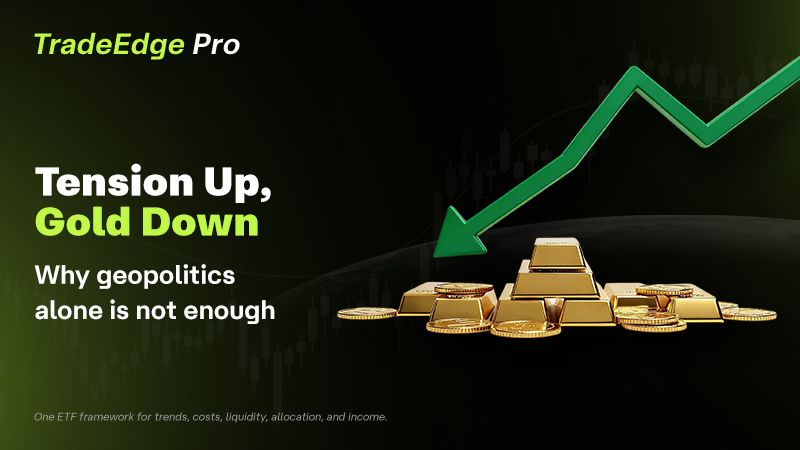
Gold falling despite geopolitical tensions highlights a major shift in how markets are pricing risk in 2026. Rather than responding only to geopolitical stress, gold is increasingly being driven by the secondary effects of conflict, especially higher oil prices, firmer inflation expectations, stronger Treasury yields, and a more resilient US dollar.
This helps explain why gold is falling despite geopolitical tensions and why gold prices falling despite geopolitical tensions is becoming a more frequent feature of the current macro environment.
For traders, the message is clear: the real drivers of gold now sit in rates, currencies, and policy expectations.
Table of Contents
The Core Reason: Policy Expectations Are Now Driving Gold More Than Headlines
The clearest explanation for Gold Falling Despite Geopolitical Tensions is that markets are currently pricing policy and yields more aggressively than conflict risk itself. In 2026, investors are watching whether conflict-driven oil and inflation pressure will keep central banks restrictive for longer.
That helps explain why gold is falling despite geopolitical tensions even as safe-haven demand should, in theory, be supportive. Put simply, gold prices falling despite geopolitical tensions reflects a market where the policy response is outweighing the geopolitical shock.
A Stronger US Dollar Creates a Powerful Headwind
A stronger dollar is one of the main reasons behind Gold Falling Despite Geopolitical Tensions. In periods of uncertainty, investors often move into the dollar first because it remains the world’s main reserve and funding currency.
That early demand for liquidity helps explain why gold is falling despite geopolitical tensions in the short term. Since gold is priced in dollars, a stronger DXY also reduces affordability for global buyers, adding direct pressure to bullion.
Why Rising Treasury Yields Increase Gold’s Opportunity Cost
Rising Treasury yields are another major reason for Gold Falling Despite Geopolitical Tensions. Gold offers no yield, so when government bonds provide higher returns, investors have less incentive to hold bullion. This is especially relevant in 2026, when markets remain sensitive to any sign that rates could stay higher for longer.
That rate backdrop is a key part of why gold is falling despite geopolitical tensions, because capital is being pulled toward income-producing assets.
The Real vs. Nominal Yields Distinction Crucial for Gold Traders
For traders, real yields are often the most useful tool for understanding Gold Falling Despite Geopolitical Tensions. Gold tends to do better when real yields are falling, because inflation-adjusted returns on bonds become less attractive. But when nominal yields rise faster than inflation expectations, real yields move higher and gold usually struggles.
This is one reason why gold is falling despite geopolitical tensions now: the market is reacting to higher real returns, not just to the conflict itself.
Deconstructing the 2026 Chain Reaction: From Conflict to Gold’s Decline
The market is witnessing a clear, albeit counter-intuitive, causal chain where geopolitical events are inadvertently triggering bearish conditions for gold. This chain reaction demonstrates how macroeconomic forces can overpower traditional asset class relationships.
- Step 1: Geopolitical Flare-ups Trigger Oil Price Shocks. Conflicts in or near major energy-producing regions introduce a risk premium into crude oil prices. Fears of supply disruptions drive Brent and WTI crude well above baseline forecasts, creating a global inflationary impulse.
- Step 2: Rising Oil Fuels Persistent Inflationary Fears. Higher energy costs are not isolated; they increase transportation and manufacturing costs, feeding directly into core inflation indicators like the Consumer Price Index (CPI). This keeps inflation stubbornly above the desired 2% target for major economies.
- Step 3: Central Banks Signal ‘Higher for Longer’. Faced with this persistent inflation, central banks are forced to maintain a hawkish stance. Any plans for interest rate cuts are pushed further into the future. Their forward guidance reiterates a commitment to keeping monetary policy tight until inflation is unequivocally under control.
- Step 4: The Dollar and Yields Strengthen, Pressuring Gold. This policy response is the final link in the chain. The promise of higher rates for longer makes the US dollar more attractive and pushes Treasury yields higher. As detailed earlier, this combination is profoundly negative for gold, leading to the perplexing scenario where escalating global risks lead to a falling gold price.
Beyond Headlines: Why ETF Flows Reveal Real Market Sentiment
Despite news headlines suggesting a flight to safety, institutional investors are voting with their capital, as evidenced by significant outflows from gold-backed Exchange-Traded Funds (ETFs). This data provides a clearer picture of market sentiment than anecdotal evidence of retail buying.
Tracking ETF Outflows: A Key Indicator of Investor Behaviour
Gold ETFs, such as SPDR Gold Shares (GLD) and iShares Gold Trust (IAU), are the primary vehicles for large-scale institutional investment in gold. Data from sources like the World Gold Council consistently shows that when these funds experience sustained outflows, it indicates that major asset managers, pension funds, and hedge funds are reducing their exposure.
In 2026, the trend has been one of net redemptions, signalling a lack of conviction in gold’s short-to-medium term prospects among the market’s largest players.
When Institutional De-risking Overpowers Retail Safe-Haven Buys
There is often a disconnect between retail and institutional behaviour. While individual investors may be buying physical coins and bars in response to geopolitical fears, their purchasing power is dwarfed by institutional portfolio adjustments.
A large fund needing to raise cash to meet redemptions or reallocating capital to take advantage of high bond yields will sell its liquid gold ETF holdings. This institutional selling pressure can easily overwhelm retail buying, creating the downward price action we are currently observing.
This factor is another critical component in understanding why gold is falling despite geopolitical tensions.
What Could Reverse the Trend? Key Signposts for a Gold Rally in 2026
A reversal in gold’s fortunes hinges on a definitive shift in the macroeconomic factors currently suppressing its price. Traders should monitor for specific signposts indicating that the headwinds are abating, which would create a more favourable environment for the precious metal.
- A Peak in the US Dollar Index (DXY): A sustained downturn in the DXY would be the most powerful catalyst for a gold rally. This would likely be triggered by a change in central bank policy or signs of economic weakness that necessitate a more dovish stance.
- A Sustained Drop in Real Yields: The key driver for a gold bull market is falling real yields. This can happen in two ways: either nominal yields begin to fall due to economic concerns, or inflation expectations begin to rise significantly faster than yields. Both scenarios reduce the opportunity cost of holding gold.
- A Shift in Central Bank Forward Guidance: Any language from major central bankers that signals a pivot from fighting inflation to supporting growth would be extremely bullish for gold. This ‘dovish pivot’ is what gold bulls are waiting for, as it would signal the end of the ‘higher for longer’ rate environment.
Actionable Strategy: What Traders Should Monitor Now
Traders attempting to solve the puzzle of why gold is falling despite geopolitical tensions must prioritise macroeconomic data over news headlines. The following table outlines the key indicators to watch and what they signal for gold’s direction.
| Indicator | Source / Symbol | What it Signals for Gold |
| US 10-Year Treasury Yield | TNX, US10Y | Rising yields are bearish for gold. Falling yields are supportive. |
| US Dollar Index | DXY | A stronger dollar is bearish for gold. A weaker dollar is bullish. |
| Gold ETF Holdings | WGC Reports, GLD Holdings | Outflows signal weaker demand. Inflows signal stronger buying interest. |
| Crude Oil Prices | WTI, Brent | Rising oil can pressure gold if it lifts inflation and yields. |
| Inflation Data | CPI, PCE | Hot inflation can keep gold under pressure if policy stays hawkish. |