

Returning from a trip abroad or managing an international investment often leaves you with a common conundrum: what to do with leftover foreign currency? The most instinctive first stop for many is their trusted high street bank. But in 2025, as global finance evolves rapidly, the question remains highly relevant: will banks exchange foreign currency efficiently and cost-effectively?
While the short answer is usually “yes,” the fuller picture is far more nuanced. Many consumers discover that local banks exchange foreign currency under tighter conditions than before, often at a hidden cost reflected in unfavourable rates. Customer-only policies, reduced in-branch services, and growing competition from specialist providers mean that banks are no longer automatically the best place to exchange foreign currency.
This guide provides a clear, practical breakdown of will banks exchange foreign currency in 2025, which UK banks still offer the service, how bank foreign currency exchange fees really work, and how banks compare with modern alternatives. Whether you are an investor allocating capital globally or a traveller returning with unused cash, this is your roadmap to making an informed decision.
🏦 The Reality of Bank Foreign Exchange Services in 2025
The traditional expectation that local banks exchange foreign currency freely has shifted. While most high street banks still provide the service, it now operates within stricter operational and regulatory limits. Understanding these constraints is essential before assuming a walk-in exchange is possible.
The Current Stance of UK High Street Banks
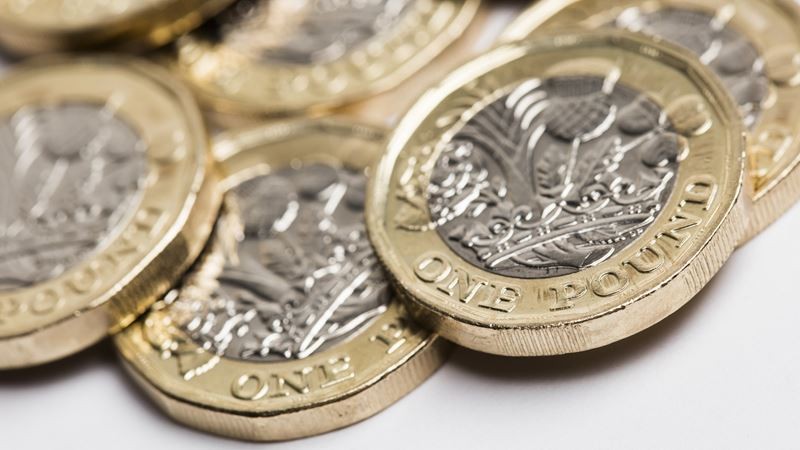
Most major UK high street banks—think HSBC, Barclays, Lloyds, and NatWest—do continue to offer foreign currency exchange. However, the service is now overwhelmingly positioned as a perk for their existing customers. If you don’t hold an account with them, you’re likely to be turned away.
- Customer-Centric Model: Banks prioritise their own customers due to stringent Anti-Money Laundering (AML) regulations. It’s easier for them to verify the source of funds for someone whose financial history they already hold.
- Reduced In-Branch Services: Many smaller branches no longer hold a stock of foreign currency. The trend is moving towards a ‘click and collect’ model, where you must order the currency online or via their app and pick it up a few days later from a designated, larger branch.
- The Challenger Bank Approach: Digital-first banks like Monzo, Starling, and Revolut excel at providing cheap currency exchange for spending abroad via their debit cards. However, they are not the place to go to exchange physical cash. Their business model is built around digital transactions, not over-the-counter services.
For investors operating across borders, platforms such as Ultima Markets increasingly complement or replace traditional banks by enabling multi-asset exposure without physical currency handling.
Exchanging Common vs. Exotic Currencies
The type of currency significantly affects whether local banks exchange foreign currency smoothly.
-
Major Currencies: EUR, USD, JPY, CHF, CAD, and AUD are widely accepted and easily exchanged.
-
Exotic Currencies: THB, ZAR, TRY, or MXN are often limited to flagship branches, with noticeably weaker rates to offset lower liquidity.
For investors active in emerging markets, regulated trading environments—supported by transparent infrastructure such as Ultima Markets MT5—can offer exposure without relying on physical exchange channels.
Important: No bank will exchange foreign coins. This is universal across the UK financial system.
📊 Deconstructing the Cost: Bank Exchange Rates & Fees Explained
Understanding bank foreign currency exchange fees is critical. Even when banks advertise “0% commission,” costs are rarely eliminated—they are simply embedded in the rate.
The ‘Hidden’ Fee: Understanding the Exchange Rate Margin
The interbank or mid-market rate represents the true value of a currency. Banks apply a margin—typically between 2% and 5%—when offering retail exchange rates. This margin is the primary source of profit.
As a result, when assessing will banks exchange foreign currency fairly, the answer often depends on how much value you are willing to sacrifice for convenience.
Commission and Administrative Fees
While many banks now advertise ‘0% commission’ or ‘commission-free’ exchanges, this can be misleading. The lack of a commission fee is often compensated for by a wider exchange rate margin. However, it’s still crucial to check the small print:
- Fixed Commission: Some institutions may still charge a flat fee per transaction, especially for smaller amounts.
- Minimum Charges: Be aware of potential minimum transaction fees, which can make exchanging a small amount of leftover holiday money very uneconomical.
Transparent pricing structures—common in investment platforms with clearly defined Deposits & Withdrawals policies—highlight how traditional bank pricing often lacks clarity.
Comparison Table: Banks vs. Alternatives (Indicative for 2025)
To put it all into perspective, here’s how a typical high street bank stacks up against other popular options when exchanging $500 USD back to GBP.
| Provider Type | Typical Exchange Rate Margin | Fees | Convenience | Best For |
|---|---|---|---|---|
| High Street Bank (e.g., Barclays) | 2.5% – 5% | Usually none, but rate is poor | Moderate (requires visit to specific branch) | Existing customers exchanging small amounts of major currencies. |
| Specialist Bureau (e.g., Travelex) | 1.5% – 4% | Can have better rates, especially if pre-ordered online | High (airport/city centre locations) | Last-minute exchanges and a wider range of currencies. |
| Supermarket (e.g., Tesco Bank) | 1% – 3% | Often very competitive rates; 0% commission | High (available during shopping trips) | Price-conscious consumers who can plan ahead. |
| Online Platform (e.g., Wise) | 0.4% – 1% | Small, transparent fee | Very High (for digital funds) | Digital transfers and spending abroad; not for physical cash. |
For users seeking credibility and regulatory assurance, independent Ultima Markets Reviews further reinforce how fintech-driven models outperform banks in transparency and execution.
🧭 A Practical Guide to Using a Bank for Currency Exchange
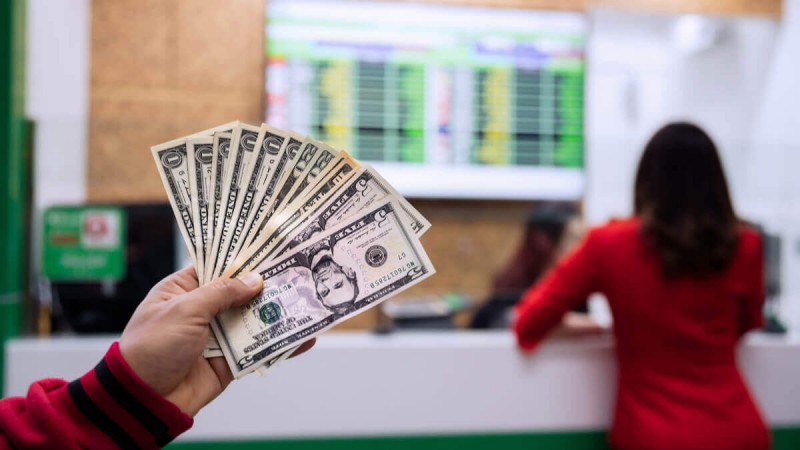
If, after weighing the options, you decide that the convenience of a bank is worth the potential extra cost, it’s essential to approach the process efficiently to avoid wasted time and frustration.
Your Step-by-Step Checklist
If you still choose a bank despite bank foreign currency exchange fees, follow this checklist:
- Confirm Your Eligibility: First and foremost, check if the bank requires you to be an account holder. As of 2025, the answer is almost certainly yes.
- Use the Online Branch Locator: Go to your bank’s website and use their branch finder tool. Look for a filter that indicates ‘Travel Money’ or ‘Foreign Currency Exchange’ services. Don’t assume every branch offers it.
- 📞 The Golden Rule: Call the Branch Directly: This is the single most important step. Website information can be outdated. Call the specific branch you plan to visit and ask:
- Do you exchange foreign currency over the counter?
- Do you have the specific currency I need (or will you buy the currency I have)?
- What are your current exchange rates for [currency]?
- Do I need to book an appointment?
- What identification will I need to bring?
- Prepare Your Documents: You will almost certainly need to prove your identity. Bring your passport or UK driving licence, along with the bank card for the account you hold with them.
- Inspect the Notes: Ensure any foreign notes you are exchanging are in good condition—not torn, heavily worn, or covered in markings. Banks can and will reject damaged banknotes.
Beyond the Bank Counter: Better Alternatives for Value
While local banks exchange foreign currency, they are rarely the best place to exchange foreign currency in 2025.
-
Supermarkets and the Post Office often provide better walk-in rates.
-
Specialist brokers excel for large sums.
-
FinTech and trading platforms eliminate the need for physical cash while prioritising security—reinforced by strong frameworks such as Ultima Markets fund safety.
Conclusion: A Strategic Approach to Currency Exchange
So, will banks exchange foreign currency in 2025? Yes—but with limitations, higher costs, and reduced flexibility. For small, convenient exchanges, banks remain viable. However, for value-driven users, supermarkets, brokers, and digital platforms increasingly represent the best place to exchange foreign currency.
The key principle remains comparison. By understanding bank foreign currency exchange fees, checking mid-market rates, and evaluating alternatives, you retain more value and control—whether travelling or investing globally.

FAQ
1. Can I exchange foreign coins at a UK bank?
No. Virtually no bank, bureau de change, or other financial institution will exchange foreign coins. The administrative and shipping costs are prohibitive. It’s recommended to spend them, donate them in airport charity bins, or keep them as souvenirs.
2. Do I need ID to exchange currency at a bank?
Yes, absolutely. To comply with anti-money laundering (AML) regulations, you will be required to present a valid form of photo identification, such as a passport or a UK driving licence. You’ll also need your bank card to prove you are a customer.
3. How much foreign currency can I exchange at one time?
This varies by bank and transaction type. For smaller, typical holiday amounts (under £2,500), there are usually no issues. For larger transactions, banks will require additional checks and may have specific limits. If you are exchanging a substantial amount (over £8,000), be prepared for enhanced scrutiny regarding the source of the funds.
4. What’s the difference between the ‘mid-market rate’ and the rate my bank offers?
The mid-market rate (or interbank rate) is the wholesale price of a currency—the midpoint between the buy and sell prices on the global market. It’s the ‘real’ rate. The rate your bank offers is a retail rate, which includes a markup or margin. This margin is the bank’s profit and represents the main cost of the transaction for you.
5. Is it cheaper to exchange currency in the UK or at my destination?
Generally, it is almost always cheaper to exchange your money before you travel, especially for major currencies like the Euro or US Dollar. Exchanging currency at an airport or hotel in your destination country will typically result in the worst possible rates and highest fees. The best strategy is to pre-order currency in the UK or use a specialist travel card with low withdrawal fees.
*This article represents the author’s personal views only and is for reference purposes. It does not constitute any professional advice.*
