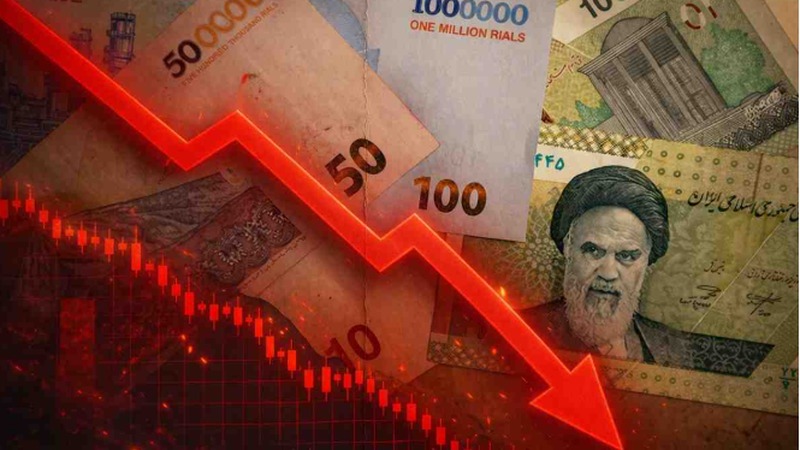
The Iranian rial is weak because the nation’s economy faces severely constrained hard-currency inflows, elevated and persistent domestic inflation, a deep-seated loss of public confidence, and consequently, a rising demand for US dollars and other foreign currencies in unofficial markets. The currency’s slide in 2026 is not a sudden, isolated shock but rather the latest stage of a prolonged and structural currency crisis.
Understanding why is the Iranian rial so weak requires an analysis of these interconnected factors, which collectively erode its value and create significant challenges for savers, businesses, and economic stability.
For traders and financial analysts, the rial’s performance is a case study in how external pressures, domestic economic policy, and public sentiment converge. This article provides an in-depth examination of the long-term causes, the specific triggers seen in 2026, and the potential future trajectory for the currency.
The Rial’s Weakness in 2026 Did Not Begin in 2026
The currency’s current predicament is the culmination of forces that have been building for decades. A long-term perspective reveals that the depreciation is not a recent phenomenon but a chronic condition, marked by periods of sharp decline followed by brief, unstable plateaus. This history is crucial for understanding the deep-rooted lack of confidence that plagues the currency today.
A Multi-Decade Trend of Depreciation
The rial has lost value against the US dollar consistently over the past forty years. What began as a gradual decline accelerated dramatically in the 2010s due to intensifying international sanctions. For context, the unofficial market rate crossed the 10,000 rials per dollar mark for the first time around 2010. By 2018, it had breached 100,000. This hundredfold collapse in under a decade illustrates the scale of the structural issues.
Each new geopolitical or economic shock has created a new, higher floor for the exchange rate, from which recovery has proven impossible. This history has conditioned the public to expect further depreciation, creating a self-fulfilling prophecy where any negative news prompts a flight to hard assets.
January 2026 and the Break Above 1.5 Million Per Dollar
The year 2026 began with another significant psychological barrier being broken, as the unofficial exchange rate surpassed 1,500,000 rials per US dollar.
This milestone was not triggered by a single event but by a confluence of factors: renewed geopolitical tensions in the region, disappointing domestic economic data showing inflation remaining stubbornly high, and a realisation that a significant easing of external financial pressures was unlikely in the near term.
This break confirmed the market’s bearish sentiment and reinforced the trend of individuals and businesses converting their rial-denominated savings into more stable assets, further fuelling the currency’s decline.
Why Hard-Currency Shortages Still Matter Most
At the heart of the rial’s weakness is a fundamental imbalance: a chronic shortage of accessible foreign currency (FX), primarily the US dollar and the euro. While Iran continues to export goods, particularly oil, its ability to access the revenue from these sales is severely restricted. This is a critical distinction for any trader to grasp.
Why Sanctions Reduce Usable FX, Not Just Oil Revenue
International sanctions, particularly those targeting the financial sector, are the primary cause of this shortage. These measures effectively cut off Iranian banks from the global financial system. Consequently, while export revenues may be recorded on paper, they are often trapped in foreign accounts in countries like China or India.
The funds can typically only be used for bilateral trade with that specific country, not converted into freely usable hard currency like dollars or euros that can be repatriated or used for imports from elsewhere. This creates a permanent scarcity of liquid FX reserves within the domestic economy, a core reason why is the Iranian rial so weak.
The Challenge of Accessing and Repatriating Funds
The operational challenge of moving money is immense. Without access to SWIFT and corresponding banking relationships, even permissible transactions become slow, expensive, and complex. The central bank’s ability to intervene in the currency market to defend the rial’s value is therefore severely hampered.
It cannot simply sell dollars from its reserves to meet demand because a large portion of those reserves is illiquid or inaccessible. This leaves the domestic market starved of dollars, pushing the unofficial exchange rate ever higher as importers, businesses, and ordinary citizens compete for a very limited supply.
How Inflation Makes the Rial Even Weaker
High inflation and currency depreciation are locked in a destructive feedback loop in Iran’s economy. While the hard-currency shortage is an external pressure, high domestic inflation is an internal disease that erodes the rial’s value from within, destroying its function as a reliable store of value.
The Vicious Cycle of Devaluation and Price Hikes
The cycle operates as follows: the rial weakens due to external pressures and a lack of dollars. This initial depreciation immediately increases the cost of all imported goods, from raw materials for factories to consumer electronics and essential medicines. Businesses pass these higher costs on to consumers, leading to a general rise in the price level—this is inflation.
As citizens see the prices of goods rising, they realise their rial savings are losing purchasing power. This prompts them to sell their rials to buy assets that hold their value better, such as US dollars, gold, or property. This act of selling rials for dollars increases demand for the latter, causing the rial to weaken even further. The cycle then repeats, but from a higher inflation and exchange rate base.
How Depreciation Becomes Imported Inflation
This phenomenon, known as ‘exchange rate pass-through’, is particularly acute in economies like Iran’s that are heavily reliant on imports for both production inputs and finished goods. When the rial loses 50% of its value, the rial cost of an imported item effectively doubles, even if its dollar price has not changed. This ‘imported inflation’ rapidly spreads through the entire economy.
For example, if the cost of imported animal feed rises, the prices of meat and dairy products will soon follow. If the cost of imported machinery parts increases, the cost of manufactured goods rises. This dynamic explains why periods of rapid currency depreciation are almost always accompanied by a surge in the consumer price index.
Why Unofficial Exchange Rates Matter More Than Official Ones
A defining feature of Iran’s currency market is the existence of multiple exchange rates. While an ‘official’ rate is set by the central bank, a separate ‘unofficial’ or free-market rate operates in parallel. For any practical analysis, the unofficial rate is the far more important indicator of the economy’s health and the rial’s true value.
A True Barometer of Public Confidence and Demand
The official rate is typically a subsidised rate reserved for the import of a narrow list of essential goods, such as basic food and medicine. It is not accessible to the general public or most businesses.
The unofficial rate, determined by supply and demand among private currency traders, individuals, and businesses, is the rate at which most real-world transactions occur. It reflects the actual cost of acquiring foreign currency for everything from foreign travel and overseas education to importing non-essential goods and, most importantly, for savings.
The widening gap between the official and unofficial rates is a clear metric of economic stress and the degree to which the official rate is detached from reality.
Why People Move into Dollars, Gold, and Hard Assets
With annual inflation often running at 40-50% or higher, holding cash in Iranian rials is a guaranteed way to lose wealth. A rational economic actor, seeking to preserve the value of their savings, will naturally seek refuge in assets that are immune to domestic inflation and currency devaluation. The most accessible of these are physical US dollars and gold coins. For those with more capital, real estate and equities in resilient companies are also popular choices.
This ‘asset substitution’ or ‘dollarisation’ of savings is a vote of no confidence in the domestic currency and economic stewardship. It further weakens the rial by increasing the demand for alternative assets while reducing the pool of domestic savings available for productive investment through the formal banking system.
What a Weak Rial Does to Prices, Savings, and Finance
The consequences of a chronically weak currency are profound and permeate every facet of the economy. For ordinary citizens, it represents a continuous decline in their standard of living. For businesses, it creates a climate of extreme uncertainty that stifles investment and growth.
The Erosion of Purchasing Power and Household Wealth
The most direct impact is the decimation of savings and wages. A salary that was adequate five years ago may now be barely enough for basic necessities. Long-term savings for retirement or major purchases are rendered worthless.
This erosion of wealth creates widespread economic anxiety and inequality, as those with access to hard assets see their wealth preserved or grow, while those dependent on rial-denominated incomes fall further behind. The question of why is the Iranian rial so weak is, for millions, a daily struggle for economic survival.
Impact on Business Operations and Investment Decisions
Businesses face an impossible operating environment. The volatility of the exchange rate makes financial planning and pricing exceptionally difficult. A company that imports raw materials must constantly adjust its prices, creating instability for its customers.
The high cost of foreign currency and machinery makes expansion or technological upgrades prohibitively expensive. This leads to a decline in industrial capacity and competitiveness. Foreign direct investment becomes virtually non-existent, as no international firm can reliably forecast returns or repatriate potential profits in such a volatile environment.
What Could Happen Next in 2026
For traders and investors, understanding the past and present is only useful insofar as it informs an assessment of the future. The outlook for the Iranian rial in the remainder of 2026 depends on several key variables, primarily related to the external environment and domestic policy responses. We can analyse the potential paths forward through scenario planning.
Scenario Planning for Traders
The following table outlines three broad scenarios for the rial in the second half of 2026. These are not predictions but analytical frameworks to help traders identify key signposts and potential market reactions.
| Scenario | Key Drivers | Potential Unofficial Exchange Rate Path (USD/IRR) |
| Base Case: Muddling Through | Status quo in sanctions; domestic inflation remains high (40%+); no major policy shifts; central bank continues limited, ineffective interventions. | Gradual depreciation continues, following the inflation differential. Potential to reach 1.8-2.0 million by year-end. |
| Downside Case: Renewed Shock | New geopolitical flare-up; tightening of secondary sanctions enforcement; a domestic crisis of confidence or major banking sector issue. | Rapid, non-linear depreciation. A panic-driven spike could see the rate accelerate past 2.5 million in a short period. |
| Relief Case: De-escalation | Unexpected diplomatic breakthrough leading to partial sanctions relief; release of some frozen assets; significant positive shift in market sentiment. | A temporary but sharp appreciation (strengthening) of the rial, potentially back towards the 1.2-1.4 million level. Sustainability would depend on the scale of relief. |
Conclusion
The clearest answer to why is the Iranian rial so weak is that Iran still faces the same three core pressures: tight foreign-currency supply, persistently high inflation, and weak confidence in the local currency. Together, these factors explain why the rial keeps falling and what is driving the Iranian rial down in 2026.
From here, the base case is continued weakness rather than a sustained recovery. A sharper downside move could follow if fresh shocks trigger stronger dollar demand, while any relief rally would likely depend on a meaningful improvement in FX access and market confidence. Until those structural pressures ease, the path of least resistance for the rial remains further depreciation.
Frequently Asked Questions (FAQ)
Why is the Iranian rial so weak right now?
The Iranian rial is weak because foreign-currency supply remains tight, inflation is high, and confidence in the local currency is low. These pressures push households and businesses to seek dollars and other hard assets, which keeps the rial under sustained depreciation pressure.
Why does a weak rial cause inflation?
A weak rial causes inflation because imports become more expensive in local-currency terms. As businesses pay more for dollar-priced goods, raw materials, and equipment, those higher costs are passed through to consumers.
Why do unofficial exchange rates matter in Iran?
Unofficial exchange rates matter because they reflect real market demand for foreign currency. Unlike the controlled official rate, the unofficial rate is a better indicator of the rial’s actual value in private transactions and public expectations.
Can the rial recover in 2026?
A lasting recovery in 2026 is unlikely without a meaningful improvement in foreign-currency inflows, inflation control, and economic confidence. Without those structural changes, any rebound would likely be temporary rather than a durable trend reversal.