
Ever exchanged money for a holiday? If so, you’ve already taken part in what is foreign exchange trade in its most basic form. At its core, foreign exchange trade—commonly known as forex or FX—is the act of converting one country’s currency into another. However, for investors and traders, forex trading for beginners quickly goes far beyond travel money. It is a vast, decentralised global market where the world’s currencies are traded against each other, making it the largest financial marketplace on the planet.
Unlike the London Stock Exchange or Wall Street, there is no single physical location for what is foreign exchange trade. The forex market operates electronically over-the-counter (OTC), meaning transactions take place via global computer networks between banks, institutions, and retail traders. This structure allows the market to operate 24 hours a day, five days a week, across major financial centres such as London, New York, Tokyo, and Sydney—creating a continuous trading cycle ideal for forex trading for beginners seeking flexibility.
The main motivation behind what is foreign exchange trade is speculation on currency price movements. Traders attempt to profit from fluctuations in exchange rates. For example, if you believe the British Pound (£) will strengthen against the US Dollar ($), you would buy the GBP/USD pair. If the price rises, you sell at a higher rate and realise a profit. This constant interaction of supply, demand, macroeconomic data, and sentiment explains how does forex trading work in practice and why forex remains the most liquid market in the world.
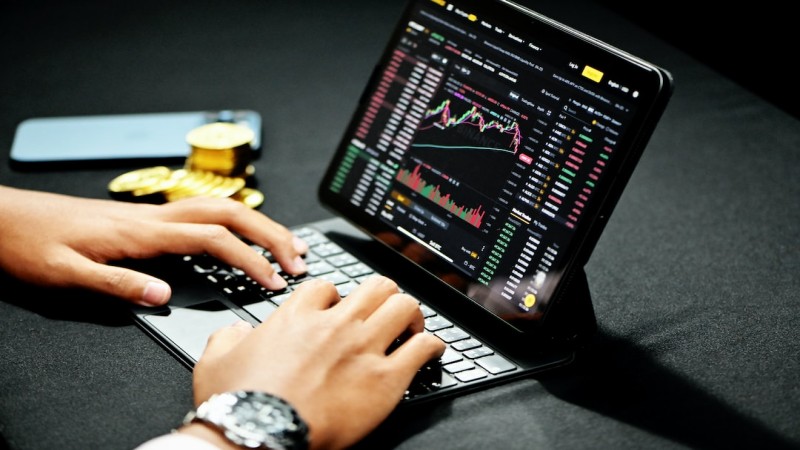
Understanding Currency Pairs: The Foundation of Forex
In forex, you never just buy or sell a single currency. Trading is always done in pairs. This is because you are simultaneously buying one currency while selling another. The first currency in the pair is the base currency, and the second is the quote currency.
- Major Pairs: These are the most traded pairs and always involve the US Dollar (USD). They are highly liquid and tend to have lower spreads (transaction costs). Examples include EUR/USD, GBP/USD, and USD/JPY.
- Minor Pairs (Cross-Currency Pairs): These pairs do not involve the USD. They typically have slightly wider spreads than the majors. Examples include EUR/GBP, GBP/JPY, and AUD/CAD.
- Exotic Pairs: These pairs consist of one major currency paired with the currency of an emerging economy, such as Brazil, Mexico, or South Africa. They are less liquid and have much wider spreads, making them riskier to trade. An example would be USD/ZAR (US Dollar/South African Rand).
🧭 How Does Foreign Exchange Trading Actually Work?
Now that we’ve covered the ‘what’, let’s delve into the ‘how’. The mechanics of a forex trade involve several key concepts that every beginner must grasp. Understanding these terms is crucial before you even consider risking a single pound.
Pips, Lots, and Spreads Explained
The language of forex can seem intimidating, but it’s quite straightforward once broken down.
- Pip (Percentage in Point): This is the smallest price move that a given exchange rate can make. For most currency pairs, a pip is equivalent to 0.0001. So, if the GBP/USD moves from 1.2500 to 1.2501, that is a one-pip move. The value of a pip depends on the currency pair and the size of your trade.
- Lot Size: A lot is a unit measuring a transaction amount. In forex, lot sizes are standardised to manage the quantity of currency being traded. A ‘standard lot’ is 100,000 units of the base currency. For beginners, smaller sizes like a ‘mini lot’ (10,000 units) or a ‘micro lot’ (1,000 units) are more appropriate.
- Bid/Ask Spread: Every currency pair has two prices: the ‘bid’ price (the price at which your broker will buy the base currency from you) and the ‘ask’ price (the price at which they will sell it to you). The ‘ask’ is always slightly higher than the ‘bid’. The difference between these two prices is called the spread, and it’s essentially the broker’s fee for the transaction. A ‘tight’ or low spread is preferable as it reduces your trading costs.
Leverage: The Double-Edged Sword
Leverage is one of the most attractive, and dangerous, features of forex trading. It allows you to control a large position with a relatively small amount of capital (known as margin). For example, with a leverage ratio of 30:1 (the maximum allowed for retail clients in the UK for major pairs), you could control a £30,000 position with just £1,000 in your account.
This means your potential profits are magnified. A small positive price movement can result in a significant gain relative to your initial deposit. However, the reverse is also true. Leverage magnifies losses just as much as profits. A small adverse price movement can quickly wipe out your entire trading capital. It’s imperative that beginners use leverage with extreme caution and have robust risk management strategies in place.

💰 The Big Question: Is Forex Trading Profitable?
This is the multi-million-dollar question, isn’t it? The straightforward answer is yes, forex trading can be extremely profitable. There are many professional traders who make a very comfortable living from the markets. However, the path to profitability is fraught with challenges, and the statistics are sobering: the vast majority of retail traders (often cited as over 80-90%) lose money.
So, what separates the profitable minority from the rest? It isn’t about finding a ‘holy grail’ indicator or a secret formula. Success in forex trading for 2025 and beyond hinges on a combination of three pillars:
- A Solid Trading Strategy: Profitable traders don’t just guess. They operate with a well-defined and back-tested strategy that dictates their entry and exit points. This could be based on technical analysis (chart patterns, indicators), fundamental analysis (economic news, interest rates), or a combination of both. The key is consistency.
- Disciplined Risk Management: This is arguably the most important factor. Successful traders are obsessive about managing risk. They know exactly how much they are willing to lose on a single trade (typically 1-2% of their account balance) and use tools like stop-loss orders to enforce this limit automatically. They also understand position sizing and never over-leverage their account.
- Psychological Fortitude: The psychological aspect of trading cannot be overstated. The ability to remain calm, stick to your plan, and avoid emotional decisions driven by fear or greed is what truly defines a professional. Losing is a part of trading; how you handle those losses determines your long-term success.
⚠️ Navigating the Minefield: Key Risks in Forex Trading
Before engaging in what is foreign exchange trade, understanding risk is critical.
- Market Risk: This is the most obvious risk – the chance that a currency’s value will move against your position. The forex market can be incredibly volatile, with prices swinging wildly in response to economic announcements, political instability, or unexpected global events. This volatility is a source of opportunity, but also of significant risk.
- Leverage Risk: Excessive leverage remains one of the largest forex trading risks, capable of wiping out accounts rapidly.
- Interest Rate Risk: Changes in a country’s interest rates, set by its central bank (like the Bank of England), can have a profound impact on its currency’s value. Higher rates typically attract foreign investment, strengthening the currency, and vice versa. Unexpected rate changes can cause sharp market moves.
- Counterparty Risk: This is the risk associated with your broker. Are they reliable? Are your funds safe? In the UK, it is absolutely essential to use a broker regulated by the Financial Conduct Authority (FCA). FCA regulation provides a layer of protection, including segregated client funds and the Financial Services Compensation Scheme (FSCS).
📊 Choosing Your Tools: Selecting a Forex Trading Platform
Your broker and platform are the foundation of your trading experience. Selecting reliable forex trading platforms UK traders use is critical in 2025.
When evaluating platforms, consider regulation, execution quality, spreads, and technology. Many traders choose Ultima Markets due to its competitive trading conditions and professional infrastructure.
Modern traders often prefer advanced platforms like Ultima Markets MT5, which offers enhanced charting, faster execution, and multi-asset functionality—features well-suited to both beginners and experienced traders.
Efficient funding is equally important. Smooth account operations are supported by Ultima Markets Deposits & Withdrawals, ensuring timely access to capital.
For independent insights, many traders also review Ultima Markets Reviews to assess real user experiences.
Comparison of Key Broker Features
When comparing platforms, focus on these core areas. Below is a sample table illustrating what to look for.
| Feature | Why It Matters | What to Look For in 2025 |
|---|---|---|
| Regulation | Ensures your funds are protected and the broker operates fairly. This is non-negotiable. | Must be regulated by the Financial Conduct Authority (FCA) in the UK. Check their registration number. |
| Spreads & Fees | Directly impacts your profitability. High costs eat into your potential gains. | Competitive, tight spreads on major pairs (e.g., under 1 pip for EUR/USD). Transparency on all fees (commissions, overnight fees, etc.). |
| Trading Platform | Your primary tool for analysis and execution. Must be stable, fast, and user-friendly. | Industry standards like MetaTrader 4 (MT4) or MetaTrader 5 (MT5). Some brokers offer excellent proprietary platforms with advanced charting. |
| Customer Support | Crucial when you have an issue, especially with live trades or funds. | 24/5 support via live chat, phone, and email. UK-based support is a major plus. Quick response times. |
💡 Practical Tip: Always Start with a Demo Account
For anyone learning how does forex trading work, a demo account is indispensable. It allows you to practise strategies, understand platform mechanics, and experience market psychology without exposing yourself to forex trading risks. Consistent demo performance should precede any live trading.
Conclusion
In summary, what is foreign exchange trade represents both opportunity and responsibility. While forex trading for beginners offers accessibility and global exposure, long-term success depends on education, discipline, and risk control.
Treat forex trading as a professional endeavour, not speculation. With patience, structured learning, and the right forex trading platforms UK traders rely on, the market can remain a sustainable opportunity rather than a costly lesson.

FAQ
1. How much money do I need to start forex trading in the UK?
While many brokers allow you to open an account with as little as £100, it’s advisable to start with a more substantial amount, such as £1,000 to £2,000. This allows for proper position sizing and helps you withstand the natural ebbs and flows of the market without being forced out of trades prematurely.
2. Is forex trading considered gambling?
It can be, if approached without a strategy or risk management. Trading without a plan is gambling. However, professional forex trading is a game of skill and probability. Successful traders use analysis and a strict set of rules to put the odds in their favour over the long term, which is the opposite of gambling.
3. What are the best times to trade forex?
The most active periods are when market sessions overlap. The most significant overlap for UK traders is the London and New York session overlap (approximately 1 PM to 5 PM GMT). This period typically has the highest liquidity and volatility, offering more trading opportunities.
4. Do I have to pay tax on forex profits in the UK?
Yes. For most UK retail traders, profits from forex trading are typically subject to Capital Gains Tax (CGT). However, if you trade through a financial spread betting account, your profits are currently considered tax-free by HMRC. Tax laws are complex and can change, so it’s always best to consult with a qualified tax advisor for advice specific to your circumstances.
*This article represents the author’s personal views only and is for reference purposes. It does not constitute any professional advice.*