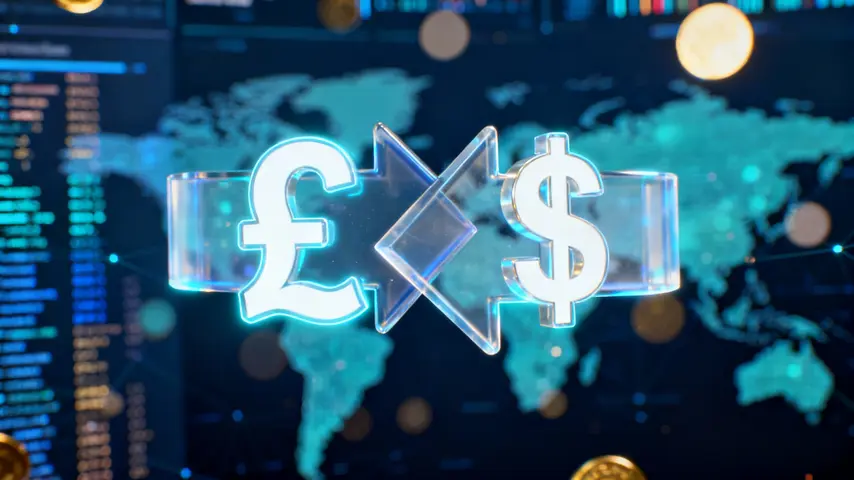
Ever found yourself holding one currency while needing another for a short period? Perhaps you’re a UK business waiting on a large payment from a US client, but you have immediate euro-denominated expenses to cover. Or maybe you’re an investor looking to manage currency exposure on your international portfolio without fully committing to a long-term position. In scenarios like these, a common question arises: what is foreign exchange swap, and how does it actually help solve short-term currency mismatches?
In the intricate dance of global finance, these situations are far from rare. The solution often lies in a sophisticated but surprisingly intuitive instrument: the Foreign Exchange (FX) Swap. While many market participants are familiar with spot trades or forwards, FX swaps dominate interbank currency markets and represent a core mechanism behind global liquidity flows — a concept frequently referenced across institutional platforms such as Ultima Markets.
📊 What Exactly is a Foreign Exchange Swap? Demystifying the Mechanics
At its core, understanding how does a foreign exchange swap work is far simpler than its name suggests. An FX swap is a two-part agreement between two parties to exchange currencies now and reverse that exchange at a future date. In practical terms, it combines a spot transaction with a forward transaction in the opposite direction.
This structure allows one party to temporarily access a foreign currency while maintaining control over its original holdings — a mechanism widely used for liquidity management rather than speculation.
The Core Concept: Two Transactions in One Deal
An FX swap consists of two distinct ‘legs’ that are executed simultaneously for the same amount of currency:
- The Near Leg: This is the initial exchange, which typically happens at the current spot exchange rate. Party A sells Currency X and buys Currency Y from Party B.
- The Far Leg: This is the future exchange, where the transaction is reversed. On a pre-agreed future date, Party A sells Currency Y back to Party B and re-purchases Currency X.
The forward rate is locked in from the start, removing uncertainty around future exchange rates. This is why FX swaps are often cited as textbook answers to what is foreign exchange swap in institutional finance training.
How Rates are Determined: Spot Rate and Forward Points
The price of an FX swap is not quoted as a single exchange rate but through forward points. These points represent the difference between the interest rates of the two currencies involved over the swap’s duration.
- If the currency you are buying (in the near leg) has a higher interest rate than the one you are selling, you will pay forward points. The forward exchange rate will be less favourable than the spot rate.
- Conversely, if the currency you are buying has a lower interest rate, you will earn forward points, and the forward rate will be more favourable.
This mechanism ensures that neither party is disadvantaged by interest rate differences. It’s a way of balancing the economic exposure, making the transaction a tool for liquidity and hedging rather than outright speculation on interest rates.
💡 A Practical Walkthrough: How an FX Swap Works in the Real World
A foreign exchange swap example helps clarify how this works in real-world conditions.
Scenario: A UK-Based Fund Manager Needs Short-Term USD Liquidity
Imagine a UK-based fund manager holding GBP but needing USD for a three-month investment in US equities. They do not want long-term exposure to USD volatility. Rather than executing a spot trade, they arrange an FX swap with their bank.
They agree on:
-
Spot exchange rate
-
Forward points
-
Swap maturity
Example Numbers (2025 Assumptions)
-
Notional: $10,000,000
-
Spot GBP/USD: 1.2500
-
3-month forward points: -50 points
-
Forward rate: 1.2450
The fund manager receives USD immediately and repurchases GBP at maturity, eliminating FX risk during the holding period. This foreign exchange swap example illustrates why swaps are preferred for short-term funding over outright currency sales.
Here’s the breakdown of the cash flows in a clear, tabular format:
*Calculation for Far Leg GBP Received: $10,000,000 / 1.2450 = £8,032,128.51. The difference between the GBP paid and received (£32,128.51) represents the cost of the swap, driven by the interest rate differential.
The result? The fund manager gained access to $10 million for three months to make their investment. They completely eliminated the risk of the GBP/USD exchange rate falling during that period, as the buy-back rate was locked in from day one. Their only cost was the predictable one dictated by the forward points.
📊 FX Swap vs. Currency Swap: Understanding the Critical Differences
One of the most common sources of confusion is currency swap vs fx swap. Despite similar names, these instruments serve very different purposes.
An FX swap focuses on short-term currency liquidity with no recurring interest payments. A currency swap, by contrast, is designed for long-term financing and involves exchanging interest flows over several years.
The Devil is in the Detail
Let’s be clear: while both involve exchanging currencies, their structure and purpose diverge significantly. An FX swap is essentially a collateralised loan, where one currency is borrowed against another. A currency swap, on the other hand, involves exchanging not just the principal but also interest payments over a longer period.
Comparison Table: FX Swap vs. Currency Swap
Here is a head-to-head comparison to highlight the key distinctions:
Choosing between them depends entirely on duration and balance-sheet objectives — a distinction often emphasised in professional risk frameworks similar to those outlined in Ultima Markets fund safety.

Which One is Right for Your Strategy?
Choose an FX Swap if your goal is to:
- Hedge a short-term currency exposure.
- Secure foreign currency funding for a period of less than a year.
- Avoid the complexities of interest rate payments.
Consider a Currency Swap if you need to:
- Secure long-term financing in a foreign currency at a better rate.
- Transform a fixed-rate loan in one currency to a floating-rate loan in another.
- Manage long-term balance sheet mismatches.
🧭 Why Use an FX Swap? Key Applications for Investors and Businesses
Understanding fx swap uses reveals why these instruments underpin global finance.
Hedging Against Currency Volatility
This is the most common use. A UK company exporting goods to Japan knows it will receive JPY 100 million in 90 days. It can use an FX swap to ‘lock in’ the value of that future cash flow in GBP today, protecting its profit margins from adverse movements in the GBP/JPY exchange rate.
Securing Short-Term Foreign Currency Financing
As in our fund manager example, an FX swap is an efficient way to borrow a foreign currency. It’s often cheaper and quicker than securing a traditional bank loan in that currency, as you are providing your home currency as collateral.
Managing Cash Flows and Liquidity
Multinational corporations constantly manage cash surpluses in one currency and deficits in another. FX swaps allow them to move liquidity across borders efficiently to meet operational needs without taking on unwanted currency risk.
Central Bank Operations and Market Stability
Even central banks like the Bank of England are major users. They utilise FX swaps to manage domestic liquidity conditions and to provide emergency foreign currency (usually USD) liquidity to their domestic banks during times of market stress. These central bank swap lines are a critical backstop for the global financial system.
💰 Navigating the Risks: What to Watch Out For
While powerful, FX swaps are not without risk. Understanding these potential pitfalls is essential for any prudent investor or financial manager.
Exchange Rate Risk
Wait, isn’t an FX swap meant to eliminate exchange rate risk? Yes, for the principal amounts. However, risk still exists. The primary risk, often called settlement risk, arises if a counterparty defaults *before* the far leg exchange. If the spot rate has moved significantly, replacing the defaulted transaction could lead to a substantial loss.
Counterparty Risk
As OTC instruments, FX swaps rely on counterparties fulfilling future obligations. Institutional credibility matters — a principle also relevant when assessing broker infrastructure, platforms, and settlement processes such as those supporting Ultima Markets MT5.
Liquidity and Interest Rate Risk
While the forward points lock in the cost based on current interest rates, unforeseen market events can cause liquidity to dry up, making it difficult or expensive to roll over or exit a swap position before maturity. Furthermore, while the swap itself hedges against FX moves, your underlying business or investment is still exposed to broader interest rate changes in both economies.
Conclusion: A Strategic Tool in the Global Investor’s Arsenal
So, what is foreign exchange swap in practical terms? It is a foundational instrument that allows capital to move efficiently across borders without unnecessary currency risk. For UK investors and businesses operating internationally in 2025, FX swaps provide flexibility that spot and forward contracts alone cannot.
By mastering how does a foreign exchange swap work, market participants gain access to cost-efficient funding, precise hedging, and operational control — benefits that are magnified when paired with transparent execution, robust settlement, and reliable counterparties, as highlighted in independent evaluations like Ultima Markets Reviews.
FAQ
- 1. Are FX swaps traded on an exchange?
- No, FX swaps are not standardised and are not traded on public exchanges. They are over-the-counter (OTC) instruments, meaning they are bespoke agreements negotiated privately between two parties, typically a client and a financial institution.
- 2. What is the typical duration of an FX swap?
- FX swaps are predominantly short-term instruments. The most common tenors are overnight, one week, one month, three months, and six months. While swaps up to a year are common, anything longer is rare and would typically be structured as a currency swap.
- 3. How are FX swap points calculated?
- Forward points are calculated based on the interest rate differential between the two currencies for the duration of the swap. A simplified formula is: Forward Points ≈ Spot Rate × [(Interest Rate of Currency B – Interest Rate of Currency A) / 100] × (Days to Maturity / 360 or 365). This ensures no-arbitrage pricing between the money markets and FX markets.
- 4. Can retail investors use FX swaps?
- Generally, no. FX swaps are institutional products designed for corporations, fund managers, central banks, and other large financial institutions. The large transaction sizes (typically in the millions) and the need for a credit relationship with a bank put them out of reach for most retail investors. Retail traders might see ‘swap fees’ or ‘overnight financing’ on leveraged FX positions, which is a related concept but not the same as a formal FX swap contract.
This article represents the author’s personal views only and is for reference purposes. It does not constitute any professional advice.