
In the world of finance, few topics generate as much buzz, confusion, and excitement as cryptocurrency. You’ve likely heard of Bitcoin and seen headlines about fortunes made and lost. But what exactly is this digital phenomenon? For the aspiring UK investor in 2025, understanding the fundamentals is the first, most crucial step. Think of it not just as ‘digital money’, but as a revolutionary approach to finance, ownership, and transactions.
Beyond Digital Coins: The Core Concepts
At its heart, a cryptocurrency is a digital or virtual token that uses cryptography for security. Unlike the British Pound or the US Dollar, which are controlled by central banks (like the Bank of England), most cryptocurrencies are built on a decentralised framework.
- Decentralisation: This is the magic ingredient. It means there is no single entity—no bank, no government, no company—in control. Instead, control is distributed among all the users on the network. This structure is designed to be resistant to censorship or manipulation.
- Cryptography: This ensures the security of the network. Complex algorithms protect transactions and control the creation of new coins, making it incredibly difficult to counterfeit or double-spend.
- Blockchain Technology: This is the backbone of almost every cryptocurrency. Imagine a traditional bank ledger that records all transactions. Now, picture that ledger being public, shared across thousands of computers worldwide, and cryptographically linked together in a chain of ‘blocks’. This is a blockchain. Once a transaction is added to a block and the block is added to the chain, it is permanent and cannot be altered. It’s a transparent and immutable record of everything that has ever happened on that network.

The Mechanics: How a Cryptocurrency Transaction Works
So, how does money move from A to B without a bank to process the payment? The process is fascinatingly logical and secure.
- Initiation: It all starts with a digital wallet. This wallet doesn’t hold your coins (they live on the blockchain), but it holds your keys. You have a public key (like your bank account number, which you can share) and a private key (like your PIN, which you must never share). To send coins, you use your private key to authorise the transaction.
- Broadcast: The transaction is then broadcast to the entire network of computers (often called ‘nodes’).
- Verification: Nodes across the world check the transaction’s validity. They confirm you have enough funds and that your authorisation is legitimate.
- Confirmation: Once verified, the transaction is bundled with others into a new block. This block is then cryptographically added to the existing blockchain. At this point, the transaction is considered complete and irreversible. The funds are now officially in the recipient’s wallet.
📈 Getting Started: Cryptocurrency Trading vs. Investing
Once you grasp the ‘what’, the next question is ‘how’. People engage with cryptocurrencies primarily in two ways: trading and investing. While they might sound similar, their goals, timeframes, and strategies are vastly different.
What is Cryptocurrency Trading?
Cryptocurrency trading is the act of speculating on short-term price movements to generate profit. Traders aren’t necessarily interested in the long-term vision of a project; they’re focused on market volatility. A popular method in the UK is using Contracts for Difference (CFDs). With CFDs, you don’t actually own the cryptocurrency. Instead, you’re making a bet on whether its price will rise or fall.
Many UK traders choose an established CFD broker such as Ultima Markets to gain exposure to crypto price movements without directly holding the asset. Platforms like this allow traders to access crypto markets alongside forex, indices, and commodities from a single account.
This allows traders to use leverage, which can amplify both profits and losses. It’s a high-risk, high-reward strategy that requires skill and constant market monitoring.
Common Strategies: Day trading (opening and closing positions within a day), swing trading (holding for several days or weeks), and scalping (making tiny profits on many trades).
What is Cryptocurrency Investing?
Cryptocurrency investing involves buying and holding digital assets for the long term, with the belief that their value will increase over time. This approach is less about daily price charts and more about the fundamental potential of the technology, the team behind it, and its real-world application. The popular crypto slang for this is “HODL” (Hold On for Dear Life), which captures the essence of weathering market volatility for future gains.
- Focus: Investors conduct deep research, reading project whitepapers, analysing the ‘tokenomics’ (the economics of the coin), and assessing its competitive advantage.
Trading vs. Investing: Which Path Is Right for You?
Choosing your approach depends entirely on your financial goals, risk appetite, and how much time you can dedicate. This table breaks down the key differences:
| Factor | Cryptocurrency Trading | Cryptocurrency Investing |
|---|---|---|
| Time Horizon | Short-term (minutes, hours, days, weeks) | Long-term (months, years) |
| Goal | Generate frequent, smaller profits from market volatility | Build wealth over time through asset appreciation |
| Skill Required | Technical analysis, chart reading, risk management, discipline | Fundamental analysis, research, patience, long-term vision |
| Risk Level | Very high, especially with leverage | High, due to market volatility and technological risk |
⛏️ The Engine Room: Understanding Cryptocurrency Mining
If there are no banks, who processes transactions and creates new coins? This vital role is filled by ‘miners’. Cryptocurrency mining is the engine that powers many of the most well-known digital currencies, like Bitcoin. It’s a complex, competitive, and essential part of the ecosystem.
What is Crypto Mining? The Digital Gold Rush Explained
Crypto mining is the process by which new coins are created and transactions are verified and added to the blockchain. Miners are essentially the bookkeepers of the decentralised ledger. They dedicate immense computing power to solving complex mathematical puzzles. In return for their work and investment in hardware and electricity, they are rewarded with a certain number of new coins, plus the transaction fees paid by users. This reward system incentivises people to maintain the network’s security and integrity.
How Does Mining Work? The Proof-of-Work (PoW) Model
The original consensus mechanism, used by Bitcoin, is called Proof-of-Work (PoW). Here’s a simplified breakdown:
- Miners compete to solve a cryptographic puzzle. This isn’t a brain-teaser; it’s a brute-force guessing game that requires specialised, powerful computers (ASICs) to run through trillions of possibilities per second.
- The first miner to find the solution gets to create the next ‘block’ of transactions.
- They broadcast this solution and the new block to the network.
- Other nodes quickly verify the solution is correct.
- If it’s valid, the block is added to the blockchain, and the successful miner receives the block reward (e.g., a set amount of new Bitcoin).
This process is incredibly secure but has drawn criticism for its enormous energy consumption, which rivals that of entire countries.
The Evolution: Proof-of-Stake (PoS) and Other Methods
Due to the environmental and cost concerns of PoW, alternative systems have emerged. The most popular is Proof-of-Stake (PoS). Ethereum, the second-largest cryptocurrency, famously transitioned to this model in 2022.
In a PoS system, instead of mining, participants ‘stake’ their own coins to become validators. The network then chooses a validator to create the next block. The likelihood of being chosen is often proportional to the amount of currency staked—the more you stake, the higher your chances. If you validate a block correctly, you earn a reward. This method is far more energy-efficient and allows investors to earn passive income on their holdings through staking.
🧭 Navigating the Crypto Market: A Practical Guide for 2025
Feeling ready to dip your toes in? The crypto market is vast and can be intimidating. Here’s a structured approach to getting started safely as a UK resident.
How to Buy Cryptocurrency in the UK
The process is more straightforward than you might think, but diligence is key.
- Choose a Reputable Exchange: This is your gateway to the crypto market. For UK investors, it’s crucial to select a platform that is registered with the Financial Conduct Authority (FCA) for anti-money laundering purposes. Key factors to compare are fees, security measures (like 2-Factor Authentication and cold storage), the range of coins offered, and ease of use. Examples include Coinbase, Kraken, and Binance.
- Create and Verify Your Account: You’ll need to go through a Know Your Customer (KYC) process. This typically involves providing a photo of your ID (passport or driving licence) and proof of address, similar to opening a traditional bank account.
- Deposit Funds (‘Fiat’): Once verified, you can ‘on-ramp’ your British Pounds (£) onto the exchange. The most common and fastest method in the UK is via Faster Payments from your bank account. Debit card payments are also an option, but watch out for higher fees.
- Place Your Order: You can now swap your GBP for the cryptocurrency of your choice. A ‘market order’ buys the coin at the current best price, while a ‘limit order’ allows you to set a specific price at which you wish to buy.
- Secure Your Assets: For significant investments, it is strongly recommended to move your crypto off the exchange and into a personal wallet. Exchanges are prime targets for hackers. A hot wallet is connected to the internet (convenient but less secure), while a cold wallet (like a USB device) is kept offline and is the gold standard for security.
Understanding the Risks and How to Manage Them
The potential for high returns comes with significant risks. Acknowledging and managing these is the hallmark of a smart investor.
- Extreme Volatility: Prices can, and do, swing by 20% or more in a single day. This is not the stock market. You must have the stomach for this volatility and avoid panic selling.
- Regulatory Uncertainty: The UK government and the FCA are still developing a comprehensive regulatory framework for crypto. Future rules could impact the value and legality of certain assets.
- Security Threats: The crypto space is rife with scams, phishing attempts, and hacks. Always double-check URLs, use a unique, strong password and 2FA, and be wary of unsolicited offers promising guaranteed returns.
- The Golden Rule: This cannot be overstated—only invest what you can comfortably afford to lose. Never use money intended for rent, emergencies, or essential living costs.
💰 Conclusion: Your Journey into Digital Finance
Cryptocurrency represents a paradigm shift in how we think about money, assets, and value transfer. It offers a glimpse into a decentralised future, powered by the elegant and robust technology of the blockchain. For UK investors in 2025, it presents both a tantalising opportunity and a field of significant risks.
The key to navigating this new frontier is education. By understanding what cryptocurrency is, the mechanics of how it works, the difference between a trader’s and an investor’s mindset, and the critical importance of security, you can approach the market from a position of knowledge, not hype. Always begin with caution, start small, and never stop learning.

❓ FAQ
1. Is cryptocurrency legal in the UK?
Yes, it is legal to buy, sell, and hold cryptocurrency in the UK. However, the market is not fully regulated in the same way as traditional financial services. The FCA regulates certain crypto-asset derivatives and requires crypto exchanges to register for anti-money laundering purposes, but investors do not have the same protections (like the Financial Services Compensation Scheme) as they would with a bank.
2. Do I have to pay tax on cryptocurrency in the UK?
Yes. HMRC considers cryptocurrencies to be assets, meaning they are subject to Capital Gains Tax (CGT). If your profits from selling or swapping crypto in a tax year exceed the annual CGT allowance (£6,000 for 2024/25, check for 2025 updates), you must report and pay tax on the gain. Keeping detailed records of all your transactions is essential.
3. What is the best cryptocurrency to invest in for beginners?
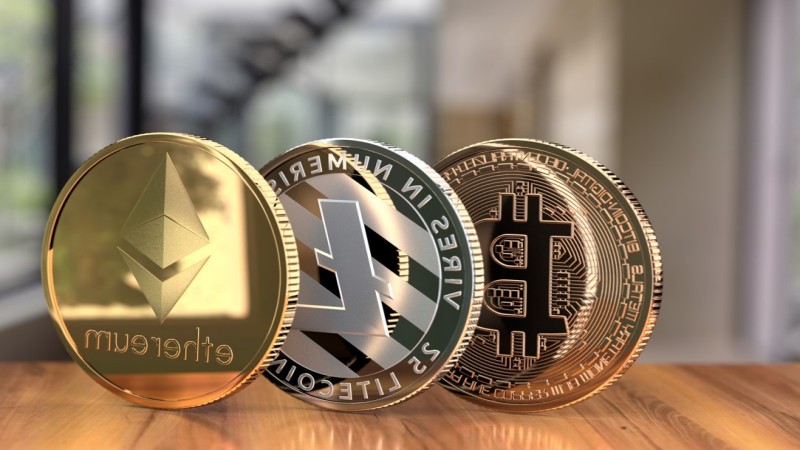
There is no single ‘best’ investment. Most beginners start with the most established and largest cryptocurrencies, Bitcoin (BTC) and Ethereum (ETH), as they have the longest track records and highest liquidity. However, it is vital to do your own research (DYOR) into any project before investing and understand its specific risks and potential.
4. Can I lose more money than I invest?
If you are simply buying and holding cryptocurrencies (spot investing), the maximum you can lose is your initial investment—the value can go to zero. However, if you are trading with leverage (e.g., using CFDs), it is possible to lose more than your initial deposit. This is why leverage is only recommended for experienced traders who fully understand the risks.