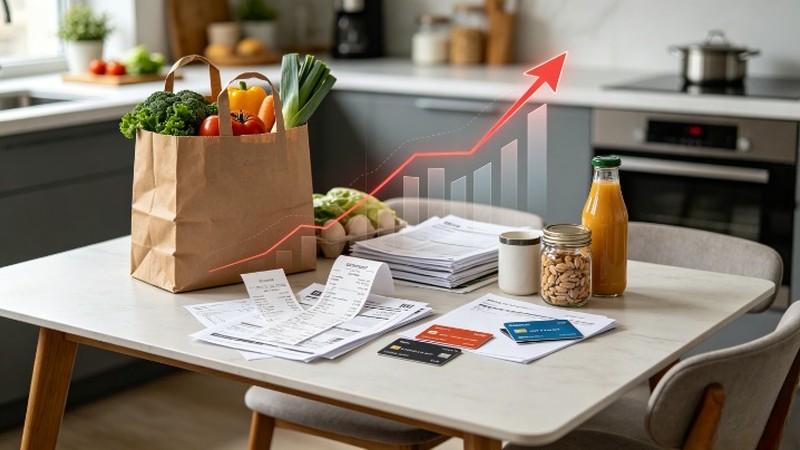
By 2026, the average UK household will bear an additional cost from import tariffs estimated to be in the hundreds of pounds annually. The precise figure is subject to considerable variation based on household income, consumption patterns, and the specific categories of imported goods a family purchases. This analysis will dissect the factors determining these costs and their wider economic implications.
Understanding how much do tariffs cost households in 2026 requires moving beyond a single headline number. It involves examining the UK’s post-Brexit trade framework, the mechanics of price transmission from importers to consumers, and the disproportionate impact these levies have across different socio-economic groups. For investors and consumers alike, comprehending these dynamics is crucial for effective financial planning and market analysis.
The Headline Number: What Households Are Estimated to Pay in 2026
Economic models from institutions like the Bank of England and the Office for Budget Responsibility (OBR) project a tangible increase in the cost of living directly attributable to tariffs. While a definitive single figure remains elusive due to fluctuating trade policies and economic conditions, a consensus range has emerged from various independent analyses.
Why Estimates Cluster Around Several Hundred Pounds
Most credible estimates place the direct annual cost of tariffs per household between £200 and £600. This calculation is derived from the UK’s Global Tariff (UKGT) schedule, which applies to goods from countries without a specific trade agreement. The figure represents the weighted average tariff rate applied to the typical basket of imported consumer goods, accounting for the fact that nearly 100% of the cost of a tariff is eventually passed through to the end consumer.
Why Some Estimates Are Higher
Higher-end estimates, sometimes approaching £800-£1,000 per household, often include the indirect costs associated with tariffs. These secondary effects include increased compliance costs for businesses (so-called non-tariff barriers), which are also passed on to consumers through higher prices, and the reduced competition in the domestic market that allows local producers to increase their prices. Therefore, assessing how much do tariffs cost households in 2026 must account for these less visible, but significant, economic frictions.
Why Policy Changes Can Move the Number Quickly
The projected cost is not static. The signing of new free trade agreements (FTAs) can reduce or eliminate tariffs on certain goods, lowering the overall burden. Conversely, the imposition of new retaliatory or protective tariffs in response to global trade disputes can cause the estimated cost to rise sharply. This policy-driven volatility is a key risk factor for household budgets and the broader economy leading into 2026.
Why Tariff Costs Are Not Evenly Shared
The aggregate cost of tariffs masks a regressive impact, where the financial burden falls more heavily on lower-income households. This is a critical aspect of understanding the true societal price of these trade policies and is a recurring theme in analysis from think tanks like the Resolution Foundation.
Lower-Income Households Spend More on Affected Goods
A larger proportion of a lower-income family’s budget is allocated to essential goods such as food, clothing, and footwear. These categories often carry some of the highest tariff rates under the UKGT. For instance, tariffs on certain food products and apparel can exceed 10%. Consequently, the price increases on these essential items consume a much larger share of their disposable income compared to wealthier households, making the true cost of tariffs relative to income significantly higher.
Goods-Heavy Budgets Feel Tariffs Faster
Households whose consumption is weighted towards physical goods rather than services will experience the impact of tariffs more directly and immediately. Tariffs apply to imported goods, not services.
Families who spend more on groceries, electronics, furniture, and cars will see their budgets squeezed more than those who spend a larger portion of their income on services like digital subscriptions, education, or hospitality. This further clarifies the nuanced answer to how much do tariffs cost households in 2026.
Substitution Is Harder for Some Families Than Others
Higher-income consumers may have the flexibility to substitute a higher-priced imported good with a domestic alternative or simply absorb the cost. For lower-income households, this flexibility is limited.
Often, the most affordable products in a given category are imported. When tariffs raise the price of these value-oriented goods, there are few, if any, cheaper alternatives to switch to, forcing these families to either pay the higher price or go without.
Which Products Are Most Likely to Get More Expensive
The price impact of tariffs is not uniform across all consumer goods. Certain categories are inherently more exposed due to a combination of high tariff rates under the UKGT and a heavy reliance on imports to meet domestic demand. The following table provides a clear breakdown of the product categories expected to see the most significant price pressure by 2026.
| Product Category | Typical UKGT Rate Range | Rationale for Price Impact |
| Apparel and Footwear | 8% – 12% | High reliance on imports from Asia. These are finished goods where tariffs are difficult for suppliers to absorb. |
| Food and Agricultural Products | 5% – 20%+ (Tariff Rate Quotas apply) | Complex tariff schedules designed to protect domestic agriculture. Affects meat, dairy, cereals, and processed foods. |
| Automotive Vehicles and Parts | 10% (on finished cars) | A standard 10% tariff on cars from outside the EU/FTA partners directly increases showroom prices. |
| Home Goods and Ceramics | 5% – 12% | Includes furniture, kitchenware, and decorative items. Tariffs on these discretionary items add to household setup and replacement costs. |
Why Prices Do Not Always Fall Immediately When Policy Changes
A common misconception is that if a tariff is reduced or removed, consumer prices will drop overnight. In reality, the pass-through of cost reductions is often slow and incomplete due to several commercial and economic factors. This ‘price stickiness’ is a key factor in long-term financial planning.
Existing Inventory and Contracts
Retailers and importers hold inventory that was purchased and imported at the higher tariff-inclusive cost. They will typically sell through this existing stock at the established price point before reflecting any cost savings on newly imported goods. This process can take months, creating a significant lag.
Retail Pricing Lags
Businesses may choose not to pass on the full cost saving to the consumer immediately. Instead, they might use the opportunity to improve their own profit margins, especially if they have been under pressure. They may also wait to see if competitors lower their prices first before making a move, a standard practice in competitive retail environments.
Uncertainty Keeps Firms Cautious
In a volatile trade policy environment, firms may be hesitant to lower prices in response to a tariff reduction if they suspect the policy could be reversed. The administrative cost of repricing goods is not trivial, and businesses often prefer to maintain price stability rather than react to what might be a temporary policy shift. This caution helps explain why the question of how much do tariffs cost households in 2026 has a persistent, upward bias.
What This Means for Inflation, Spending, and Consumer Stocks
The cumulative cost of tariffs on households has macroeconomic consequences that are closely monitored by investors and policymakers. These effects ripple through inflation data, retail sales figures, and the performance of consumer-facing companies listed on the London Stock Exchange.
Household Squeeze Can Hit Discretionary Spending
When households are forced to spend more on essential imported goods due to tariffs, they have less disposable income for discretionary purchases. This can lead to a slowdown in spending on hospitality, entertainment, and big-ticket items. The ONS retail sales figures are a key indicator to watch for this trend. This reduction in demand can act as a drag on overall economic growth.
Why Retailers May Face Demand and Margin Pressure Together
For UK retailers, tariffs create a dual threat. They face higher input costs from the tariffs themselves, which pressures their gross margins. Simultaneously, they may face weakening consumer demand as household budgets are squeezed. This combination can be particularly challenging for companies in the clothing, general merchandise, and electronics sectors, impacting their profitability and share price.
When Higher Household Costs Become a Market Story
The impact of tariffs on household costs directly feeds into the Consumer Price Index (CPI), the UK’s primary measure of inflation. If tariff-driven price rises are significant and sustained, they can contribute to higher overall inflation.
This, in turn, can influence the Bank of England’s monetary policy decisions, particularly regarding interest rates, which has profound implications for all asset classes, from equities to bonds and property.
How Consumers and Investors Can Read the Next Round of Tariff Headlines
To accurately assess the ongoing financial impact, it is essential to look beyond the headlines and analyse the underlying data. Focusing on specific metrics will provide a clearer picture of how much do tariffs cost households in 2026 and beyond.
- Watch Category-Level Inflation: Pay close attention to the components of the ONS’s monthly CPI report. Look for accelerating price inflation in goods-heavy categories like ‘food & non-alcoholic beverages’, ‘clothing & footwear’, and ‘furnishings & household equipment’. This provides direct evidence of tariff pass-through.
- Monitor Consumer Confidence and Spending Mix: Track consumer confidence surveys (e.g., GfK Consumer Confidence Barometer). A sustained decline, coupled with ONS data showing a shift in spending away from discretionary goods towards essentials, is a strong signal that household budgets are under pressure from rising costs.
- Analyse Retail Earnings Commentary: For investors, the quarterly earnings reports and conference calls of major UK retailers (e.g., Tesco, Marks & Spencer, Next) are invaluable. Listen for management commentary on import costs, supply chain pressures, and gross margin performance. Mentions of ‘tariffs’, ‘duties’, or ‘sourcing costs’ can be leading indicators of future profitability.
Conclusion
In conclusion, the question of how much do tariffs cost households in 2026 does not have a single, simple answer. The cost is a dynamic figure, likely amounting to several hundred pounds per year for the average UK household, but with a disproportionately severe impact on lower-income families.
The primary drivers are the UK’s independent trade policy, the specific goods households consume, and the pricing strategies of businesses. For both consumers managing their budgets and investors navigating the market, a detailed understanding of these forces is not just academic—it is a practical necessity for sound financial decision-making in the years ahead.