

Navigating the world of cryptocurrency investment is thrilling, but for many UK investors, the excitement quickly turns to confusion when the topic of tax arises. With HM Revenue & Customs (HMRC) stepping up its scrutiny of cryptoassets, simply hoping for the best is no longer a viable strategy. Understanding your tax obligations isn’t just good practice; it’s essential for staying compliant and securing your financial future. Are you wondering if your Bitcoin profits are taxable? Unsure how to handle earnings from staking or airdrops? You’re not alone. This guide is designed to demystify the complexities of UK cryptocurrency tax in 2025, providing a clear roadmap for investors.
The core issue for many is that the rules weren’t designed with crypto in mind, leading to a patchwork of guidelines that can be difficult to interpret. We’ll break down the two primary taxes you need to be aware of—Capital Gains Tax and Income Tax—and explain exactly when each one applies. From calculating your gains to reporting them correctly on your Self-Assessment, this article will equip you with the knowledge to manage your crypto tax affairs with confidence.
💡 Understanding HMRC’s Stance on Cryptoassets
First things first, it’s crucial to understand how the UK tax authority, HMRC, views cryptocurrency. Officially, they do not consider cryptocurrencies like Bitcoin or Ethereum to be ‘currency’ or ‘money’ in the traditional sense. Instead, they are classified as ‘cryptoassets’. This distinction is vital because it determines how they are taxed.

For the vast majority of individuals who are investing their own money in crypto, their activities will be subject to two main types of tax:
- Capital Gains Tax (CGT): This is the most common tax for crypto investors. It applies to the profit you make when you ‘dispose’ of your cryptoassets.
- Income Tax: This applies in specific situations where your crypto-related activities are considered a form of income, such as being paid by an employer in crypto, or through certain professional trading, mining, or staking activities.
It’s important to note that you won’t be taxed twice on the same profit. If a crypto transaction is liable for Income Tax, it won’t also be subject to Capital Gains Tax.
📈 Capital Gains Tax (CGT) on Cryptocurrency: The Core for Investors
For most people buying and selling crypto as a personal investment, Capital Gains Tax is the primary concern. You pay CGT on the ‘gain’ you make, which is the profit from selling an asset that has increased in value. It’s the gain that’s taxed, not the total amount of money you receive.
What is a ‘Disposal’ Event?
A ‘disposal’ is an event that triggers a potential CGT liability. It’s not just about selling your crypto for pounds. HMRC identifies several types of disposal events:
- Selling crypto for fiat currency: The most straightforward example, such as selling your ETH for GBP.
- Trading one cryptocurrency for another: A frequently misunderstood rule. Swapping your Bitcoin for an altcoin is a disposal of the Bitcoin and an acquisition of the altcoin. You must calculate the gain or loss in GBP at the time of the trade.
- Using crypto to pay for goods or services: If you buy a product using crypto, you are ‘disposing’ of the crypto at its market value in GBP at that moment.
- Gifting crypto to another person: In most cases, gifting crypto is treated as a disposal at the market value, potentially triggering a CGT event for the giver. However, gifts to a spouse or civil partner are usually exempt.
Simply buying and holding crypto (HODLing) is not a taxable event. The tax is only triggered upon disposal.
Calculating Your Crypto Capital Gains
The basic formula for calculating your gain or loss on a single transaction is:
Fair Market Value at Disposal (in GBP) – Cost Basis = Gain or Loss
Let’s break that down:
- Fair Market Value: This is the value of the crypto in pounds sterling at the time you sold, traded, or spent it.
- Cost Basis: This is the total amount you spent to acquire the crypto, including the purchase price plus any associated fees (like exchange transaction fees).
After calculating the gain or loss for every single disposal in a tax year, you sum them up. You can deduct any losses from your gains to arrive at your net capital gain for the year. From this net gain, you can then deduct your annual CGT allowance.
The Annual Exempt Amount for Capital Gains Tax for the 2024-2025 tax year is £3,000. This means you can realise gains up to this amount without paying any tax. You only pay tax on gains that exceed this threshold.
UK Capital Gains Tax Rates for 2025
The rate of CGT you pay depends on your Income Tax band. After applying your £3,000 exempt amount, any remaining gains are added to your total income to determine the rate.
| Income Tax Band | CGT Rate on Crypto Gains |
|---|---|
| Basic Rate Taxpayer (£12,571 to £50,270) | 10% (on gains within the basic rate band) |
| Higher or Additional Rate Taxpayer (over £50,270) | 20% (on gains pushing you into or falling within the higher rate bands) |
📊 When Does Income Tax Apply to Crypto?
While most investors deal with CGT, certain activities are seen by HMRC as a form of income. In these cases, you’ll pay Income Tax and National Insurance contributions on the GBP value of the tokens you receive, at the time you receive them.
Scenarios Subject to Income Tax
- Receiving crypto as employment income: If your employer pays your salary or a bonus in crypto, this is treated as money’s worth and is subject to Income Tax and National Insurance, just like a regular salary.
- Crypto mining: If your mining activity is significant and carried out with a certain degree of organisation, frequency, and sophistication, HMRC may view it as a trade. In this case, your mining rewards (less allowable expenses) are considered trading profits and are subject to Income Tax. For hobbyist miners, it’s more likely to be miscellaneous income.
- Airdrops: Receiving tokens from an airdrop can be taxable as income if you have to perform a service or action in return (e.g., sharing a post, signing up for a newsletter). If the airdrop is entirely unsolicited and unprompted, it may not be subject to Income Tax upon receipt, but will have a cost basis of zero for future CGT calculations.
- Staking Rewards: Income from staking is generally considered miscellaneous income and is subject to Income Tax. The taxable amount is the fair market value of the rewards in GBP at the time they are received.
- DeFi Lending/Liquidity Pools: Income generated from Decentralised Finance (DeFi) activities is complex. However, the returns are typically treated as either miscellaneous income (like interest) and subject to Income Tax.
Investors concerned about security and fund protection often check resources like Ultima Markets fund safety.
Tax Implications for Different Crypto Activities
To clarify, here’s a comparison of how different crypto activities are generally treated for tax purposes:
| Activity | Primary Tax Type | Taxable Event |
|---|---|---|
| Investing (Buy/Sell/Trade) | Capital Gains Tax | When you ‘dispose’ of the asset (sell, trade, spend). |
| Mining (as a trade) | Income Tax | When the mined coins are received. |
| Staking | Income Tax | When staking rewards are received. |
| Airdrops (for a service) | Income Tax | When the airdropped tokens are received. |
| Receiving as Salary | Income Tax | At the point of payment. |
Important Note: When you later dispose of crypto that you received as income (e.g., you sell the coins you earned from staking), you may still be liable for Capital Gains Tax. However, your cost basis for the CGT calculation will be the market value of the crypto on the day you received it (the same value on which you paid Income Tax), preventing double taxation.
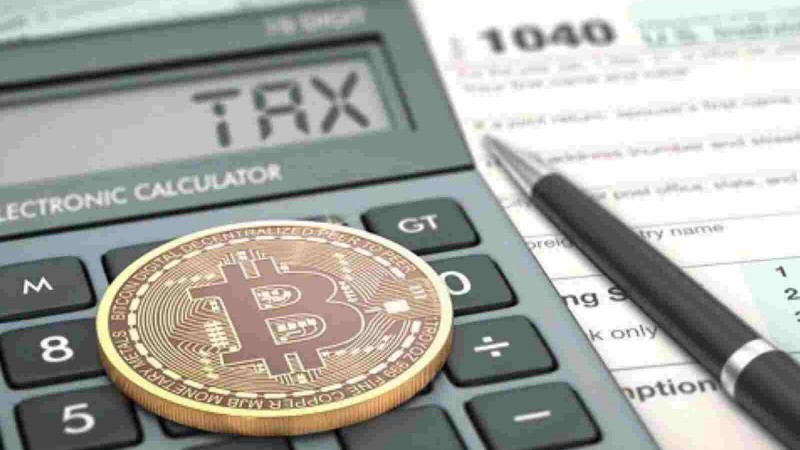
🧭 Reporting Your Crypto Taxes to HMRC: A Step-by-Step Guide
Knowing the rules is one thing; applying them and reporting to HMRC is another. Staying organised is key to making this process as painless as possible.
Record Keeping: Your First Line of Defence
HMRC expects you to keep detailed and accurate records of all your crypto transactions. If they ever launch an enquiry, this documentation will be your proof of compliance. For every transaction, you should record:
- Type of cryptoasset (e.g., Bitcoin, Cardano).
- Date and time of the transaction.
- Type of transaction (buy, sell, trade, stake reward, etc.).
- Value in GBP at the time of the transaction.
- Cumulative profit or loss for the tax year.
- Transaction fees paid.
- Wallet addresses and exchange records as proof.
Maintaining a spreadsheet from day one is a good habit. For active traders, this can become overwhelming, which is where specialised software and platforms like Ultima Markets Deposits & Withdrawals help manage assets efficiently.
The Self-Assessment Process
You must report your crypto gains or income via a Self-Assessment tax return. You need to file a return if your total capital gains from all sources are over the £3,000 annual exempt amount, or if your total proceeds from selling assets are more than four times the exempt amount. You will also need to file if you have received crypto as income.
-
Register for Self-Assessment: If you haven’t filed a tax return before, you need to register with HMRC.
-
Complete the Return: For capital gains, you’ll need to fill out the SA108 ‘Capital gains summary’ supplementary pages.
-
Meet the Deadlines: The UK tax year runs from 6 April to 5 April. The deadline for online Self-Assessment returns is 31 January of the following year.
To gauge platform reliability and performance, many traders review Ultima Markets Reviews.
Leveraging Crypto Tax Calculators
For anyone with more than a handful of transactions, manually calculating gains is a nightmare due to the complexity of tracking cost basis across thousands of trades. This is where crypto tax software becomes invaluable. Platforms like Koinly, Recap, and TokenTax are designed for UK investors.
They work by:
- Connecting to your exchanges and wallets via API or CSV uploads.
- Automatically tracking the cost basis of your assets.
- Identifying taxable events like sales and trades.
- Generating comprehensive tax reports, including the SA108 form data, which you can use to complete your tax return.
While these tools are incredibly powerful, always double-check the data they import and categorise. They are an aid to help you, but the ultimate responsibility for an accurate tax return lies with you.
💰 Conclusion
The world of cryptocurrency taxation in the UK is undeniably complex, but it is not impenetrable. By understanding the fundamental distinction between Capital Gains Tax and Income Tax, identifying which of your activities are taxable, and maintaining meticulous records, you can approach your tax obligations with clarity and confidence. The key is to be proactive. Don’t wait until the tax deadline is looming to sort through a year’s worth of transactions. Use the tools available, stay informed of HMRC’s guidelines, and when in doubt, seek professional advice. Managing your tax affairs properly is a crucial part of a successful investment strategy, ensuring your crypto journey is both profitable and compliant.

FAQ
1. Do I pay tax if I just buy and hold cryptocurrency?
No. Simply buying and holding cryptoassets is not a taxable event in the UK. A tax liability is only triggered when you ‘dispose’ of the asset, which includes selling it for cash, trading it for another crypto, spending it on goods, or gifting it.
2. What happens if I make a loss on my crypto investments?
You can use capital losses to offset your capital gains in the same tax year. If you have more losses than gains, you can carry forward the net loss to offset gains in future tax years. You must report these losses on your tax return to be able to use them.
3. Are crypto-to-crypto trades really taxable? I haven’t cashed out to pounds.
Yes, absolutely. HMRC is very clear on this. When you trade one crypto for another (e.g., BTC for ETH), you are disposing of the first asset. You must calculate the capital gain or loss based on the GBP value of the asset at the moment of the trade. This is one of the most common mistakes UK investors make.
4. What are the penalties for not declaring crypto tax correctly?
The penalties can be severe and depend on whether HMRC views the error as carelessness, a deliberate understatement, or deliberate concealment. Penalties can range from 0% for an unprompted disclosure of an honest mistake up to 100% of the tax due for deliberate and concealed errors, plus interest on the late payment. In serious cases of tax evasion, criminal prosecution is also possible.
This article represents the author’s personal views only and is for reference purposes. It does not constitute any professional advice.