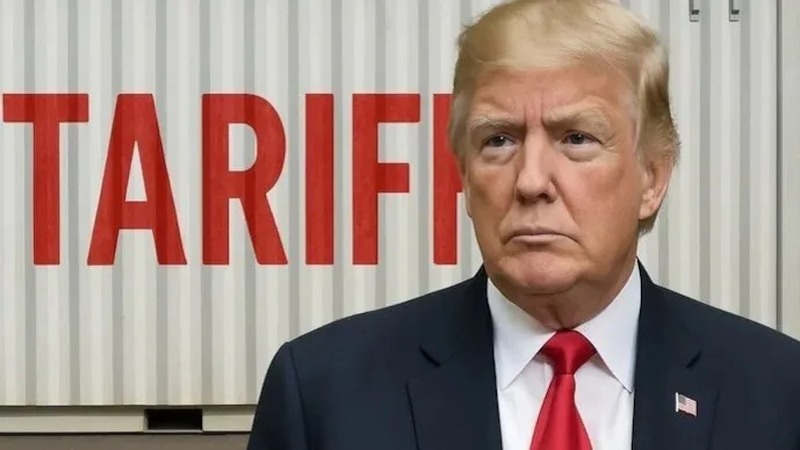
Market uncertainty from shifting trade policies challenges traders worldwide. This guide examines Trump tariffs through a data-driven lens, analyzing asset class impacts and offering practical strategies to navigate volatility caused by Trump tariffs.
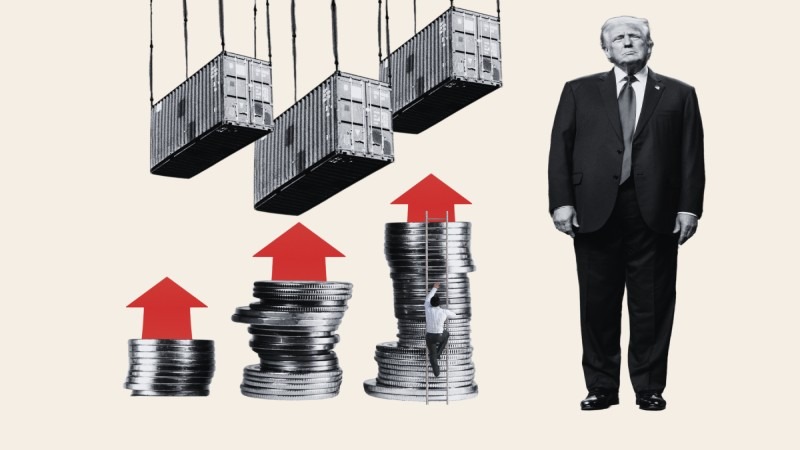
Trump Tariffs Explained: What They Are & How They Work
The Trump tariffs are a series of import taxes initiated by the Trump administration, primarily targeting goods from China but also affecting other countries. The fundamental mechanism is levying a tax, which has ranged from 10% to over 100% on specific goods, making imported products more expensive. The stated objectives were to shrink the U.S. trade deficit, shield domestic industries from foreign competition, and compel other nations to reform their trade practices, especially concerning intellectual property rights.
The Legal Basis: Section 301 and National Security
These tariffs were predominantly implemented under two key legal statutes. First, Section 301 of the Trade Act of 1974, which grants the president authority to retaliate against unfair trade practices. This was the primary justification for tariffs on Chinese goods, citing intellectual property theft. Second, Section 232 of the Trade Expansion Act of 1962, which allows for tariffs on national security grounds, was invoked to tax steel and aluminum imports from numerous countries, including traditional allies.
Who Pays for the Tariffs?
Directly, U.S. importers are the ones who pay the tax to U.S. Customs and Border Protection. However, this cost is rarely absorbed by the importer. Economic studies, including those from the National Bureau of Economic Research, have consistently shown that virtually the entire financial burden of these Trump tariffs has been passed down to U.S. businesses and consumers via higher prices. For example, a $100 item subjected to a 25% tariff costs an importer $125. This additional cost is typically factored into the final retail price, meaning the end consumer ultimately pays for it.
Trump Tariffs & China: A Timeline of the Core Conflict
The centerpiece of the Trump tariffs policy is the protracted trade conflict with China, which has involved hundreds of billions of dollars in tariffs imposed by both sides. This economic confrontation has been a major source of market volatility, as traders worldwide react to every announcement and retaliation. Below is a simplified timeline of the key phases.
| Date Range | U.S. Action | China’s Retaliation | Market Impact Example |
| Early 2018 | Tariffs on steel (25%) and aluminum (10%) globally. Initial $50 billion in tariffs on Chinese tech and industrial goods announced. | Tariffs on $3 billion of U.S. goods, including pork. Later, tariffs on $50 billion of U.S. goods like soybeans and automobiles. | Increased volatility in commodity markets; soybean futures dropped significantly. |
| Late 2018 | U.S. imposes 10% tariff on an additional $200 billion of Chinese goods. | China retaliates with tariffs on an additional $60 billion of U.S. goods. | U.S. stock indices like the S&P 500 experienced a sharp correction in Q4 2018. |
| 2019-2020 | U.S. raises tariff rate on the $200 billion list to 25%. “Phase One” trade deal signed, pausing further escalation. | Some retaliatory tariffs were adjusted as part of the deal. | Temporary market relief, but underlying uncertainty remained, impacting currency pairs like USD/CNY. |
| 2024 & Beyond | Discussions of new potential Trump tariffs, including a universal baseline tariff of 10% or higher tariffs on Chinese goods. | China has indicated it will respond proportionately to any new U.S. tariffs. | Markets are pricing in potential risk, affecting investment decisions in multinational corporations. |
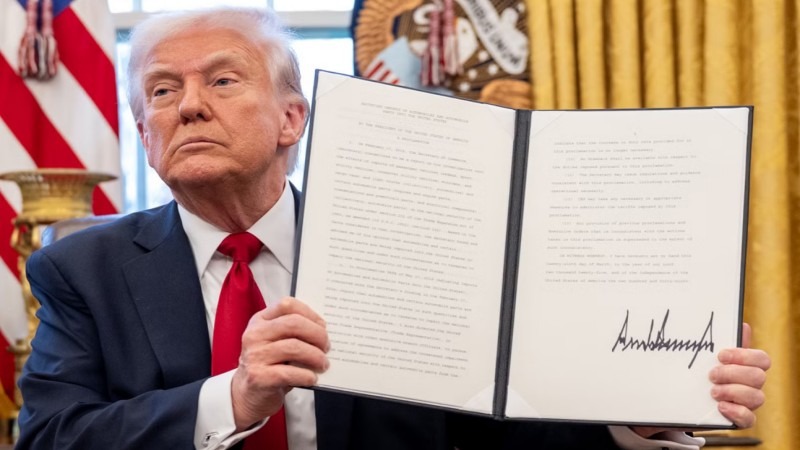
Trump Tariffs by the Numbers: Data-Driven Market Analysis
The Trump tariffs have had a quantifiable impact on the economy and financial markets, creating both significant risks and niche opportunities for traders. The primary effects have been increased costs for businesses and consumers, severe supply chain disruptions, and heightened market volatility.
Impact on Inflation and Corporate Earnings
Data from the Bureau of Labor Statistics and Federal Reserve have shown a direct correlation between the tariffs and rising prices for specific goods. For traders, this is critical because it directly erodes corporate profit margins. Companies heavily reliant on imported goods, such as major retailers and technology firms, saw their costs soar. For example, companies like Apple (AAPL) and Best Buy (BBY) had to navigate higher costs for components and finished products, a frequent topic in their quarterly earnings calls that directly impacted their stock prices.
Sector-Specific Winners and Losers
Not all sectors were affected equally by the Trump tariffs, which creates trading opportunities based on sector rotation.
- Potential Winners: Domestic steel and aluminum producers (e.g., U.S. Steel, Alcoa) initially benefited from protection against foreign competition, leading to temporary stock price increases.
- Clear Losers: U.S. agriculture, especially soybean farmers, suffered heavily from Chinese retaliatory tariffs. Tech companies faced disruptions from tariffs on electronic components, while automakers contended with higher metal prices and tariffs on imported parts.
The Ripple Effect on Global Indices and Forex
The tariffs caused significant movements in global markets. The prevailing uncertainty often triggered a “risk-off” sentiment, benefiting safe-haven assets.
- Indices: News of tariff hikes frequently led to sell-offs in major indices like the Dow Jones (DJI) and S&P 500 (SPX). Markets in affected regions, such as the Shanghai Composite (SSEC), also reacted negatively.
- Forex: The US Dollar (DXY) often strengthened due to its safe-haven status during global uncertainty. In contrast, the Chinese Yuan (CNH) faced depreciation pressure. Currencies of trade-dependent nations like the Australian Dollar also experienced heightened volatility due to the ongoing Trump tariffs saga.

Actionable Strategies for Trading the Trump Tariffs
To trade effectively in a tariff-driven market, traders must evolve from a purely fundamentals-based approach to one that heavily incorporates geopolitical news and rigorous risk management. The objective is to capitalize on the volatility created by Trump tariffs rather than being caught off guard.
Strategy 1: Monitor Geopolitical News and Key Data
Your trading strategy must be closely synchronized with the news cycle. Set up alerts for announcements from trade officials and monitor key economic data that reflects tariff impacts, such as the Consumer Price Index (CPI) and Producer Price Index (PPI). When tariff news breaks, markets react in seconds. Being prepared is paramount.
Strategy 2: Focus on Affected Asset Classes
- Forex: Trade currency pairs like USD/CNH, which are directly sensitive to US-China trade developments. Also, consider safe-haven currencies like the Japanese Yen (JPY) and Swiss Franc (CHF) during periods of high uncertainty.
- Stocks: Identify companies with high exposure to international supply chains (e.g., retailers, tech) and those that are more insulated (e.g., domestic services). This allows for sophisticated long/short pair trading strategies.
- Commodities: Trade commodities at the heart of the disputes, such as soybeans, steel, and aluminum. These assets often experience large price swings based on news related to Trump tariffs.
Strategy 3: Using a Reliable Platform for Fast Execution
In a volatile market, execution speed is not just an advantage; it’s a necessity. Using a platform like Ultima Markets, which provides a robust trading infrastructure, is critical. Access to a wide range of asset classes—including forex, indices, and commodities—on a single platform allows traders to quickly shift positions in response to breaking news. To get started with advanced tools, you can proceed with an Ultima Markets MT5 download. New traders can practice these strategies risk-free on a demo account before committing real capital.
Conclusion: Final Decision-Making Advice for Traders
The era of Trump tariffs has inextricably linked geopolitical policy with market performance. For traders, the key takeaway is that tariffs will likely remain a primary driver of volatility. To succeed, you must:
- Stay Informed: Continuously track trade policy news as a key market driver.
- Manage Risk: The unpredictable nature of tariff announcements necessitates strict risk management, including the diligent use of stop-loss orders and an understanding of Ultima Markets fund safety protocols.
- Be Adaptable: Be prepared to trade across different asset classes to capitalize on where volatility is most pronounced. Ready to apply these insights? You can start a trading account and position yourself for the opportunities ahead.
By viewing tariffs not just as political events but as core economic indicators, traders can better position themselves to navigate the risks and seize the opportunities in this dynamic market environment.
FAQ
Q:What were the primary goals of the Trump tariffs?
The main stated goals were to address the U.S. trade deficit, particularly with China; combat alleged unfair trade practices and intellectual property theft; and encourage the reshoring of manufacturing jobs back to the United States by making domestic goods more competitive.
Q:How did China retaliate against the U.S. tariffs?
China retaliated by imposing its own tariffs on a wide range of U.S. goods. Its strategy was to target politically sensitive sectors in the U.S., most notably agricultural products like soybeans, pork, and sorghum, which directly impacted the American farming industry. It also targeted U.S. manufactured goods, including automobiles.
Q:Do U.S. consumers ultimately pay for the tariffs?
Yes, extensive research from multiple economic institutions, including the Congressional Budget Office, has concluded that the costs of the tariffs have been passed on almost entirely to U.S. importers, who in turn pass those costs to consumers and businesses through higher prices. This has been observed in the prices of washing machines, steel products, and a host of other consumer goods.
Q:Which U.S. industries have been most negatively affected by the Trump tariffs?
The U.S. industries most negatively affected include agriculture (due to retaliatory tariffs), manufacturing (due to higher costs for imported parts and metals), the tech industry (relying on Chinese supply chains), and retail (which faces higher costs for imported consumer goods).
Q:What is the potential future of these tariffs?
The future is uncertain and a key point of discussion. There is a possibility of the existing tariffs remaining in place, being expanded, or being used as a baseline for future trade negotiations. Some proposals have included a potential 10% universal baseline tariff on all imports or a much higher tariff, possibly over 60%, specifically on Chinese goods. Traders should monitor policy discussions closely as any of these scenarios would have a significant impact on global markets.