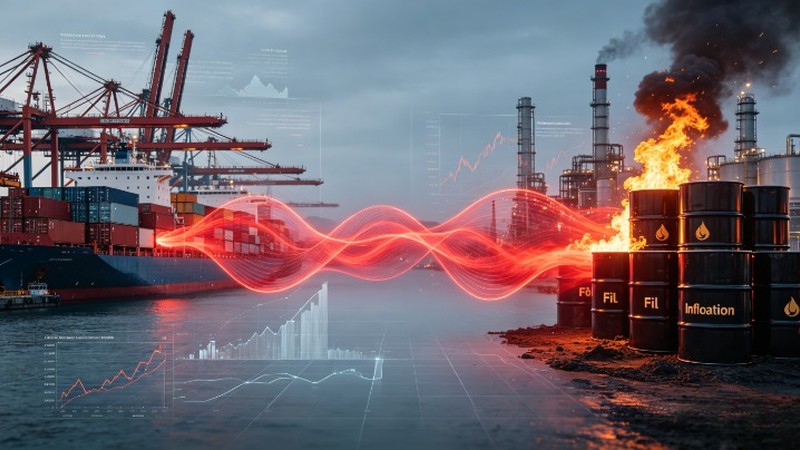
Both tariffs and oil shocks drive inflation, but their mechanisms, speed, and impact on markets and monetary policy differ profoundly. Understanding the tariffs vs oil shock inflation debate is critical for positioning in 2026. Tariffs exert a slower, more concentrated pressure on goods and corporate cost structures. In contrast, an oil shock delivers a rapid, broad-based blow that can immediately reshape market expectations for both inflation and interest rates.
This distinction is not merely academic. For traders and investors, identifying which inflationary force is dominant dictates sector allocation, risk exposure, and expectations for central bank action. As we look towards 2026, the potential for either or both of these shocks to materialise requires a clear analytical framework to navigate the associated volatility.
Tariff Inflation and Oil Shock Inflation Are Not the Same Thing
The core difference between these two inflationary pressures lies in their origin and transmission channels. One is a targeted levy on cross-border trade, whilst the other is a broad-based commodity shock. This fundamental distinction in the tariffs vs oil shock inflation dynamic is crucial for anticipating their market impact.
How Tariffs Impact Imported Goods and Corporate Margins
Tariffs directly increase the landed cost of specific imported goods. A new 10 per cent tariff on imported electronic components, for example, forces an importing company to make a choice: absorb the cost and accept lower profit margins, or pass the higher cost on to consumers.
This process is not instantaneous. It is often subject to existing inventory levels, supply chain contracts, and the competitive landscape. The inflationary impact is therefore sectoral and gradual, affecting the core goods component of the Consumer Prices Index (CPI) over several quarters.
How Oil Shocks Affect Transport, Energy, and Broad Costs
An oil price shock operates with far greater speed and breadth. As a primary input for the global economy, a sudden spike in the price of crude oil immediately translates to higher petrol prices for consumers and increased fuel costs for transport and logistics firms.
This feeds directly into headline inflation. Furthermore, it raises operational costs for nearly every business, from manufacturing (energy-intensive processes) to agriculture (diesel for machinery). This broad-based cost push has a more immediate and widespread effect than the targeted nature of tariffs.
Understanding the Different Timing and Transmission Profiles
The timing profile is a key differentiator in the tariffs vs oil shock inflation comparison. An oil shock’s impact is front-loaded, hitting consumer wallets and headline CPI within weeks. Tariff effects are back-loaded, filtering through complex supply chains over months.
A container ship full of goods ordered before a tariff was imposed will not reflect the higher price. Only new orders will, and even then, it may take time for those goods to be manufactured, shipped, and placed on retail shelves. This lag makes tariff-driven inflation a slower, more persistent force.
Which One Moves Prices Faster?
An oil shock unambiguously transmits to consumer prices faster. The visibility and frequency of petrol price changes make it the more immediate and psychologically potent inflationary force for households, directly influencing their spending behaviour and inflation expectations.
Why an Oil Shock Hits Headline Inflation First
The price of petrol is a direct and significant component of headline inflation metrics. Data from the Office for National Statistics (ONS) in the UK consistently shows that motor fuels have a notable weight in the CPI basket.
A sharp increase in crude prices is passed on at the pump almost immediately due to the high turnover of fuel inventories and the transparent nature of the global oil market. This direct link ensures that an oil shock is felt in the official inflation data for the subsequent month.
Why Tariff Effects Pass Through to Consumers More Gradually
The pass-through from tariffs to consumer prices is far more complex and delayed. A 2019 study by the National Bureau of Economic Research (NBER) on US tariffs found that while import prices rose one-for-one with the tariffs, the pass-through to final consumer prices was incomplete and lagged.
Businesses may initially absorb costs to maintain market share, or they may have long-term contracts that delay the price increase. The journey from the port to the retail price tag involves multiple steps, each adding a layer of delay and potential cost absorption.
How the Consumer Experience Differs Between the Two
The consumer’s perception of tariffs vs oil shock inflation is markedly different. An oil shock is felt as a frequent, visible, and painful increase in a necessary expense: filling up the car. This can lead to an immediate cutback in discretionary spending. Tariff inflation is more insidious.
It may manifest as a washing machine costing £50 more than it did six months ago or a slight increase across a basket of imported goods. It is less salient but steadily erodes real purchasing power over a longer period.
Which One Is Worse for Monetary Policy?
Both shocks present significant challenges for central banks, but oil shocks are often perceived as more dangerous due to their potential to de-anchor inflation expectations. This forces a more reactive and aggressive policy response, creating a tougher environment for risk assets.
How Oil Can Reprice Market Expectations Almost Instantly
Financial markets understand that a major oil shock can rapidly alter the inflation outlook. A spike in crude can cause an immediate sell-off in government bonds (pushing yields higher) and a repricing of inflation swap and breakeven rates.
This reflects the market’s expectation that the central bank will be forced to act decisively to prevent a wage-price spiral. The memory of the 1970s stagflation, triggered by an oil shock, looms large in the institutional memory of central bankers, making them highly sensitive to this specific risk.
How Tariffs Complicate the “Transitory vs. Persistent” Inflation Debate
Tariffs create a dilemma. On one hand, they are a one-off adjustment to the price level of certain goods. A central bank might be tempted to ‘look through’ this, arguing it is a transitory supply-side effect that does not warrant a monetary policy response.
On the other hand, if tariffs are broad and sustained, they can contribute to a more persistent, ‘sticky’ form of inflation as higher costs become embedded in corporate pricing strategies. This ambiguity complicates central bank communication and makes their reaction function harder for markets to predict. This aspect of the tariffs vs oil shock inflation debate is a source of significant market uncertainty.
Why Policy Becomes More Difficult When Both Shocks Occur Together
The nightmare scenario for policymakers is a concurrent tariff and oil shock. This combines a rapid, expectation-shifting rise in headline inflation with a slower, persistent increase in core goods inflation. It presents a classic stagflationary trade-off: tightening policy to combat inflation risks tipping an already slowing economy into recession, while keeping policy loose risks inflation becoming entrenched. This is the most challenging environment for setting monetary policy and the most dangerous for financial assets.
Which One Is Worse for Stocks?
For the stock market as a whole, a major oil shock is typically worse. Its historical correlation with economic recessions and its broad impact on consumer demand tend to trigger widespread, risk-off behaviour. Tariff impacts, whilst damaging, are often more contained to specific sectors.
The Link Between Oil Shocks and Broad Market Risk-Off Behavior
Sustained, high oil prices act as a tax on consumers and a direct input cost increase for most businesses. This dual threat to demand and margins raises the probability of an economic downturn. Consequently, large oil shocks are often catalysts for broad market corrections.
Investors sell cyclical stocks and flee to perceived safe havens like bonds and defensive sectors. While energy stocks may outperform, their gains are rarely enough to offset the negative performance of the wider market index.
The Direct Pressure of Tariffs on Import-Heavy Sectors
Tariffs create a clear list of winners and losers. Sectors heavily reliant on imported goods or complex international supply chains—such as retail, automotive manufacturing, and technology hardware—face immediate margin pressure. Their stock prices will likely underperform.
Conversely, domestically-focused companies that compete with these importers may see their competitive position improve. Therefore, tariff-driven market action is often about rotation and relative performance rather than a wholesale market decline.
Identifying Sectors Vulnerable to Both Shocks
Certain industries are uniquely vulnerable to the combined impact of tariffs vs oil shock inflation. These sectors suffer from both higher input costs for materials and higher energy/transport expenses, creating a severe squeeze on profitability.
| Sector | Impact from Oil Shock | Impact from Tariffs |
| Airlines & Logistics | Jet fuel and diesel are primary operating costs. Margins are immediately compressed. | Tariffs on imported aircraft parts or vehicles increase capital expenditure. |
| Automotive Manufacturing | Higher energy costs for factories and transport costs for supply chains. | Reliance on complex global supply chains for components (e.g., semiconductors, batteries). |
| Heavy Manufacturing | Energy-intensive production processes are highly sensitive to oil and gas prices. | Often reliant on imported raw materials like steel and aluminium. |
The Real Danger in 2026 Is Not Choosing One—It Is the Combination
The most pernicious risk for markets in 2026 is not a singular shock but a combination of both forces. This scenario creates a stagflationary environment that is exceptionally difficult for both policymakers and investors to navigate, where the negative feedback loops of the tariffs vs oil shock inflation dynamic are amplified.
The Compounding Effect of Sticky Goods Prices Plus Higher Energy Costs
When persistent tariff-driven inflation in core goods is met with a concurrent oil shock, overall inflation becomes much harder to control. The ‘stickiness’ of goods prices means that even if the oil shock proves temporary, the underlying inflation rate remains elevated, preventing a swift return to the central bank’s target.
How the Combination Could Delay Easing Cycles
In such a scenario, any market expectations for an easing of monetary policy (rate cuts) would be pushed further into the future. Central banks would be forced to maintain a restrictive stance for longer to ensure inflation expectations do not become unanchored. This ‘higher for longer’ interest rate environment would put sustained downward pressure on equity valuations, particularly for growth stocks.
The Impact on Real Household Spending Power
For households, this combination is devastating. Higher prices for non-discretionary energy and transport costs are compounded by rising prices for a wide range of consumer goods. This double blow severely erodes real disposable income, leading to a sharp contraction in consumer spending, which is the primary driver of most developed economies.
How Traders Can Tell Which Inflation Story the Market Is Pricing In
Discerning which inflation narrative is driving market sentiment requires monitoring a specific set of real-time indicators. Astute traders will watch commodity prices, sector-specific equities, and fixed-income markets to get ahead of the dominant trend.
Monitoring Crude Prices and Energy Equities
This is the most direct signal. A sharp, sustained rally in Brent or WTI crude futures, coupled with outperformance in the energy sector (e.g., the FTSE 350 Oil & Gas index or the XLE ETF in the US), is a clear sign that the market is pricing in an oil shock. The focus of the tariffs vs oil shock inflation debate shifts decisively towards oil in this instance.
Watching Retail and Import-Price-Sensitive Stocks
To gauge the impact of tariffs, traders should monitor the performance of large retailers and other import-heavy sectors. Look for signs of margin compression in their quarterly earnings reports and listen closely to management commentary on supply chain costs. Underperformance of these sectors relative to the broader market indicates that tariff concerns are becoming dominant.
Analyzing Yields, Breakeven Rates, and Central Bank Communications
The bond market provides crucial clues. A sharp spike in short-term inflation breakeven rates suggests an imminent headline inflation shock (oil). A slower, grinding increase in longer-term breakeven rates may signal that the market is worried about the more persistent, sticky inflation associated with tariffs.
Finally, paying meticulous attention to the language used by central bank officials in speeches and meeting minutes can reveal which type of inflation they are more concerned about, guiding expectations for the future path of monetary policy.
Conclusion
The challenge of tariffs vs oil shock inflation presents two distinct paths of risk for 2026. An oil shock is a fast-moving, broad-based threat that can trigger a classic risk-off event and force an aggressive monetary policy response. Tariff inflation is a slower, more targeted pressure that grinds down corporate margins and complicates the policy outlook.
While an oil shock is arguably the greater immediate threat to market stability, the true danger lies in their combination, which could usher in a challenging stagflationary period. For investors and traders, success will depend not on predicting one over the other, but on correctly identifying which narrative the market is pricing in at any given moment and positioning their portfolios accordingly.