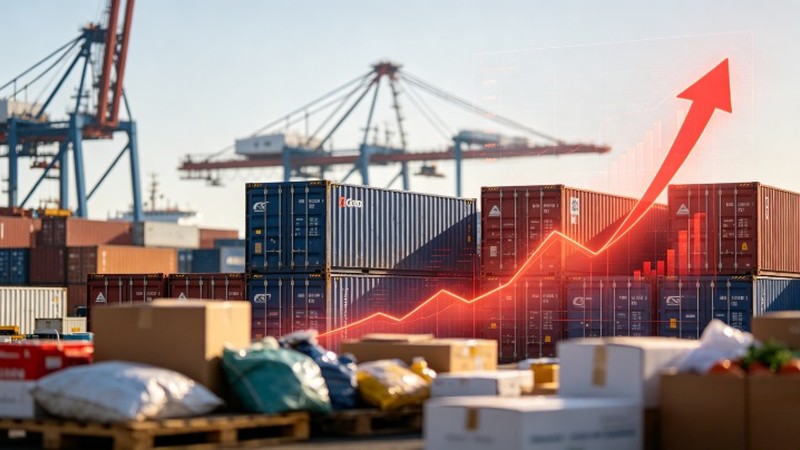
The prospect that do tariffs cause inflation in 2026 is a critical question for traders and investors. The direct answer is that new import levies almost certainly exert upward pressure on the prices of specific goods. However, the transmission into broader, sustained inflation is not uniform or guaranteed.
The impact is channelled through a complex mechanism involving import costs, corporate profit margins, and consumer behaviour, with its perceived severity amplified by concurrent market dynamics, such as recent volatility in energy prices which has heightened market sensitivity to any new inflationary impulse.
This analysis unpacks the mechanics of tariff-induced price changes, examines the key data points for 2026, and provides a strategic framework for traders navigating a market where cost-push shocks are becoming an increasingly important variable.
Do Tariffs Always Cause Inflation? The Short Answer is Yes, But Unevenly
Tariffs invariably introduce a cost wedge that pushes prices up, but the magnitude and scope of this effect differ significantly across the economy.
While the initial impulse is inflationary for targeted goods, its journey into the headline consumer price index (CPI) is complex, filtered by corporate decisions, consumer demand elasticity, and supply chain structures. Understanding this uneven transmission is key to accurately forecasting the net effect on inflation.
Why Tariffs Act Like a Tax on Imports
At its core, a tariff is a tax levied on imported goods, payable by the domestic importer. This immediately increases the landed cost of these products before they even enter the domestic supply chain. For example, a 10% tariff on £1,000 worth of imported electronic components raises the initial cost for the UK-based assembler to £1,100.
This initial price shock is the primary channel through which tariffs introduce inflationary pressure. It is a direct, quantifiable increase in input costs for businesses that rely on international suppliers.
Why the Pass-Through Rate Matters More Than the Tariff Headline
The headline tariff rate is not the final word on the consumer price impact. The crucial variable is the pass-through rate—the percentage of the tariff cost that is ultimately passed on to the end consumer. Economic studies consistently show that for many consumer goods, this rate is close to 100%.
This means that foreign exporters often do not lower their pre-tariff prices to absorb the cost, leaving domestic importers and, subsequently, consumers to bear the full brunt. A low pass-through rate would imply companies are absorbing the cost in their margins, while a high rate suggests a direct impact on shelf prices.
Why Some Categories Move Faster Than Others
The speed and extent of price rises are not uniform. They depend heavily on two factors: the complexity of the supply chain and the price elasticity of demand for the final product.
- Finished Goods: Tariffs on products like cars or electronics, which have few domestic substitutes, are often passed through to consumers quickly as retailers have little choice but to increase prices.
- Intermediate Goods: For components like steel or microchips, the cost increase may be absorbed partially by manufacturers further down the chain to remain competitive, leading to a slower and more diffused inflationary effect. The question of do tariffs cause inflation in 2026 for these goods depends on the industry’s ability to absorb costs.
How Tariff Inflation Works in Practice
The journey from a tariff announcement to a change in the consumer price index involves a series of strategic decisions made by businesses at each stage of the supply chain. Each participant—importer, manufacturer, retailer—faces a choice: absorb the new cost and accept lower profits, or pass it on and risk losing market share. The collective outcome of these decisions determines the ultimate inflationary impact.
Importers Absorb Part of the Hit
The first point of impact is the importer. While many attempt to negotiate lower prices from foreign suppliers, this is often unsuccessful, especially if the supplier has a diversified global market. Faced with a higher non-negotiable cost, importers may initially absorb some of it to maintain relationships with their domestic wholesale or retail clients. However, this is not a sustainable long-term strategy and typically only serves as a temporary buffer.
Retailers Try to Pass Costs Through
Retailers who buy from importers face the direct dilemma of raising shelf prices. In competitive markets, the ability to do so depends on consumer loyalty and the availability of non-tariffed alternatives.
A supermarket might be able to pass on the full cost of imported speciality foods, but a clothing retailer might struggle if consumers can easily switch to domestically produced or non-tariffed brands. The decision to raise prices is a calculated risk based on perceived consumer tolerance.
Consumers End Up Paying More for Key Goods
Ultimately, a significant portion of the tariff cost lands on the consumer. This is most visible in goods where import penetration is high and demand is relatively inelastic, such as certain electronics, household appliances, and vehicles.
While consumers may not see a line item for ‘tariff’, they experience it as a general price increase on these items, which directly contributes to the ‘goods’ component of CPI inflation. This directly addresses the question: do tariffs cause inflation in 2026? For the consumer’s wallet, the answer is often yes.
Margins Shrink When Firms Cannot Fully Pass It On
In situations where intense competition or weak consumer demand prevents a full pass-through, companies are forced to absorb the tariff costs. This leads to margin compression, which can have secondary economic effects.
Reduced profitability may lead to lower corporate investment, hiring freezes, or reduced shareholder returns. While this scenario mutes the immediate inflationary impact, it can act as a drag on economic growth over the medium term.
| Scenario | 20% Tariff Cost | Cost Absorbed by Importer/Retailer | Final Price Increase for Consumer | Effective Pass-Through Rate |
| Full Pass-Through | £100 | £0 | £100 | 100% |
| Partial Pass-Through | £100 | £40 (Margin Hit) | £60 | 60% |
| Zero Pass-Through | £100 | £100 (Margin Hit) | £0 | 0% |
What the 2026 Data is Saying So Far
Forward-looking analysis for 2026 requires examining economic modelling and the current commentary from monetary authorities. While precise forecasts are challenging, the available data and institutional perspectives provide a strong indication of the potential inflationary consequences of new trade levies. The consensus suggests that any new tariffs will introduce measurable, though not uncontrollable, price pressures.
Economic Models and Price Transmission Ranges
Economic modelling, similar to analyses conducted by academic institutions and bodies like the Peterson Institute, consistently estimates that the price transmission of tariffs to import prices is near-total.
These models suggest that a broad-based 10% tariff could, over a 12-month period, add between 0.5 and 0.7 percentage points to the headline CPI rate. The question is not if tariffs cause inflation in 2026, but by how much, with most models pointing to a tangible, statistically significant impact.
Why Household Effects Still Matter Even After Policy Shifts
Regardless of the specific mechanisms or policy framing, the impact on household purchasing power remains a primary concern. Analysis indicates that the cost of tariffs is borne disproportionately by low and middle-income households, as they spend a larger portion of their income on tradable goods like food, clothing, and electronics.
Therefore, even a modest rise in the CPI due to tariffs can translate into a significant squeeze on real disposable incomes, potentially dampening consumer spending and overall economic activity.
Why Inflation Progress Has Stalled in Recent Central Bank Commentary
Recent statements from major central banks, including the Bank of England and the US Federal Reserve, highlight that the final leg of returning inflation to the 2% target is proving difficult. Inflation has become ‘sticky’. In this context, a new cost-push shock from tariffs is particularly unwelcome.
It complicates monetary policy by pushing inflation up for reasons unrelated to domestic demand, creating a dilemma for policymakers who may be reluctant to raise rates and slow the economy further to counteract a supply-side price shock.
Tariff Inflation is Not the Same as Demand-Driven Inflation
It is crucial for traders to distinguish between different sources of inflation. Tariff-induced price rises stem from a supply-side constraint (a cost increase), which has different implications for the economy and monetary policy compared to inflation driven by excess consumer demand. Central banks view these shocks differently, which in turn affects their reaction function and market expectations.
One-Time Price Level Shock vs Persistent Inflation Cycle
In theory, a tariff creates a one-time adjustment to the price level of affected goods. Once prices have risen to reflect the tariff, the rate of inflation should stabilise, assuming no further tariff increases.
This is distinct from a persistent inflationary cycle, where rising wages and strong demand create a self-reinforcing upward spiral in prices. The core debate around do tariffs cause inflation in 2026 centres on whether this one-time shock could morph into something more persistent.
Why Central Banks Treat Tariff Inflation Differently
Monetary policymakers often ‘look through’ supply-side shocks like tariffs, as raising interest rates to combat them can be counterproductive. Higher rates would dampen aggregate demand, slowing the economy, without addressing the root cause of the price increase (the tariff itself).
Central banks are more likely to act only if there is evidence of second-round effects, such as the tariff-induced price rises leading to higher inflation expectations and subsequent wage demands.
When a ‘Temporary’ Tariff Shock Becomes More Persistent
A tariff shock can become more embedded in the inflation trend if it occurs in an already-high inflation environment. If consumers and businesses already expect prices to rise, they are more likely to accept tariff-related increases and incorporate them into their future wage and price-setting behaviour.
This de-anchoring of inflation expectations is the primary risk that would force a central bank to respond more aggressively to a tariff shock than it otherwise would.
Why Markets Care More in 2026 Than in a Normal Year
The market’s reaction to the threat of tariff inflation in 2026 is amplified by the prevailing macroeconomic backdrop. After a period of significant inflation, markets are highly sensitised to any new price pressures.
This sensitivity manifests rapidly in government bond yields, interest rate expectations, and equity market valuations, making the tariff debate a first-order concern for asset allocation.
Oil Shock is Raising Inflation Sensitivity
Recent upward moves in global oil prices have already put markets on edge about a potential resurgence in headline inflation. In this environment, the prospect of additional cost-push pressure from tariffs is viewed with greater alarm.
The two shocks are seen as potentially compounding, making it harder for inflation to return to its target and forcing central banks to maintain a more hawkish stance for longer.
Treasury Yields and Rate-Cut Expectations React Fast
The bond market is the primary barometer for inflation fears. Talk of new tariffs that could boost inflation causes traders to sell government bonds, pushing yields higher. Simultaneously, expectations for central bank rate cuts are pushed further into the future or priced out entirely.
For traders, this means that headlines about trade policy can have an immediate and direct impact on the pricing of fixed-income assets and interest rate futures.
Why Equity Valuations Dislike Cost-Push Inflation
Equity markets are particularly vulnerable to cost-push inflation. It presents a dual threat: firstly, it can compress corporate profit margins if costs cannot be fully passed on; secondly, the typical central bank response—or lack of easing—leads to higher discount rates, which reduces the present value of future earnings and weighs on stock valuations. This combination of lower earnings and a higher cost of capital is a negative formula for equity indices.
What Traders and Investors Should Watch Next
To effectively navigate the market’s response to the question of do tariffs cause inflation in 2026, traders must monitor a specific set of high-frequency data and policy signals. These indicators will provide the earliest clues as to the actual pass-through rate and the potential reaction from monetary authorities, allowing for more informed positioning in rates, FX, and equity markets.
- Import Price Index (IPI): This is the most direct measure of the initial impact. A sharp rise in the IPI for tariffed goods will be the first official confirmation that costs are increasing at the border.
- Core Goods Inflation (within CPI/PCE): Monitor the components of consumer inflation reports that cover tradable goods. An acceleration here, while services inflation remains stable, would be a clear sign of tariff pass-through.
- Central Bank Language on Pass-Through: Pay close attention to speeches, minutes, and press conferences from central bank officials. Any mention of ‘second-round effects’ or concerns about inflation expectations becoming ‘unanchored’ would signal a more hawkish policy response is being considered.
- Oil Prices vs. Tariff Headlines: Assess the market’s relative sensitivity. If bond yields react more aggressively to a tariff announcement than to a similar percentage increase in oil prices, it suggests trade policy is becoming the dominant driver of inflation fears.
In conclusion, while tariffs are inherently inflationary at the product level, their translation into a persistent, broad-based inflation problem in 2026 is contingent on the economic context. For traders, the actionable strategy is not to make a binary bet on inflation, but to monitor the key transmission indicators closely and position for a market that will remain highly sensitive to cost-push shocks, likely leading to higher volatility in bond yields and a more cautious outlook for equities.