Yes, under specific and severe circumstances, a disruption in the Strait of Hormuz can push oil to $200 per barrel. This outcome is not a certainty for any form of disruption; its probability depends on three critical variables: the duration of the closure, the actual volume of supply lost, and the capacity of alternative routes and strategic reserves to compensate for the shortfall.
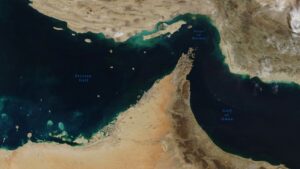
The Strait of Hormuz is the world’s most vital oil transit chokepoint, with approximately 21 million barrels of petroleum liquids passing through it daily. This volume represents over 20% of global consumption, making any sustained blockage a direct and profound threat to global energy security and price stability.
Therefore, understanding the mechanics of a potential closure is essential for any market participant questioning if can the Strait of Hormuz push oil to 200.
Why Hormuz Matters More Than the Headline
The Strait of Hormuz is one of the most important chokepoints in the global energy market, which is why investors keep asking whether the Strait of Hormuz push oil to extreme levels in a crisis. Because a large share of global crude exports passes through this narrow route, any disruption can quickly raise freight costs, insurance premiums, and oil futures prices. In other words, Hormuz does not just affect regional producers; it can push oil higher worldwide.
This is also why the debate over whether Hormuz could send oil toward $200 matters so much. A closure would not remove just one country’s barrels from the market. It could disrupt several supply streams at the same time, tightening the physical market far faster than many other geopolitical shocks. If the outage were prolonged and replacement supply proved limited, the Strait of Hormuz could drive crude sharply higher, forcing the market to price scarcity rather than fear alone.
How a Hormuz Disruption Moves Through the Oil Market
A disruption’s impact propagates through the global financial and physical markets in a distinct, four-stage sequence. Understanding this transmission mechanism is key to assessing how quickly prices could escalate and why the initial headlines only tell part of the story.
Step 1: Headline Shock Hits Futures Markets
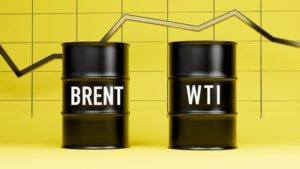
The first reaction to a Strait of Hormuz disruption would hit the futures market almost instantly. Brent and WTI contracts would likely jump as algorithmic systems, macro funds, and short-term traders rush to reprice geopolitical risk.
At this stage, the move is driven more by fear and positioning than by confirmed physical shortage. That is why even an early headline can push oil sharply higher, with prices potentially jumping $10 to $20 per barrel within hours.
This is the first reason traders ask whether the Strait of Hormuz push oil to extreme levels. Before physical barrels are lost, the paper market usually reacts first, and it reacts fast.
Step 2: Shipping Risk Tightens Physical Supply
The second stage begins when the disruption starts affecting tanker flows, freight rates, and marine insurance. If ships face higher war-risk premiums or avoid the route altogether, the market stops treating the event as just a political scare and starts pricing a real supply problem.
That is the point where the Strait of Hormuz could drive crude prices sharply higher. The issue is no longer only futures volatility. Buyers of physical barrels may have to pay more for nearby cargoes, while prompt crude tightens as shipping risk reduces available supply.
Step 3: Product Markets React to Crude Costs
Once crude becomes more expensive or harder to secure, refined product markets usually react next. Petrol, diesel, and jet fuel prices move higher as refiners pass on rising feedstock costs and compete for replacement crude. In stressed markets, crack spreads can widen as fuel prices climb faster than crude benchmarks.
This matters because a Hormuz disruption does not stay limited to oil futures. It can push oil prices higher across the broader energy chain, feeding directly into transport, aviation, freight, and industrial costs. That wider transmission is what makes the shock more than a temporary headline event.
Step 4: Inflation Fears Widen the Macroeconomic Impact
The final stage is macro transmission. As fuel costs rise, inflation pressure builds, consumer spending weakens, and business input costs increase. Markets then begin to weigh not only the oil shock itself, but also the risk of slower growth and tighter financial conditions.
If the disruption lasts long enough, the market may start pricing more than fear. It may start pricing sustained physical scarcity. In that kind of scenario, the Strait of Hormuz could push oil into a much more extreme rally and push Brent toward $200, not because of rhetoric alone, but because supply loss, shipping disruption, and inflation risk begin reinforcing each other.
The Three Disruption Scenarios Traders Must Understand
The price impact of any Strait of Hormuz incident depends on two things: severity and duration. A brief disruption may lift crude on fear alone, but a prolonged event is far more dangerous because it can tighten physical supply, disrupt shipping, and drain market buffers. For traders, the challenge is to tell the difference early.
That is why a scenario-based approach matters. It helps the market judge whether the event is just another geopolitical scare or the start of a real supply crisis. In most cases, Hormuz may push oil higher without breaking the global balance. But only the most severe scenario is likely to send oil toward $200. That is the condition under which the Strait of Hormuz can push oil to 200 and turn a risk premium into a full-scale price shock.
| Scenario | Duration | Market Impact & Price Action | Is $200 Oil Plausible? |
| 1. Brief Disruption | 24-72 hours | Sharp futures-led spike, but limited physical impact. Prices rise quickly, then ease as flows resume. | No. This is a sentiment-driven event, not a fundamental supply crisis. |
| 2. Prolonged Disruption | 1-4 weeks | Sustained premium as physical supply tightens. Market focus shifts to inventories, SPR releases, and spare capacity. | Unlikely, but prices could test and exceed $150/bbl depending on the perceived duration. |
| 3. Severe & Extended Choke | 1+ month | Extreme volatility with strong upward pressure. Supply losses overwhelm buffers, pushing prices higher until demand weakens. | Yes. This is the specific scenario where $200 oil becomes a realistic possibility. |
Why Duration Matters More Than the First Spike
The first oil spike in a crisis is usually driven by fear, but the lasting move depends on duration. Short disruptions can often be absorbed by inventories, strategic reserves, and spare production capacity. Longer disruptions are more dangerous because they steadily drain those buffers and tighten the physical market.
That is why duration matters more than the initial jump. Once the market starts pricing a sustained supply deficit instead of a temporary shock, oil prices can rise much further and stay elevated for longer.
Can Reserves and Rerouting Stop the Move?
Strategic reserves and alternative pipelines are crucial market stabilisers, but they are best understood as shock absorbers, not permanent solutions. They can cushion the initial blow but cannot fully compensate for a sustained, large-scale outage.
- Strategic Petroleum Reserves (SPRs): SPRs can slow the initial shock, but they cannot replace a major supply route for long. IEA emergency stocks exceed 1.5 billion barrels, giving the market an important crisis buffer. The limitation is speed and scale: releases must be coordinated, drawdown rates are capped, and reserves are finite. That means SPRs can steady markets for a period, but they do not add fresh production.
- Rerouting and Pipelines: Alternative pipelines can keep some Gulf barrels moving if Hormuz is disrupted, but only at the margin. Saudi Arabia’s East-West Petroline and the UAE’s Fujairah route provide valuable bypass capacity, yet together they cover only a fraction of normal Hormuz flows. In a short disruption, that helps. In a prolonged one, it is not enough to prevent the wider market from tightening.
These measures are highly effective in a ‘Prolonged Disruption’ scenario but would be quickly overwhelmed in a ‘Severe and Extended Choke’. Their existence makes a brief spike to $200 less likely, but their limitations are precisely why can the Strait of Hormuz push oil to 200 remains a valid question under a worst-case scenario.
Conclusion
The Strait of Hormuz is not just another geopolitical flashpoint. It is a core artery of the global oil trade, and any disruption there can quickly send oil higher across futures, shipping, and physical crude markets. But for the Strait of Hormuz push oil to $200, the market would need more than an initial fear spike. It would need a severe and prolonged disruption that removes enough supply for long enough to overwhelm inventories, reserve releases, and alternative export routes.
That is why $200 oil remains a tail-risk scenario, not the central case. A short disruption can lift prices sharply, but only an extended supply shock is likely to drive crude toward $200 or push Brent into a much more extreme rally. For traders, that is the real takeaway: the first spike matters, but duration and physical supply damage matter far more.
Frequently Asked Questions (FAQ)
How much oil passes through the Strait of Hormuz?
About 21 million barrels of petroleum liquids pass through the Strait of Hormuz each day.
That includes crude oil and condensates, and it accounts for just over 20% of global daily oil consumption. This is why the strait is widely seen as the world’s most important oil transit chokepoint.
Would a brief disruption be enough to send oil to $200?
No, a short disruption would probably not be enough.
A disruption lasting 24-72 hours could trigger a sharp spike as traders price in fear and uncertainty, but prices would likely ease if physical flows resume quickly. For oil to reach $200, the market would usually need a sustained supply loss, not just a temporary shock.
Why does closure duration matter so much?
Because duration determines whether the event is temporary or becomes a real supply crisis.
A short disruption is mainly a sentiment shock, while a prolonged closure drains inventories, strains spare capacity, and tightens the physical market. The longer the outage lasts, the more likely prices must rise to reduce demand and restore balance.
Can emergency reserves offset a prolonged closure?
They can soften the shock, but they cannot fully replace Hormuz flows for long.
Strategic reserves are designed to buy time and stabilise markets during an emergency, not permanently replace a major transit route. If roughly 21 million barrels per day were disrupted for an extended period, even large reserve releases would eventually be stretched.