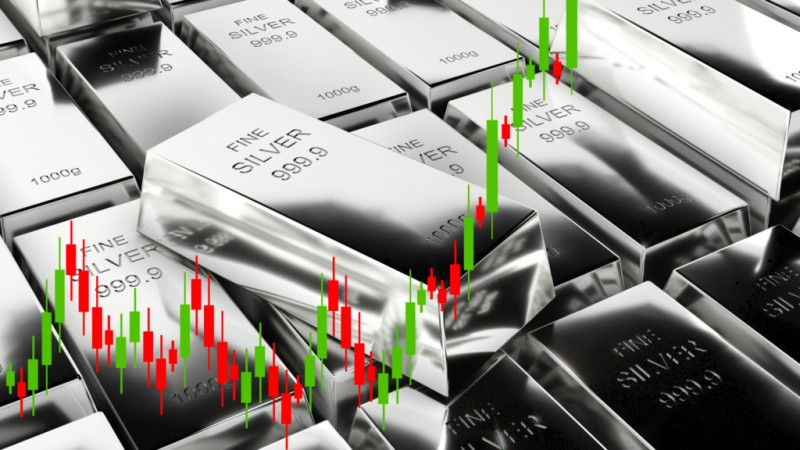
💡 Confronting Reality: Why the Spot Price is a Dead End for Your Silver Investment
Let us be unequivocally clear: the silver ‘spot price’ you see on financial terminals is a phantom. It is an indicative price for large-bar contracts, and it is a figure you, as an investor, will never transact at. To anchor your silver investment strategy to this number is the first, and most common, analytical failure. For those serious about commodity trading, understanding the gap between spot prices and physical silver or silver ETFs is the only way to achieve real-world profitability in 2026.
📊 Deconstructing the Premium: Minting, Dealer Margins, and Scarcity
The moment silver is processed into physical silver coins or smaller bullion, it accrues a ‘premium’. This is not merely a dealer’s margin; it is the quantifiable cost of fabrication and logistics essential to any silver investment. A one-ounce coin carries a higher premium than a 1-kg bar because its manufacturing cost per ounce is higher. This is a fundamental, unavoidable cost of entry in the commodity trading landscape.

📈 The Bid-Ask Spread: The Toll Gate of Liquidity
The second cost is the bid-ask spread—the difference between a dealer’s selling price (ask) and buying price (bid). This spread is the fee for liquidity. For common bullion like a Royal Mint Britannia, the spread may be tight, perhaps 3-5%. For a numismatic or semi-collectable coin, it can widen dramatically. This spread represents an immediate, embedded loss upon purchase that must be overcome by capital appreciation before a position turns profitable. Neglecting this is financial malpractice.
🧭 2026 Silver Investment Vehicle Matrix: A Quantitative Showdown
An informed decision is a data-driven one. We move beyond simplistic arguments to a quantitative comparison of the primary silver investment vehicles available to a UK-based investor. The critical metric here is the ‘Effective Total Cost of Ownership’ (ETCO), a proprietary model calculating the all-in cost over a hypothetical five-year holding period, based on a £10,000 initial allocation. All data is benchmarked against the London Bullion Market Association (LBMA) silver price as of Q1 2026.
| Investment Vehicle | Upfront Cost (Premium + Spread) | Annual Holding Cost (Storage/TER) | Liquidity Rating (1-5) | Counterparty Risk Rating (1-5) | 5-Year ETCO Estimate |
|---|---|---|---|---|---|
| Physical Bullion (1oz Coins) | 8% – 15% | 0.5% – 1.5% (Insured Storage) | 3 (Moderate) | 1 (Very Low) | ~18% |
| Physical Bullion (1kg Bars) | 4% – 8% | 0.4% – 1.2% (Insured Storage) | 2 (Low) | 1 (Very Low) | ~12% |
| Silver ETF (e.g., SLV, SSLN) | 0.1% – 0.3% (Brokerage + Spread) | 0.20% – 0.50% (TER) | 5 (Very High) | 4 (Moderate-High) | ~2.5% |
| Silver Mining Equities | 0.1% – 0.5% (Brokerage + Stamp Duty) | N/A (Dividend Potential) | 5 (Very High) | 5 (Very High) | N/A (Market Risk Dominates) |
Data captured Q1 2026. ETCO is an estimate and subject to market volatility and changes in fee structures. Ratings are on a 1 (Low Risk/Cost) to 5 (High Risk/Cost) scale.
💰 Vehicle Analysis (I): Physical Bullion – The Ultimate Hedge or an Inefficient Asset?
Physical silver is the bedrock of hard-asset investing. Its primary function is not necessarily spectacular returns, but the mitigation of systemic financial risk. It is an asset held outside the digital banking system, free from the counterparty risk inherent in nearly every other financial instrument.
✅ Advantages: Counterparty Risk Mitigation and Tangibility
In an era of central bank digital currencies and ever-present bail-in legislation, holding physical silver means you have direct, unencumbered title to your asset. There is no fund manager, no custodian bank, and no prospectus that can alter its nature. This is its core, immutable value proposition. For high-net-worth individuals concerned with capital preservation, this attribute is paramount.
⚠️ Financial Risk Deep Dive: Storage, Insurance, and Illiquidity
The advantages come at a steep price. Storing bullion at home presents a significant security risk. Professional, fully-allocated, and insured vaulting is the only prudent option, costing between 0.5% and 1.5% of the asset’s value annually. This is a direct drag on performance.
Furthermore, liquidity is a major friction point. Selling physical silver requires finding a reputable dealer, verifying the product, and agreeing on a price, which will be below the prevailing spot. This process can take days. In the UK, investors must also consider Capital Gains Tax (CGT) on profits for most silver bullion, unlike CGT-exempt coins like the Silver Britannia. This tax burden must be factored into any expected net return.
🧭 Expert Verdict: When Physical Allocation is Non-Negotiable
An allocation to physical silver is a strategic decision, not a speculative one. It is most appropriate for investors whose primary objective is wealth insurance against currency debasement or systemic financial instability. A holding of 5-10% of one’s net worth in physical precious metals serves as a portfolio stabiliser. If your time horizon is less than five years or your priority is speculative gain, the high entry and holding costs make it a structurally inefficient choice.
📈 Vehicle Analysis (II): Silver ETFs – The High Cost of Convenience
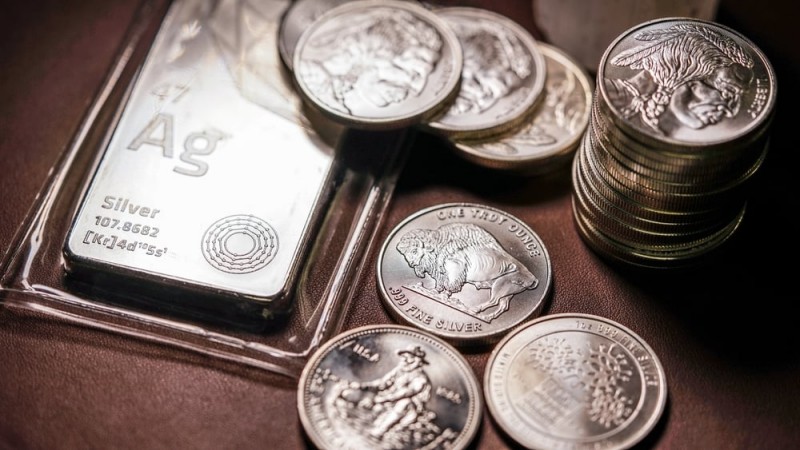
Silver Exchange-Traded Funds (ETFs) present themselves as a modern, efficient proxy for holding silver. They are liquid, can be held within tax-efficient wrappers like ISAs and SIPPs, and remove the burden of storage and insurance. However, this convenience is paid for through a series of explicit and implicit costs, which an analyst must scrutinise.
🔍 Unpacking the Total Expense Ratio (TER): The Silent Portfolio Drain
The most visible cost is the Total Expense Ratio (TER), an annual fee covering management, storage, and administrative costs. While a TER of 0.40% may seem negligible, it compounds. Over a decade, this fee alone erodes 4% of your capital. Compare this to a single purchase of physical bullion where the premium is a one-off cost. As a long-term holder, the cumulative effect of the TER can eventually exceed the initial premium on a physical bar, representing a ‘convenience tax’ of several percentage points.
⚠️ Counterparty & Custodial Risk: Do You Truly Own the Silver?
This is the critical, often overlooked, risk. When you buy an ETF, you do not own silver. You own a share in a trust that claims to own the silver. Your claim is subject to the performance of the custodian (e.g., a large investment bank) and the terms of the prospectus. The metal is often unallocated, meaning it is part of a larger pool of metal with multiple claimants. This introduces a layer of counterparty risk that physical ownership explicitly eliminates. The Financial Conduct Authority (FCA) consistently warns investors to understand the underlying structure of complex products like ETFs.
📊 Tax Efficiency Analysis: ISA/SIPP Eligibility vs. Physical CGT
For UK investors, the ability to hold a silver ETF within a tax-free wrapper is its most compelling advantage. This can completely negate CGT, providing a significant tailwind to net returns. The decision thus becomes a direct trade-off: are you willing to accept the counterparty risk and annual fee drag of an ETF in exchange for superior tax treatment and liquidity? For active traders and those utilising registered accounts, the ETF is often the logical choice. For long-term wealth preservationists, the risks may outweigh the benefits.
🚀 Vehicle Analysis (III): Mining Equities & Futures – The Leverage Play
Investing in companies that mine silver or trading silver futures contracts is not an investment in silver; it is a leveraged speculation on the price of silver. These instruments offer the potential for amplified returns but come with a commensurate, and often greater, amplification of risk.
⚙️ Operational Gearing: Why Miners Amplify Silver Price Moves
A silver mining company’s profitability is acutely sensitive to the price of silver. A miner may have a fixed all-in sustaining cost (AISC) of $20 per ounce. At a silver price of $25, their profit is $5. If the silver price rises 20% to $30, their profit doubles to $10—a 100% increase. This operational gearing is what attracts speculators. However, it works in reverse. A modest fall in the silver price can erase profitability entirely and lead to catastrophic equity performance.
🌍 The Perils of a Proxy: Geopolitical, Managerial, and Extraction Risks
Mining stocks are a deeply flawed proxy for the metal itself. An investor is exposed to a raft of risks unrelated to silver: geopolitical instability in the jurisdiction of the mine, poor management decisions, labour strikes, operational failures, and unforeseen geological challenges. Any of these can cause a company’s share price to collapse, even during a raging bull market for silver. A robust risk management guide is not optional; it is essential when dealing with such volatility.
📈 2026 Outlook: Are Valuations Justified in the Current Cycle?
As of 2026, the green energy transition continues to place structural demand on industrial silver. However, many senior silver producers are trading at forward price-to-earnings ratios that have already priced in significant silver appreciation. The strategic play is to identify junior miners with viable deposits in politically stable jurisdictions that are undervalued relative to their peers. This requires deep, sector-specific due diligence far beyond simply having a bullish view on the metal.
⚖️ Final Mandate: A Strategist’s Allocation Model for a £100,000 Portfolio
There is no universally ‘best’ way to invest in silver. The optimal strategy is dictated by your personal objectives, risk tolerance, and time horizon. As a financial strategist, here is how I would approach allocation based on two distinct investor profiles.
🛡️ Scenario 1: Capital Preservation in a High-Inflation Environment
Objective: Protect purchasing power over a 10+ year horizon.
My Allocation:
– **70% Physical Silver (1kg Bars):** The core of the allocation. The lower premium on larger bars and the focus on long-term holding minimises the impact of transaction costs. Stored in a professional, audited vault.
– **30% Silver ETF (within a SIPP):** This portion provides liquidity and tax efficiency. It can be used for rebalancing or if funds are needed without disturbing the core physical holding.
🏹 Scenario 2: Aggressive Growth and Speculation
Objective: Maximise returns over a 2-3 year cycle, based on a bullish macroeconomic forecast for silver.
My Allocation:
– **60% Silver ETF:** The primary vehicle for capturing price upside due to its low entry cost and high liquidity. Held in an ISA to maximise tax-free gains.
– **40% Diversified Basket of Silver Mining Equities:** Focus on a mix of established producers and promising junior explorers. This provides the leveraged exposure to the silver price that is the core of the speculative thesis.
⏳ The Opportunity Cost of Holding a Non-Yielding Asset
It must be stated that silver, in its physical or ETF form, is a Tier 1 asset that produces no yield. In a high-interest-rate environment, the opportunity cost of holding silver is the risk-free return one could earn on government bonds. This is a critical factor. The decision to hold silver is an implicit statement that you expect its price appreciation to outperform prevailing yields, or that you value its insurance properties above any income generation.
Conclusion and Investment Outlook
Investing in silver in 2026 is a complex but potentially rewarding endeavour. The dual drivers of monetary hedging and industrial demand create a compelling fundamental backdrop. However, success is not achieved by simply buying ‘silver’. It is achieved by selecting the correct investment vehicle that aligns with your financial objectives, cost considerations, and risk profile.
The disciplined investor does not chase the spot price. They calculate their Effective Total Cost of Ownership, understand the trade-offs between physical security and paper convenience, and allocate capital with strategic intent. Do not mistake speculation for investment. Analyse the data, define your mandate, and execute with precision.
FAQ
- 1. Is it better to buy silver coins or bars in the UK?
- For pure investment, 1kg bars typically offer a lower premium per ounce, making them more cost-effective for large allocations. However, Royal Mint Silver Britannia coins are Capital Gains Tax (CGT) exempt for UK residents, which can be a significant advantage, making them superior for smaller, taxable investments.
- 2. Does a silver ETF track the silver price perfectly?
- No. While highly correlated, an ETF’s price can deviate slightly due to tracking error, management fees (TER), and cash drag. Over the long term, the ETF’s value will underperform the spot price of silver by at least the amount of its annual expense ratio.
- 3. What is the single biggest risk with silver mining stocks?
- Operational risk. A mine can face a catastrophic failure (e.g., a flood or collapse), a government can nationalise assets, or management can make poor hedging decisions. These events can bankrupt a company even if the price of silver is rising, highlighting that it is a business investment, not a direct commodity investment.
- 4. How is silver regulated in the UK?
- Physical bullion itself is largely unregulated. However, firms providing silver-backed products, such as ETFs or futures, are regulated by the Financial Conduct Authority (FCA). Investors should always ensure they are dealing with an FCA-authorised firm when investing in silver-related financial products.
- 5. Why is there VAT on silver but not on gold in the UK?
- Investment-grade gold is recognised as a financial instrument and is exempt from VAT in the UK and EU. Silver, however, is classified as an industrial metal and is therefore subject to the standard VAT rate of 20% when purchased new. This makes professional storage in bonded warehouses (which defer the VAT) or purchasing second-hand silver (on the VAT margin scheme) critical for UK investors.