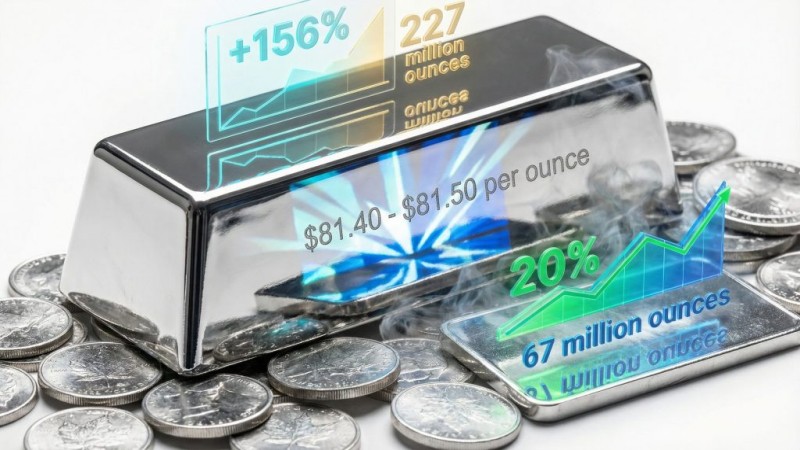
The Core Premise: Does Silver Still Shine in a 2026 Portfolio?
In the financial theatre of 2026, silver investment commands a complex role. It is no longer sufficient to parrot the historical narrative of a mere monetary metal, a second fiddle to gold. A professional analysis of commodity trading demands a quantitative deconstruction of its dual identity: a strategic industrial commodity and a hard monetary asset. 💡
Technological Imperative: Decoding Silver’s Industrial Demand
📊 The most significant driver for silver investment, often under-reported in retail analysis, is silver’s non-negotiable role in green technology. The global push towards decarbonisation is fundamentally a mandate for industrial physical silver consumption. It is a critical component in photovoltaic cells and is indispensable in the electric vehicle (EV) market. Data from 2025 shows a consistent uptick in industrial demand for commodity trading, now accounting for over 50 per cent of annual consumption. This structural demand driver makes silver ETFs and metal holdings a multi-decade horizon play.
Monetary Resilience: 2026 Geopolitical & Inflationary Headwinds
📈 Conversely, its function as a monetary hedge remains potent. The inflationary pressures witnessed post-pandemic have embedded a deep-seated scepticism towards fiat currencies. Whilst central banks attempt to navigate a delicate balance, geopolitical instability, particularly in Eastern Europe and the South China Sea, provides a persistent bid for tangible, non-sovereign assets. In this context, silver offers a lower entry point than gold, rendering it a more accessible safe-haven for a broader investor base.

2026 AUDIT REPORT: Four Key Silver Investment Channels: A Risk & Cost Matrix
An investment decision devoid of a granular cost and risk analysis is pure speculation. The following matrix is our core asset, moving beyond superficial descriptions to provide an institutional-grade audit of the four primary channels for silver exposure available to a UK-based investor in 2026. This data is compiled from market analysis conducted in Q4 2025. 🧭
| Investment Channel | Total Cost of Ownership (TCO) | Counterparty & Security Risk | Liquidity & Speed | Complexity Score (1=Simple, 5=Complex) | Best Use Case |
|---|---|---|---|---|---|
| Physical Bullion (Coins/Bars) | High (Premiums 5-20% + Storage 0.5-1.5% p.a. + Insurance) | Low (if vaulted), High (if home-stored) | Low-Medium (Dealer dependent, 2-5 days) | 3 | Long-term wealth preservation; ultimate hedge. |
| Silver ETFs/ETPs | Low (TERs 0.20-0.50% p.a. + trading commissions) | Medium (Custodian & issuer risk; unallocated vs allocated) | Very High (Instantaneous during market hours) | 1 | Liquid, low-cost exposure to spot price; short-to-medium term positions. |
| Silver Mining Stocks | Low (Trading commissions + bid-ask spread) | Very High (Operational, geopolitical, management risk) | High (Dependent on exchange and stock) | 4 | Leveraged, high-risk speculation on silver price appreciation. |
| Silver Futures/CFDs | Variable (Spreads + overnight financing) | High (Leverage risk, broker counterparty risk) | Very High (24/5 market access) | 5 | Short-term, active trading and hedging strategies. |
Channel One: Physical Bullion (Coins & Bars) – The Tangibility Premium and Its Burdens
For the purist, physical silver is the only true investment. It is an asset without counterparty risk—you hold it, you own it. However, this tangibility comes at a considerable and often underestimated cost. 💰
🔍 The Complete Cost Breakdown: Premiums, Assaying, Storage, and Insurance
The price you pay for a silver coin or bar is never the spot price. It includes a premium, which covers the costs of fabrication, distribution, and the dealer’s margin. For popular coins like the Silver Britannia, expect premiums of 5-15% over spot, potentially higher for smaller denominations. For larger bars, this may fall, but it is a significant, immediate haircut on your investment.
Beyond the acquisition cost, ownership carries ongoing burdens:
- Professional Storage: Using an LBMA-approved vault (e.g., via a service like BullionVault or directly with a provider) is the only professionally sound option. This incurs annual fees, typically calculated as a percentage of the asset value, ranging from 0.5% to 1.5%.
- Insurance: If you choose the high-risk path of home storage, a standard home insurance policy is woefully inadequate. A specialised policy is required, adding to the annual cost drag.
- Assaying and Liquidation: When you sell, the dealer will need to verify the silver’s purity, especially for lesser-known bars. This can incur assaying fees, and the price you receive will be back at, or often below, the spot price (the bid-ask spread).
A Professional’s View on Security: Your Greatest Risk
⚠️ The primary point of failure for retail physical investors is security. Home storage is a fundamentally flawed strategy for any significant allocation. It exposes the investor to theft, damage, and complicates insurance. Professional, allocated, and segregated vaulting is the benchmark standard. This ensures your specific holdings are identified and held separately from the vault’s other assets, insulating you from the provider’s credit risk. Do not compromise on this.
Channel Two: Paper Silver (ETFs & ETPs) – Efficiency versus Counterparty Risk
Exchange-Traded Funds (ETFs) and Products (ETPs) have democratised silver investment, offering exposure to the spot price with the ease of trading a stock. They are liquid, cost-effective, and transparent. But their simplicity masks a critical layer of risk: counterparty exposure. 🧭
On-the-Ground Analysis: Comparing Major Silver ETPs
In the UK market, investors have several options. The two most prominent are iShares Physical Silver (SSLN) and the WisdomTree Physical Silver (PHSP). Both are physically backed, meaning they hold silver bullion in vaults (typically in London or Zurich). When choosing, the critical metrics are:
- Total Expense Ratio (TER): This is the annual management fee. As of late 2025, these range from 0.20% to 0.49%. A lower TER translates directly to better returns.
- Tracking Error: The deviation between the ETP’s performance and the spot silver price. A well-managed fund will have a minimal tracking error.
- Liquidity: Measured by the average daily trading volume. Higher liquidity ensures a tighter bid-ask spread, reducing your transaction costs.
⚠️ The Unspoken Risk: Is Your ‘Allocated’ Silver Truly There?
This is the central question. A ‘physically-backed’ ETP’s prospectus is required reading. Does it hold allocated silver (specific bars assigned to the fund) or unallocated silver (a claim on a pool of metal held by a custodian bank)? Unallocated exposure introduces credit risk. If the custodian bank (the counterparty) fails, investors become unsecured creditors. Whilst a catastrophic failure is a low-probability event, it is a non-zero risk that does not exist with self-custodied physical bullion. The regulatory framework under the Financial Conduct Authority (FCA) provides investor protection, but understanding the product structure is paramount.
Channel Three: Silver Mining Stocks – Leveraged Plays with Geological & Political Peril
Investing in companies that mine silver, such as Fresnillo plc (listed on the LSE), is not a direct investment in silver. It is a leveraged, and therefore higher-risk, equity investment. 📈
Why Mining Equities Are Not a Pure Play on Silver Prices
A mining company’s stock price is influenced by a multitude of factors beyond the silver price:
- Operational Gearing: A small increase in the silver price can lead to a large increase in profitability, as mining costs are relatively fixed. This provides leverage on the upside but also amplifies losses on the downside.
- Input Costs: The price of fuel, labour, and equipment directly impacts margins.
- Management Competence: The executive team’s ability to control costs, explore new deposits, and manage capital is critical.
- Jurisdictional Risk: The political and regulatory stability of the country where the mines are located is a major variable. A sudden tax increase or nationalisation can destroy shareholder value overnight.

Cost-Benefit Analysis: The Potential for Alpha vs. Extreme Volatility
The appeal of mining stocks is their potential to outperform the metal itself during a bull market. However, the data is clear: they are significantly more volatile. An investor choosing this route must have a high-risk tolerance and the analytical capacity to perform deep equity research. This is not a passive ‘set-and-forget’ investment; it is an active, high-stakes speculation.
Channel Four: Silver Derivatives – The Professional’s Toolkit
Futures and CFDs: A Double-Edged Sword
For the sophisticated and active trader, derivatives such as futures contracts and Contracts for Difference (CFDs) offer unparalleled flexibility. These instruments allow for high leverage, the ability to profit from both rising (long) and falling (short) prices, and near 24-hour market access. 📊
However, this flexibility is bought at the price of extreme risk. Leverage magnifies losses just as it does gains, and a position can be liquidated rapidly if the market moves against you. Furthermore, CFD trading involves significant counterparty risk—the solvency of your broker is paramount. In the UK, it is essential to use a broker regulated by the Financial Conduct Authority (FCA), which provides a degree of protection, including the Financial Services Compensation Scheme (FSCS). This is a domain exclusively for experienced professionals who understand risk management intimately. For further guidance on regulatory standards, consider our FCA regulation trading guide.
Final Verdict: Constructing Your Silver Allocation Strategy for 2026
The optimal silver investment strategy is not monolithic; it must be tailored to your financial objectives, risk tolerance, and time horizon. 🧭
For the Capital Preservationist: A Physical & ETF Blend
💡 An investor whose primary goal is wealth preservation and hedging against systemic risk should build a core position in physical, professionally vaulted silver (50-70% of silver allocation). This serves as the ultimate insurance policy. The remainder can be allocated to a low-cost, physically-backed ETF for liquidity and ease of rebalancing.
For the Aggressive Speculator: A Tactical Use of Equities & Derivatives
💡 An investor with a high-risk appetite seeking to maximise returns from a predicted rise in silver prices should focus on silver mining equities and, if experienced, derivatives. This approach requires active management, deep due diligence on specific companies, and disciplined risk controls (e.g., stop-loss orders). Physical bullion has little place here, as the associated costs and illiquidity work against a speculative thesis.
FAQ
Q1: Is silver a better investment than gold in 2026?
A: It is not a question of ‘better’, but of function. Gold is a pure monetary asset with lower volatility. Silver has a significant industrial demand component, giving it higher volatility and potentially higher beta. For a portfolio, a combination can be optimal, but silver offers more speculative upside due to the industrial demand narrative.
Q2: What are the UK tax implications of investing in silver?
A: This is critical. Unlike investment-grade gold, silver bullion is subject to Value Added Tax (VAT) at 20% upon purchase in the UK, which is a major deterrent. However, certain silver coins produced by The Royal Mint, like the Silver Britannia, are Capital Gains Tax (CGT) exempt. Silver ETFs and mining stocks are subject to standard CGT and dividend tax rules. Professional tax advice is essential.
Q3: How much of my portfolio should I allocate to silver?
A: Traditional portfolio theory suggests a 1-5% allocation to precious metals as a whole. A more aggressive stance might increase this to 10% in an inflationary environment. The specific allocation depends entirely on an individual’s risk profile and existing assets.
Q4: Is it safe to buy silver from online dealers?
A: Yes, provided the dealer is highly reputable with a long track record and transparent pricing. Look for members of the London Bullion Market Association (LBMA) or other established trade bodies. Always verify storage and insurance arrangements and be wary of deals that seem too good to be true.