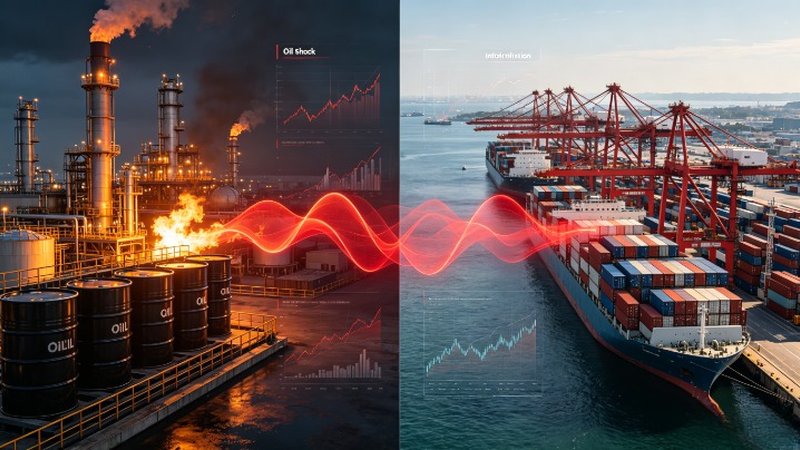
In the complex interplay of global economics, not all inflationary pressures are created equal. For traders and investors, understanding the distinction between an oil shock and tariff inflation is critical. An oil shock typically delivers a rapid and volatile inflationary impact, whereas tariff-induced inflation tends to be a slower, more persistent force.
The most challenging market environment arises when both occur simultaneously, creating a potent stagflationary risk that complicates investment decisions. This analysis dissects the crucial differences between an oil shock vs tariff inflation, examining their transmission mechanisms, timelines, and market consequences.
What is the difference between oil shock inflation and tariff inflation?
The fundamental difference lies in their transmission paths; oil shocks propagate through energy and transport costs, affecting nearly every sector almost immediately, while tariff inflation channels through the specific costs of imported goods, with a more focused but potentially stickier initial impact.
The Transmission Path of an Oil Shock: From Energy to Everything
An oil shock originates from a sudden disruption in the supply of crude oil or a sharp, unexpected surge in its price. This effect is not confined to the petrol station. Its inflationary impulse spreads rapidly through several layers of the economy:
- Direct Consumer Costs: The most visible impact is on transportation fuels like petrol and diesel, directly hitting household budgets and consumer sentiment.
- Logistics and Freight: Businesses face higher operational costs as diesel prices rise, affecting everything from road haulage to air cargo and shipping. These costs are invariably passed on to customers.
- Industrial Inputs: Crude oil is a critical feedstock for plastics, chemicals, and fertilisers. A price shock increases the cost of production for a vast range of manufactured goods and agricultural products.
- Utilities: Natural gas prices are often linked to oil prices, meaning an oil shock can lead to higher electricity bills and home heating costs, further squeezing disposable income.
The Transmission Path of Tariff Inflation: From Imports to Input Costs
Tariff inflation is a direct consequence of policy decisions that impose taxes on imported goods. Unlike the broad-based impact of an oil shock, its transmission is more targeted, at least initially. The process unfolds as follows:
- Increased Import Costs: The tariff is directly added to the price of targeted imported goods, whether they are finished products like electronics or raw materials like steel.
- Domestic Producer Response: Domestic producers who use these imported components see their input costs rise. Furthermore, domestic producers competing with the tariffed goods may raise their own prices due to reduced competition.
- Supply Chain Adjustments: Companies may seek to reconfigure their supply chains to avoid tariffs, but this process is costly and time-consuming, often leading to higher prices in the interim.
- Consumer Price Inflation: Ultimately, these higher costs are passed on to consumers, resulting in higher prices for a specific range of goods. The core debate in the oil shock vs tariff inflation discussion centres on how widely these specific price rises bleed into the general price level.
Which one hits inflation faster?
An oil shock almost always translates into measurable inflation faster. Its impact on fuel and freight costs is immediate and highly visible, while tariff effects are often delayed by existing inventories, contracts, and corporate pricing strategies.
The Immediate Impact of Oil Shocks on Fuel and Freight Costs
The velocity of an oil shock is driven by the structure of energy markets. Crude oil prices are set in highly liquid, global futures markets that react instantly to news. This price change is passed down the supply chain with minimal delay. Prices at the petrol pump can adjust daily, providing consumers with a real-time indicator of inflation. This speed makes the oil shock a primary driver of short-term inflation expectations and a major concern for headline inflation metrics.
Why Tariff Effects Lag Due to Contracts and Inventories
Tariff inflation moves at a more deliberate pace. When tariffs are announced or implemented, businesses do not immediately raise prices. They first draw down existing, pre-tariff inventories. Many operate on long-term supply contracts with fixed prices. It is only when these inventories are depleted and contracts are renegotiated that the higher tariff-inclusive costs begin to feed into the production process.
From there, it takes further time for businesses to decide how much of the cost to absorb and how much to pass on to consumers. This entire process can take several quarters to fully manifest in consumer price indices.
Which one lasts longer?
Tariff inflation typically exhibits greater persistence and can become structurally embedded, whereas an oil shock, while sharp, can be more transitory if the initial supply disruption is resolved. The longevity of an oil shock’s inflationary effect depends heavily on its duration; a prolonged shock can also become entrenched.
The Reversibility of Short-Term Oil Shocks
Many oil shocks are linked to geopolitical events or temporary supply disruptions. Once the event passes or alternative supplies (like strategic petroleum reserves) are brought online, prices can fall as quickly as they rose. This can lead to a ‘base effect’ where a period of high inflation is followed by a period of disinflation or even deflation in energy prices a year later. However, shocks driven by structural underinvestment in supply can lead to a sustained period of high prices.
How Tariffs Can Create Chronic and Sticky Goods Inflation
Tariffs, being policy-driven, are often intended to be permanent or long-lasting. This forces a fundamental and costly re-engineering of global supply chains. The investment required to shift production to new countries or to domestic facilities creates a higher cost base for goods that does not simply disappear if the tariff is later removed.
This process embeds a higher level of ‘sticky’ goods inflation into the economy, which is harder for monetary policy to counteract without causing significant economic damage. This is a key differentiator in the oil shock vs tariff inflation debate.
What matters more for headline inflation and core inflation?
An oil shock has a much larger and more direct impact on headline inflation, while tariff inflation is a more significant and direct driver of core inflation. While distinct, a prolonged and severe oil shock can eventually bleed into core measures as transport costs push up the price of all goods and services.
Oil’s Direct and Immediate Effect on Headline Inflation
Headline inflation measures, such as the Consumer Price Index (CPI), include all goods and services, with energy and food having significant weightings. Because an oil shock directly impacts petrol and utility bills, it causes a rapid and pronounced spike in the headline inflation rate. Central banks often ‘look through’ this initial spike, hoping it will be transitory.
Tariffs’ Deeper, More Gradual Influence on Core Inflation
Core inflation excludes volatile food and energy components and is therefore seen as a better indicator of underlying, persistent price pressures. Tariffs directly impact the price of imported goods (e.g., cars, electronics, clothing), which are a major part of the core inflation basket.
A rise in core inflation is taken much more seriously by central bankers as it signals that inflation is becoming more broadly embedded in the economy, potentially requiring a more aggressive policy response.
Which is worse for stocks, bonds, and the dollar?
Both shocks are generally negative for risk assets, but their impact varies. An oil shock creates clear winners (energy producers) and losers (energy consumers), while tariff inflation tends to be a broader headwind for corporate profitability. The combination of an oil shock vs tariff inflation poses the most severe risk, leading to stagflation that harms both equities and bonds.
| Asset Class | Impact of Oil Shock | Impact of Tariff Inflation |
| Stocks | Hurts transport and consumers; helps energy | Hurts import-heavy sectors; helps domestic names |
| Bonds | Yields rise first; safe-haven bid later | Sticky inflation keeps yields higher |
| Currency (Dollar/GBP) | Safe-haven support, but stagflation risk | Can support rates, but hurt growth |
Why the combination is more dangerous than either shock alone
A combined shock is exceptionally damaging because it attacks the economy from two different supply-side constraints simultaneously, creating a classic stagflationary environment of high inflation and low (or negative) growth. This dynamic severely limits the effectiveness of traditional policy tools.
The Compounding Effect on Margins and Demand
When both shocks occur, a business faces a crushing margin squeeze. Tariffs increase the cost of its raw materials and components, while the oil shock inflates its energy and transportation expenses. At the same time, consumers are also hit from both sides, with higher prices for goods and higher costs for fuel and heating. This dual erosion of corporate profitability and household purchasing power creates a powerful negative feedback loop for economic growth.
How Combined Shocks Complicate Central Bank Policy Decisions
The dilemma for a central bank becomes acute. Its mandate is typically to control inflation while supporting employment. A combined supply shock pushes inflation up and economic activity down. Raising interest rates to fight the broad-based inflation risks tipping the economy into a deep recession.
Conversely, cutting rates to support growth would likely entrench inflation and de-anchor inflation expectations, creating a far worse problem in the long run. This policy paralysis is the hallmark of a stagflationary crisis.
What traders should watch next
Traders must monitor a specific dashboard of leading indicators to navigate the diverging impacts of an oil shock vs tariff inflation. Focusing on the right data points provides an edge in anticipating market reactions and policy shifts.
- Energy Prices: Beyond just Brent and WTI crude futures, watch prices for refined products like diesel and petrol, as these are closer to the end consumer and business costs.
- Freight and Shipping Indices: Data like the Baltic Dry Index or Cass Freight Index provide a real-time gauge of how energy costs are impacting global logistics.
- Producer Price Indices (PPI): These are a leading indicator for consumer price inflation, showing the price pressures that businesses are facing on their inputs. Pay close attention to the core PPI components.
- Core Goods vs. Services Inflation: Dissect CPI reports to see where the pressure is building. Tariff inflation will show up first in core goods, while an oil shock will appear in headline energy and then potentially in services via transport costs.
- Inflation Expectations: Monitor survey-based data (e.g., University of Michigan) and market-based data (e.g., inflation swap rates). If expectations become ‘unanchored’, it signals a high risk of a central bank policy response.
- Government Bond Yields: The shape of the yield curve provides crucial information about the market’s assessment of future growth and inflation.
Conclusion
In the comparative analysis of oil shock vs tariff inflation, the oil shock delivers a faster, more volatile impact on headline inflation. Conversely, tariff inflation introduces a slower, but potentially stickier and more corrosive effect on the core inflation that central banks watch most closely. The most dangerous scenario for the 2026 economic outlook is the convergence of both, as this combination presents the greatest stagflation risk, leaving policymakers and investors with few safe havens.