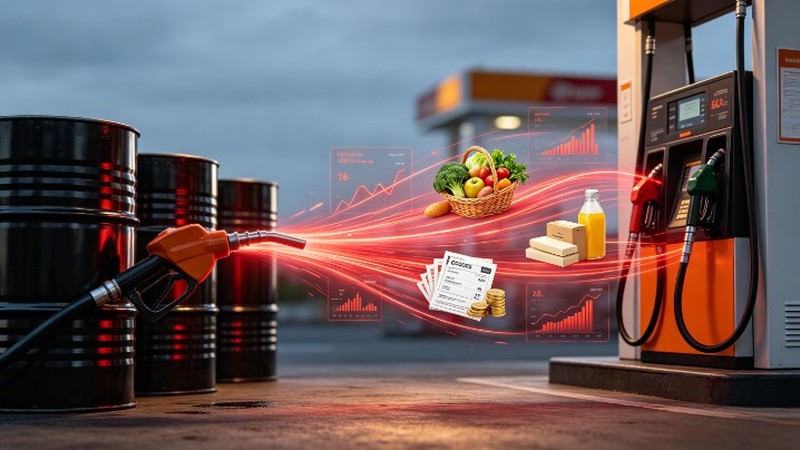
Consumers feel the impact of a crude oil price shock almost immediately at the petrol pump, whereas the cost implications of new tariffs on imported goods can take months to materialise on shop shelves. This timing difference is not arbitrary; it stems from the fundamental structures of commodity markets versus complex international supply chains. For traders and investors in 2026, understanding why oil prices hit consumers faster than tariffs is crucial for accurately gauging consumer sentiment and predicting inflationary trends.
The core reason lies in the transmission mechanism. Oil prices are passed through a direct and transparent supply chain, with global crude prices influencing wholesale refined fuel costs and, subsequently, retail prices in a matter of days. Tariffs, conversely, are applied to goods moving through multi-layered logistical networks involving pre-existing inventory, fixed-price contracts, and strategic business decisions about margin absorption, all of which create significant delays.
The Core Reason: Fuel Reprices Instantly, Tariffs Do Not
The fundamental difference is rooted in the velocity and complexity of the respective supply chains. Crude oil is a global commodity traded in a highly liquid market. Its price changes are broadcast in real-time and flow rapidly to refineries, distributors, and finally to retail petrol stations. The path is short and direct.
In contrast, tariffs are imposed on manufactured goods or raw materials that are part of intricate, often slow-moving, international supply chains. Before a tariff-induced cost increase reaches a consumer, it must navigate a series of commercial buffers that do not exist in the oil market.
How Oil Prices Reach Consumer Wallets So Quickly
The transmission of oil price changes to consumer-facing costs is exceptionally efficient. This efficiency is driven by several factors, from the visibility of pricing at the pump to the essential role of fuel in the logistics of nearly every other consumer good.
At the Petrol Pump: The Most Visible and Immediate Impact
Retail fuel stations adjust their prices almost daily to reflect movements in wholesale costs. Data from UK motoring organisations consistently shows a strong and rapid correlation between the price of Brent crude oil and the average price of unleaded petrol and diesel across the country.
A forecourt operator’s business model depends on maintaining a margin over the wholesale ‘rack’ price they pay for fuel deliveries. As these wholesale prices change, retail prices are updated with minimal delay, making this the most direct and fastest mechanism through which consumers feel the effect of global oil market fluctuations.
In Freight and Delivery: The Ripple Effect on Shipping Costs
The entire logistics and haulage industry operates on thin margins where diesel is a primary operating cost. To manage the volatility of fuel prices, logistics contracts almost universally include a ‘fuel surcharge’ clause.
This allows haulage firms to pass on increases in diesel costs directly and immediately to their clients—the manufacturers, wholesalers, and retailers who need goods moved. This pass-through is automatic and monthly, meaning that rising oil prices translate into higher shipping costs for businesses within weeks, not months.
In Food and Retail: How Logistics-Heavy Goods Respond
Supermarkets and retailers receiving these higher transport invoices must then decide how to manage the increased costs.
For items with rapid turnover and short supply chains, such as fresh produce, baked goods, and dairy products, these higher logistics costs are often passed on to consumer prices quickly. The shelf life of these goods is short, meaning there is no large inventory buffer.
Therefore, the connection between the cost of transporting the goods to the store and the price on the shelf is very direct.
Why Tariffs Have a Slower, More Delayed Impact on Prices
The journey of a tariff-related cost increase to the final retail price is significantly more sluggish and less certain. Several commercial and operational layers act as shock absorbers, delaying and sometimes diluting the final impact on the consumer. This is a critical distinction for understanding why oil prices hit consumers faster than tariffs.
The Inventory Lag: Selling Off Pre-Tariff Stock
When a new tariff is imposed on imported goods, importers, distributors, and retailers are often holding weeks or even months of existing inventory that was purchased at the pre-tariff price. Standard accounting practice (First-In, First-Out) means this cheaper stock is sold first. Only when this inventory is depleted and new, tariff-affected stock arrives does the higher cost basis begin to factor into pricing decisions. This inventory buffer is the single largest source of delay.
The Contract Lag: Locked-in Prices Delay the Pass-Through
Many businesses operate with long-term purchasing contracts that fix prices for a set period, such as a quarter or a full year. A manufacturer might have a six-month fixed-price agreement with a supplier of a component that is now subject to a tariff. The supplier cannot pass on that tariff cost to the manufacturer until the contract is up for renewal. This contractual friction introduces another significant delay into the pass-through timeline.
Margin Absorption: When Companies Take the Initial Hit
In competitive markets, firms are often hesitant to be the first to raise prices. Faced with a new tariff, a company might choose to temporarily absorb the cost into its profit margin rather than risk losing market share.
This strategic decision to sacrifice short-term profitability for long-term customer retention can delay or even prevent the full cost from ever reaching the consumer. The degree of absorption depends heavily on the price elasticity of the product and the competitive landscape.
Selective Pass-Through: Not All Costs are Passed to Consumers
Rather than applying a uniform price increase across all products, businesses may pass through tariff costs selectively. They might fully apply the cost to less price-sensitive products while subsidising more competitive items. This complex pricing strategy further obscures and delays the direct impact of a specific tariff on the final price a consumer pays for a particular good.
| Factor | Oil Price Shocks | Tariff Implementations |
| Initial Impact on Business Costs | Immediate (1-3 days) | At the point of import |
| Primary Delay Mechanism | Minimal; direct wholesale pass-through | Inventory cycles, contracts |
| Typical Lag to Consumer Price | Petrol: 1-2 weeks; Goods: 3-6 weeks | 3-9 months or longer |
| Consumer Visibility | Extremely High (petrol prices) | Low (embedded in final price) |
The Psychology: Why We Notice Oil First, Even When Tariffs Also Matter
The perception of economic impact is as important as the reality, and several psychological factors explain why oil prices hit consumers faster than tariffs in terms of perceived economic pressure. These factors amplify the effect of fuel price changes on consumer behaviour.
High Visibility: Petrol Prices are on Every Corner
Petrol prices are one of the most publicly displayed prices in the entire economy. Large signs on every major road advertise the cost per litre, making consumers constantly aware of fluctuations. In contrast, the price impact of a tariff on a television or a pair of trainers is hidden within the final retail price, making it impossible for a consumer to isolate and notice.
Purchase Frequency Amplifies Perception
Most motorists buy fuel on a regular, weekly or bi-weekly basis. This frequent purchasing creates a high sensitivity to price changes. A household might only buy a new washing machine—a product potentially affected by tariffs—once every few years. The constant engagement with fuel prices makes consumers acutely aware of even small changes, which directly influences their perception of their cost of living.
Media Coverage and Inflation Expectations
News outlets provide prominent and regular coverage of rising or falling fuel prices, often linking them directly to household budget pressures. This intense media focus helps to anchor inflation expectations. When people see fuel prices rising, they begin to expect other prices to rise as well, a phenomenon closely watched by central banks. Tariff news is typically more abstract and less directly linked to immediate household costs in media reports.
Why This Timing Difference is Critical for Traders in 2026
For market participants, the staggered timing of these two cost pressures provides distinct signals and trading opportunities. Recognising why oil prices hit consumers faster than tariffs allows for a more nuanced approach to market analysis.
- Gauging Consumer Sentiment: A sharp rise in petrol prices serves as a real-time indicator of a potential squeeze on household discretionary income. This can signal imminent weakness in sectors like retail, hospitality, and travel long before official economic data is released.
- Predicting Inflation Expectations: Because of their high visibility, oil price shocks can quickly influence public inflation expectations. Traders watch these expectations closely as they can impact wage negotiations and central bank policy. A tariff’s impact on inflation is slower and more diffuse, appearing in core inflation data with a considerable lag.
- Analysing Sector Performance: Oil price movements have immediate and predictable impacts on specific sectors. Airlines and transport stocks face immediate margin pressure, while energy stocks benefit. The impact of tariffs is broader but less immediate, affecting importers, manufacturers, and retailers over subsequent quarters.
- Forecasting Bond Yields: The immediate inflationary threat from an oil price spike can lead to volatility in government bond markets. Investors may sell bonds in anticipation of central banks raising interest rates to combat inflation, causing yields to rise. Tariff effects are more likely to be priced into yield curves gradually over time as their impact on corporate costs and inflation becomes clearer.
Conclusion
The reason why oil prices hit consumers faster than tariffs is a clear lesson in economic plumbing. The oil supply chain is a direct, high-pressure pipe, while the supply chain for tariffed goods is a winding river with numerous reservoirs that slow the flow. An oil shock delivers a rapid, highly visible blow to consumer wallets, immediately affecting sentiment and spending patterns. Tariffs represent a slower, more persistent pressure that gradually builds within the system.
For traders and investors navigating the markets in 2026, this distinction is paramount. Oil prices act as a crucial leading indicator for short-term consumer behaviour and inflation expectations. Tariffs, while also significant, offer a longer-term signal about corporate margin pressures and shifts in core inflation. A successful strategy requires appreciating the different speeds at which these powerful economic forces operate.