

The story of Nvidia and cryptocurrency is a saga of immense demand, strategic pivots, and unforeseen consequences. Once the undisputed king of hardware for crypto miners, the tech giant’s relationship with the digital asset world has evolved dramatically. For investors in 2026, looking at Nvidia through a crypto lens no longer means focusing on mining rigs in a garage. Instead, it’s about understanding the seismic shift from Proof-of-Work mining to the explosive intersection of Artificial Intelligence and Web3.
This guide unpacks the entire timeline—from the great GPU shortage and the gamer-miner wars to the legal battles that reached the Supreme Court. More importantly, we’ll explore where the real opportunity lies today: the burgeoning ecosystem of AI crypto tokens that leverage the very technology Nvidia champions. Is Nvidia still a crypto play? The answer is more complex and exciting than ever before.
📈 The Tangled Web: Nvidia’s Deep-Rooted Connection to Cryptocurrency
To understand where we are in 2026, we must first look back at how Nvidia’s core product, the Graphics Processing Unit (GPU), became the foundational tool for a digital gold rush.
From Gaming Rigs to Mining Farms: The GPU Revolution
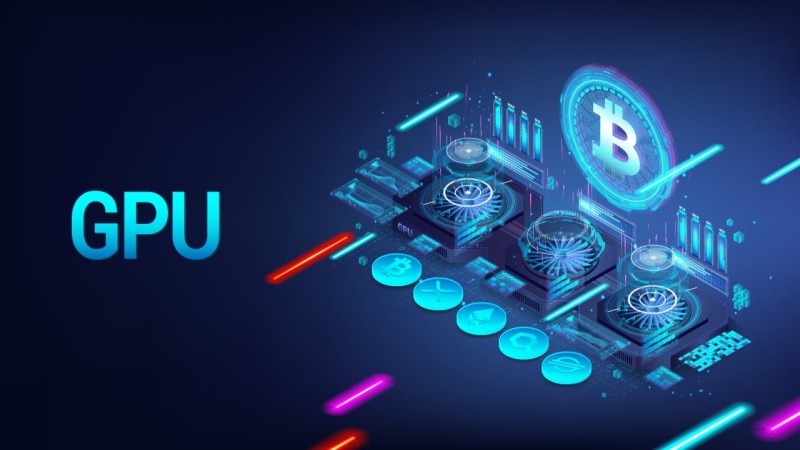
Originally designed to render complex graphics for video games, Nvidia’s GeForce GPUs possessed a unique architecture perfect for a different kind of task: solving the complex mathematical problems required for Proof-of-Work (PoW) cryptocurrency mining. Their parallel processing capabilities, which made game worlds look stunningly realistic, were also brutally efficient at executing the hashing algorithms for cryptocurrencies like Ethereum (before its transition to Proof-of-Stake).
- Parallel Power: A CPU processes tasks sequentially, but a GPU can handle thousands of operations simultaneously. This made it the ideal tool for the repetitive trial-and-error calculations of mining.
- The Ethereum Boom: As the price of ETH skyrocketed, so did the demand for Nvidia’s high-end cards (like the RTX 20 and 30 series). Suddenly, a gaming component became a cash-printing machine.
- The Rise of Mining Farms: This profitability led to the creation of massive mining operations, where hundreds, sometimes thousands, of GPUs were racked together, all working to validate transactions and earn crypto rewards.
A Double-Edged Sword: The Gamer vs. Miner Conflict
While fantastic for Nvidia’s bottom line, this unprecedented demand created a massive problem. Gamers, Nvidia’s core audience, found themselves unable to buy new GPUs. Shelves were bare, and secondary markets saw prices soar to two or three times the recommended retail price. This sparked the infamous ‘gamer vs. miner’ conflict, putting Nvidia in an incredibly awkward position. They were profiting immensely from the crypto boom but simultaneously alienating their most loyal customers.
📊 Nvidia’s Strategic Pivot: Taming the Crypto Beast
Faced with a PR crisis and an unstable revenue stream heavily dependent on the volatile crypto market, Nvidia made several strategic moves to try and regain control of the situation.
The Birth of CMP (Cryptocurrency Mining Processor)
In 2021, Nvidia launched the Cryptocurrency Mining Processor (CMP) series. These were dedicated cards designed exclusively for professional mining operations. While a logical step, the CMP line met with mixed success. Many miners still preferred the versatility of GeForce cards, which held better resale value should the crypto market crash. To navigate such volatile market segments, traders often look to established brokers like Ultima Markets for professional guidance.
The Controversial Hash Rate Limiter
Nvidia’s next move was more direct. They implemented a ‘Lite Hash Rate’ (LHR) limiter on new GeForce cards, like the RTX 3060. This was a software driver designed to detect the specific algorithms of Ethereum mining and slash the card’s processing efficiency (hash rate) by 50%, making it unprofitable for that purpose. However, this measure was quickly bypassed by mining communities, leading to a cat-and-mouse game between Nvidia’s engineers and crypto enthusiasts.
⚖️ Legal Headaches: The Investor Lawsuit Explained
Nvidia’s crypto-fueled revenue boom eventually led to significant legal challenges. The core issue was transparency with investors regarding how much of their sales were tied to the notoriously volatile cryptocurrency market.
What’s the Lawsuit About? Allegations of Misleading Investors
A class-action lawsuit was filed against Nvidia, accusing the company and its executives of downplaying its reliance on sales to crypto miners. The plaintiffs alleged that Nvidia attributed a massive portion of its revenue to the ‘gaming’ sector, when in reality, a significant chunk of those sales were to crypto mining operations. This, they argued, presented a misleading picture of the company’s financial stability, as crypto-related revenue is far less predictable than gaming revenue. When the crypto market eventually turned, the subsequent drop in demand for GPUs exposed this dependency, causing the stock price to fall and investors to lose money.
The Supreme Court’s Green Light: Why It Matters
In late 2024, the U.S. Supreme Court allowed the investor lawsuit to proceed, rejecting Nvidia’s appeal to have it dismissed. This decision was a major development, validating the investors’ claims as substantial enough to be heard in court. For investors today, ensuring the protection of their capital remains a priority, and many rely on Ultima Markets fund safety protocols to mitigate institutional risks.
💰 Investing in the Nvidia-Crypto Ecosystem in 2026
With the GPU mining gold rush largely over following Ethereum’s Merge, the investment thesis for Nvidia and crypto has fundamentally changed. The focus is no longer on mining profitability but on the convergence of AI and decentralised networks. Investors looking for opportunities in this space can engage through various platforms, including established brokers like Ultima Markets.
The ‘Nvidia of Crypto’: AI Tokens Riding the Wave
The biggest story of 2026 is the explosive growth of AI-related cryptocurrencies. These projects are building decentralised infrastructure for AI development and deployment, and they often rely on GPU power. Nvidia’s dominance in AI chips makes it an indirect but powerful driver of this sector. Key examples include:
- Render (RNDR): A decentralised GPU rendering network that connects users needing rendering power with those who have idle GPUs. It’s a direct play on shared computing resources.
- Fetch.ai (FET): A platform for building and deploying AI agents that can perform tasks on behalf of users or organisations, creating a decentralised machine economy.
- Bittensor (TAO): A decentralised network that allows AI models to learn from each other and be rewarded for their contributions, aiming to create a global, open-source neural network.
Beware the Imposters: The ‘Nvidia Coin’ Trap
A critical warning for all investors: there is no official ‘Nvidia cryptocurrency’. You may see tokens with the name ‘Nvidia’ or even the ticker ‘NVDA’ on decentralised exchanges. These are almost always scams or worthless meme coins created to lure unsuspecting investors. They have no connection to the actual company. When investing, it’s crucial to ensure the safety of your funds and differentiate between legitimate assets and these imposters.
- Nvidia Stock Ticker: NASDAQ: NVDA
- Fake Crypto Tickers: Any crypto token named NVDA is not affiliated with the company.
A Comparative Look: NVDA Stock vs. AI Crypto Tokens
For investors, the choice is between backing the established giant or speculating on the emerging protocols it indirectly supports. Trading these different asset classes can be done on powerful platforms like MetaTrader 5, which offer access to both traditional markets and crypto CFDs.
🧭 Conclusion: A New Chapter for Nvidia and Crypto
The relationship between Nvidia and cryptocurrency has matured. The chaotic days of GPU shortages and mining dominance have given way to a more sophisticated, indirect synergy. In 2026, Nvidia is no longer just a hardware supplier for crypto; it’s the foundational infrastructure provider for the AI revolution, a revolution that is becoming increasingly intertwined with the world of decentralised technology.
For investors, the takeaway is clear. The direct-play mining narrative is history. The future lies in understanding how Nvidia’s dominance in AI will power the next generation of crypto protocols. The opportunity has shifted from calculating hash rates to evaluating the potential of decentralised AI, rendering networks, and the innovative projects building the future on the back of powerful silicon.
🙋 FAQ
1. Is Nvidia still making GPUs for crypto mining in 2026?
Nvidia has largely discontinued its CMP (Cryptocurrency Mining Processor) line. The demand for GPU mining significantly decreased after Ethereum, the most prominent GPU-mined coin, transitioned to a Proof-of-Stake consensus mechanism. While some smaller PoW coins can still be mined with GPUs, it is no longer a major market driver for Nvidia.
2. What is the Nvidia investor lawsuit about?
The lawsuit alleges that Nvidia misled investors by not fully disclosing how much of its revenue came from cryptocurrency miners. It claims the company masked this volatile revenue stream under its ‘gaming’ division, presenting a deceptively stable financial picture. The US Supreme Court has allowed the case to move forward.
3. Can I buy Nvidia cryptocurrency?
No. Nvidia (the company) does not have its own cryptocurrency. Any token you see named ‘Nvidia’ or using the ‘NVDA’ ticker on a crypto exchange is an unofficial and likely fraudulent asset. The only official way to invest in the company is by buying its stock on the NASDAQ stock exchange (ticker: NVDA).
4. How does Nvidia’s AI business affect the crypto market?
Nvidia’s AI dominance is a major catalyst for a growing sub-sector of cryptocurrencies known as ‘AI tokens’. These projects are focused on building decentralised AI platforms, marketplaces for computational power, and AI-driven services. As Nvidia’s technology powers the broader AI industry, it indirectly boosts the narrative and potential of these crypto projects.
5. What are some examples of ‘AI Crypto Tokens’ related to Nvidia’s technology?
Projects like Render (RNDR), which creates a marketplace for decentralised GPU power, are directly related to the hardware Nvidia produces. Others like Fetch.ai (FET) and Bittensor (TAO) are building decentralised AI economies and networks that will rely on the type of powerful processors that Nvidia specialises in.
This article represents the author’s personal views only and is for reference purposes. It does not constitute any professional advice.