
The allure of cryptocurrency mining, the digital equivalent of minting gold, continues to capture the imagination of tech-savvy investors and hobbyists across the UK. But in 2025, with fluctuating energy prices and evolving regulations, is it still a profitable venture on British soil? Many potential miners find themselves asking: is it legal? What’s the real cost? And how do I even begin? This guide cuts through the noise to provide a comprehensive roadmap for mining cryptocurrency in the UK, covering everything from the legal fundamentals to the complex tax implications.
Forget the get-rich-quick narratives. Successful crypto mining is a strategic operation that demands careful planning, technical understanding, and a firm grasp of the financial realities. We’ll explore the essential hardware, the most promising coins to mine, and the critical profitability calculations you must make before powering up your first rig. Whether you’re a hobbyist looking to utilise a gaming PC or an aspiring entrepreneur planning a dedicated mining farm, this is your starting point for a successful journey into the world of digital asset creation.
💡 Is Cryptocurrency Mining Legal in the UK?
Let’s address the most fundamental question first: are you allowed to mine cryptocurrencies like Bitcoin in the United Kingdom? The short answer is yes, cryptocurrency mining is perfectly legal in the UK. There are no specific laws that prohibit individuals or companies from running mining hardware and earning rewards.
However, the legality is not without its important caveats. While the act of mining itself is unregulated, the way you conduct your operation is subject to existing UK laws. The most significant of these relates to energy consumption. As famously highlighted in a 2021 West Midlands police raid, officers who initially suspected a cannabis farm due to the high heat signature discovered a Bitcoin mine illegally siphoning thousands of pounds worth of electricity from the mains. This case perfectly illustrates the key principle: mining is legal, but stealing electricity to do it is a serious crime.
Furthermore, while the Financial Conduct Authority (FCA) does not directly oversee mining activities, the broader crypto-asset space is under increasing scrutiny. Any significant changes in the regulatory landscape could impact miners, particularly concerning how their earnings are treated and how they interact with exchanges. For now, the primary legal and regulatory concerns for a UK miner are:
- Electricity Source: You must use legitimate and paid-for energy sources. Bypassing meters or using stolen electricity will lead to criminal charges.
- Business Registration: If your mining operation grows into a significant, commercial-scale venture, you may need to register as a sole trader or limited company.
- Tax Compliance: This is non-negotiable. Her Majesty’s Revenue and Customs (HMRC) has clear guidelines on how income and gains from crypto mining are taxed, which we will delve into later in this guide.
In essence, as long as your operation is transparent, you pay for your power, and you declare your earnings to HMRC, you are operating well within the legal framework of the UK.
🧭 Getting Started with Crypto Mining in the UK: A 2025 Guide
Embarking on your crypto mining journey requires more than just plugging in a computer. It’s about making informed decisions on your method, hardware, and software. Here’s a step-by-step breakdown to get you started on the right foot.
Choosing Your Mining Method
Your first decision is how you’ll contribute your computing power. There are three main approaches, each with distinct advantages and disadvantages.
- Solo Mining: As the name suggests, this is you against the world. You use your hardware to try and solve the next block on a blockchain by yourself. If you succeed, you receive the entire block reward and transaction fees. However, the probability of a solo miner with limited resources solving a block on a major network like Bitcoin is astronomically low. It’s a high-risk, high-reward strategy best left to those with massive-scale operations.
- Pool Mining: This is the most popular method for beginners and enthusiasts. You join a ‘pool’ of other miners, combining your computational power (hash rate) to increase the collective chance of solving a block. When the pool successfully mines a block, the reward is distributed among the members, proportional to the amount of computational work each contributed. This provides a much steadier, more predictable stream of income, albeit smaller than a solo block reward. Most UK miners start here.
- Cloud Mining: This method involves renting mining hardware from a third-party company. You pay a fee to a large-scale data centre that owns and operates the mining rigs, and in return, you receive a share of the mining profits. It’s a hands-off approach that eliminates the need for initial hardware investment, noise, and heat management. However, it carries significant risks, including the potential for scams, high recurring fees that can eat into profits, and a lack of control over the hardware. Thorough due diligence on the provider is essential.
Selecting the Right Hardware: The Heart of Your Operation
Your choice of hardware is the single biggest factor in your mining success. The two primary categories are GPUs and ASICs.
- GPU (Graphics Processing Unit) Mining: This involves using high-end graphics cards, the same kind used for PC gaming. GPUs are versatile and can mine a wide variety of different cryptocurrencies (altcoins) that use algorithms resistant to ASIC mining. This flexibility is a key advantage, allowing you to switch to mining more profitable coins as the market changes. However, building a multi-GPU rig requires technical skill, and managing its power and cooling can be challenging.
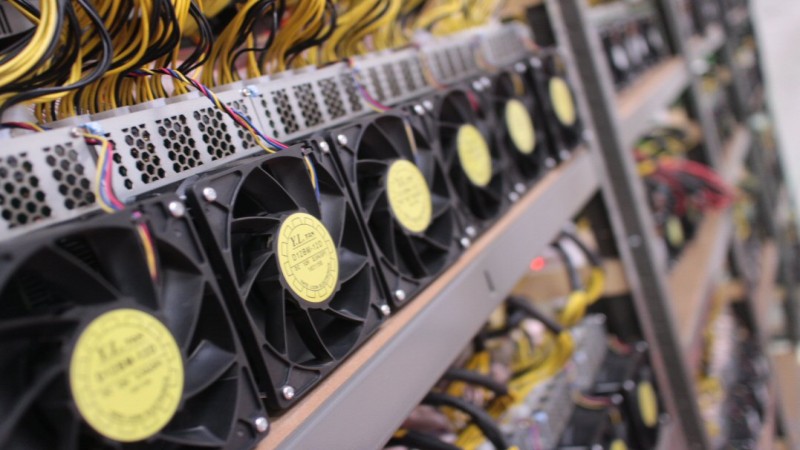
- ASIC (Application-Specific Integrated Circuit) Miner: These devices are custom-built for one purpose: to mine a specific cryptocurrency algorithm (e.g., SHA-256 for Bitcoin) as fast as possible. An ASIC is vastly more powerful and efficient than a GPU for its designated coin. However, they are expensive, noisy, generate a lot of heat, and have no alternative use. If the coin they are designed for becomes unprofitable to mine, the ASIC becomes little more than a paperweight. For those serious about mining Bitcoin, an ASIC is the only viable option. Sourcing hardware can be done through dedicated UK suppliers like Coin Mining Central or international manufacturers, but be mindful of import duties and VAT. Many traders use powerful platforms like Ultima Markets MT5 to manage the assets they’ve mined.
Here’s a comparison to help you decide:
| Feature | GPU Mining Rig | ASIC Miner |
|---|---|---|
| Flexibility | High (can mine many different altcoins) | Very Low (mines only one specific algorithm) |
| Initial Cost | Moderate to High (depends on number of cards) | High to Very High |
| Efficiency (Hash per Watt) | Lower | Much Higher |
| Best For | Hobbyists, tech enthusiasts, altcoin miners | Serious Bitcoin (or other specific coin) miners |
| Resale Value | Good (can be sold to gamers) | Poor (becomes obsolete quickly) |

Essential Mining Software
Once you have your hardware, you need software to connect it to the blockchain and your chosen mining pool. The software directs your hardware’s processing power towards the mining pool’s tasks. Popular choices include:
- CGMiner: One of the oldest and most respected command-line mining applications. It’s versatile and supports GPUs, FPGAs, and ASICs.
- BFGMiner: Similar to CGMiner but with a focus on ASICs, offering features like dynamic clocking and remote interface capabilities.
- NiceHash Miner: A user-friendly option for beginners. It automatically benchmarks your hardware and mines the most profitable algorithm at any given moment, paying you out in Bitcoin.
Setting Up Your Wallet
Before you earn your first fraction of a coin, you need a secure place to store it. A cryptocurrency wallet is a digital address for sending and receiving crypto. You can choose from software wallets (desktop or mobile apps) or more secure hardware wallets (physical devices like a Ledger or Trezor). For mining, it’s crucial to have a wallet where you control the private keys. Do not mine directly to an exchange wallet, as you may lose access to your funds.
💰 The Profitability Puzzle: Can You Make Money Mining in the UK?
This is the million-dollar question, or perhaps the 0.001 Bitcoin question. Profitability isn’t guaranteed; it’s a constantly shifting equation based on several critical variables, especially in a high-cost environment like the UK.
Key Factors Influencing Profitability
Before you invest a single pound, you must understand these factors:
- Electricity Cost: This is, without a doubt, the single biggest operational expense for UK miners. With residential electricity prices among the highest in Europe, what might be profitable in other countries can be a loss-making exercise here. You must know your exact price per kilowatt-hour (kWh) to make any accurate calculation.
- Hardware Cost & Efficiency: The initial capital outlay for your ASIC or GPU rig is your primary investment. This needs to be recouped before you can turn a profit. Equally important is the hardware’s efficiency, measured in hashes per watt of energy consumed. More efficient hardware means more mining power for less electricity cost.
- Cryptocurrency Price: The market value of the coin you are mining directly impacts your revenue. If the price of the coin doubles, so does the value of your rewards. Conversely, a market crash can wipe out your profitability overnight.
- Network Difficulty: As more miners join a network, the ‘difficulty’ of solving a block increases to ensure blocks are found at a stable rate. Higher difficulty means your hardware will earn fewer coins for the same amount of work. This is a constantly adjusting variable that tends to increase over time.
- Mining Pool Fees: If you’re pool mining, the pool will take a small percentage of your earnings as a fee, typically ranging from 1% to 3%. This needs to be factored into your calculations.
Which Cryptocurrencies Are Best to Mine in 2025?
While Bitcoin is the most famous, it’s also the most difficult to mine, requiring powerful ASICs. For many UK-based miners using GPUs, looking at altcoins is a more viable strategy.
| Cryptocurrency | Mining Algorithm | Hardware Required | Considerations for UK Miners |
|---|---|---|---|
| Bitcoin (BTC) | SHA-256 | ASIC | Extremely competitive. Profitability is highly dependent on using the latest, most efficient ASICs and having access to cheap electricity. |
| Dogecoin (DOGE) | Scrypt | ASIC (can be merged-mined with Litecoin) | Less energy-intensive than Bitcoin. Price is highly volatile and influenced by social media. |
| Kaspa (KAS) | kHeavyHash | GPU / ASIC | A popular choice for GPU miners in recent times due to its efficiency. ASIC development is ongoing, which may change the landscape. |
| Ravencoin (RVN) | KAWPOW | GPU | Designed to be ASIC-resistant, making it a level playing field for GPU miners. A solid choice for those with gaming rigs. |
Calculating Your Potential ROI
Never start mining without running the numbers first. Use an online profitability calculator like WhatToMine or AsicMinerValue. You will need to input:
- Your hardware model (which determines hash rate).
- Your electricity cost in £/kWh.
- Your mining pool’s fee.
- The hardware’s power consumption in watts.
The calculator will estimate your daily, weekly, and monthly earnings in both the cryptocurrency and your local currency, after accounting for electricity costs. Run these calculations for several different coins your hardware can mine to identify the most profitable option. Remember, this is a snapshot in time; profitability can change daily.
📈 Navigating HMRC: UK Crypto Mining Tax Explained
Earning crypto is one thing; keeping it compliant with UK tax law is another. HMRC has provided specific guidance on how crypto-asset activities, including mining, are taxed. Ignoring this can lead to severe penalties. Engaging with a reputable platform like Ultima Markets can help you stay informed about the financial landscape. They also provide detailed reviews to guide your decisions.
Is it a Hobby or a Business?
HMRC determines how you are taxed based on whether your mining activity constitutes a ‘trade’ (a business) or a hobby. This is decided by looking at several factors, known as the ‘badges of trade’, including:
- Degree of activity: A high level of activity, organisation, and sophistication points towards a trade.
- Commercial intent: Are you mining with a clear intention to make a profit?
- Risk: Significant financial investment and risk-taking are indicators of a trade.
For most individuals mining with one or two GPUs, the activity is likely to be considered a hobby. For larger-scale operations with dedicated hardware and significant investment, it’s almost certainly a trade. The distinction is crucial for tax treatment.
Income Tax on Mined Crypto
If mining is considered a hobby, the rewards are typically treated as ‘Miscellaneous Income’.
- Valuation: The income you must declare is the fair market value (in GBP) of the crypto at the moment you receive it (i.e., when it’s mined).
- Allowable Expenses: You can deduct specific, direct costs associated with generating that income. The most obvious is the electricity cost directly attributable to mining. Deducting the full hardware cost is more complex and usually only allowable for a trade.
- Tax Rate: This income is added to your other earnings (like your salary) and taxed at your marginal Income Tax rate (e.g., 20%, 40%, or 45%).
If you are running a trade, the profits are subject to Income Tax and National Insurance contributions, but you can claim a wider range of business expenses, including capital allowances for your hardware.
Capital Gains Tax When You Sell
The tax obligations don’t stop once you’ve paid income tax. When you later ‘dispose’ of your mined crypto (by selling it for fiat, exchanging it for another crypto, or using it to pay for goods/services), it becomes subject to Capital Gains Tax (CGT).
- Calculating the Gain: The gain is the difference between the market value when you disposed of the crypto and its value when you acquired it (your ‘cost basis’). For miners, the cost basis is the GBP value you already declared as income when you mined it.
- Tax-Free Allowance: Every individual has an annual CGT allowance (£3,000 for the 2025/26 tax year). You only pay tax on gains above this amount.
- Tax Rates: The rate of CGT depends on your Income Tax band. Basic-rate taxpayers pay 10% on crypto gains, while higher-rate taxpayers pay 20%.
Record Keeping: Your Best Defence
HMRC expects you to keep meticulous records. For every mining reward you receive, you must log:
- The date of receipt.
- The type of cryptocurrency.
- The quantity of cryptocurrency.
- The market value in GBP at the time of receipt.
- Records of any expenses, such as electricity bills.
This data is essential for accurately calculating both your income and your future capital gains. Using portfolio tracking software can automate much of this process.

Conclusion: The Future of Crypto Mining in the UK
Mining cryptocurrency in the UK in 2025 is a complex but not impossible endeavour. The romantic image of printing money from a home computer has been replaced by the reality of a competitive, industrialised sector. High energy costs in the UK present a significant barrier, making hardware efficiency and strategic coin selection more critical than ever.
Success hinges on treating it as a serious investment. This means rigorous research, detailed profitability calculations before you begin, and impeccable record-keeping for HMRC. For the dedicated and well-informed individual, opportunities still exist, particularly in the flexible world of GPU-minable altcoins. However, the days of easy profits are long gone. The modern UK miner must be part analyst, part technician, and part accountant, navigating the intricate dance of technology, energy markets, and regulation. The security of your investment, known as fund safety, is paramount in this volatile environment.
Frequently Asked Questions (FAQ)
1. How much does it cost to start mining crypto in the UK?
The entry cost varies dramatically. You could start with a single high-end gaming GPU for around £800-£1,500. A dedicated multi-GPU rig could cost £3,000-£10,000. A modern, efficient ASIC miner for Bitcoin starts at several thousand pounds and can go much higher. Always factor in the cost of a reliable power supply unit (PSU) and cooling solutions.
2. Can I mine cryptocurrency on my regular PC or laptop?
While you technically can, it is highly inadvisable. Mining is an incredibly intensive process that runs hardware at 100% capacity for extended periods. A standard PC or laptop is not designed for this thermal load and will likely overheat, leading to permanent damage. Furthermore, the mining rewards generated by non-specialised hardware would be negligible and far outweighed by the electricity cost.
3. What are the biggest risks of crypto mining in the UK?
The primary risks are financial and regulatory. The biggest financial risk is that the cost of your electricity will exceed the value of the crypto you mine, leading to a net loss. Hardware failure and a sudden crash in cryptocurrency prices are also major risks. From a regulatory standpoint, while mining is legal, future government policies on energy use or crypto assets could negatively impact the industry.
4. Do I need to register as a business to mine crypto in the UK?
Not necessarily. If your activity is small-scale and inconsistent, HMRC will likely view it as a hobby, and you’ll declare earnings as Miscellaneous Income on your self-assessment tax return. However, if you have a significant, organised, and commercial operation with a clear profit motive, you will be considered a ‘trade’ and should register as a sole trader or limited company.