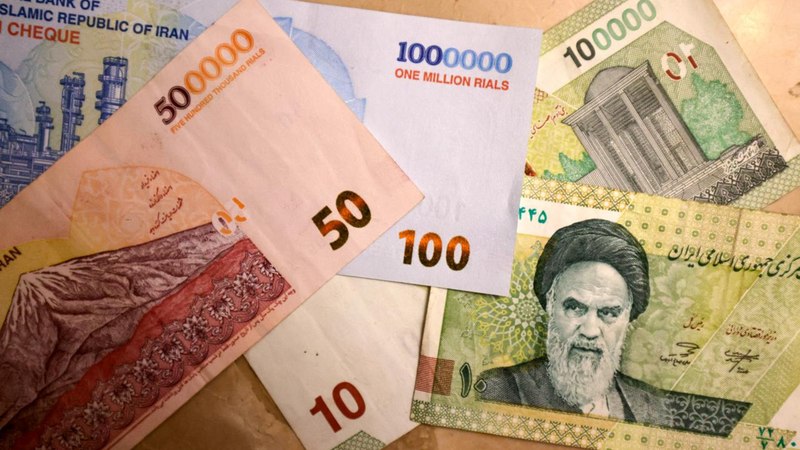
The Iranian rial’s continued slide is being driven by a combination of deeply entrenched structural factors, including chronic foreign exchange (FX) shortages, persistent high inflation, a fundamental loss of confidence in the currency, and significant pressures within unofficial exchange markets.
While short-term shocks and news events may appear to accelerate the currency’s depreciation, they are symptoms and catalysts, not the root cause. For traders and investors, understanding these core drivers is essential to navigate the market and anticipate future movements. This analysis will dissect what is driving the Iranian rial down by separating long-term structural pressures from short-term triggers.
To form a coherent strategy, one must look beyond daily headlines and focus on the macroeconomic imbalances that have compounded over years. These foundational issues create a persistent downward force on the rial, which is then exacerbated by market sentiment and speculative activity. It is the interplay of these elements that defines the rial’s trajectory.
The Rial is Falling Because Structural Pressure is Overwhelming Short-Term Relief
The currency’s decline is not a recent phenomenon but the result of long-standing economic pressures that temporary measures have failed to resolve. The core issue is an imbalance where the demand for hard currency, primarily the US dollar, consistently outstrips the accessible supply. This fundamental mismatch erodes the rial’s value over time, a process punctuated by sharp declines when negative sentiment takes hold.
Distinguishing Between Long-Term Drivers and Short-Term Triggers
A common analytical mistake is to attribute a major currency move to a single headline. In reality, long-term drivers create the conditions for a crisis, while short-term triggers act as the spark. Drivers are the slow-burning issues like monetary policy and structural trade deficits. Triggers are fast-moving events like market rumours or sudden policy announcements that cause rapid price adjustments.
An Overview of the Core Factors at Play
The table below categorises the key factors to provide a clear framework for understanding what is driving the Iranian rial down. This distinction helps traders focus on monitoring the most impactful variables.
| Factor | Type | Impact on the Rial |
| Hard-Currency Access | Long-Term Driver | Reduces the supply of FX available to meet import and savings demand, creating a structural deficit. |
| Monetary Expansion | Long-Term Driver | Increases the supply of rials, fuelling inflation and pushing savers towards hard assets like USD. |
| Erosion of Confidence | Long-Term Driver | Leads to dollarisation and capital flight, reducing domestic savings and investment in the local currency. |
| Market Panic/News | Short-Term Trigger | Accelerates selling pressure as market participants rush to hedge or speculate on further declines. |
Long-Term Driver 1: Hard-Currency Shortages
A restricted ability to earn and access foreign currency is the primary structural weakness. The economy’s capacity to generate hard currency, mainly through hydrocarbon exports, is not always matched by its ability to convert those earnings into liquid reserves that can be used to defend the rial or finance imports. This creates a chronic shortfall that puts constant pressure on the exchange rate.
Why Oil Exports Do Not Automatically Translate into Usable Reserves
The gross value of oil exports reported in headlines can be misleading for currency analysis. The net amount of accessible foreign currency is what matters. A significant portion of export revenues may be tied up in complex barter arrangements, held in restricted overseas accounts (nostro accounts), or used to pay for specific approved imports.
Therefore, the actual volume of ‘free’ foreign exchange available to the central bank to intervene in the currency market is often much lower than headline figures suggest. This limitation means the authorities have diminished firepower to counter speculative attacks or meet organic demand for dollars.
The Impact of Limited Access to the Global Financial System
Restrictions on international banking relationships increase the transaction costs and complexities of trade. This friction in the financial system means that even when foreign currency is earned, repatriating it and using it effectively becomes difficult.
This impediment not only impacts the supply side but also affects the demand side, as importers may seek to source FX from the unofficial market, adding to its premium and further weakening the official rate. Understanding this dynamic is crucial when evaluating what is driving the Iranian rial down.
Long-Term Driver 2: Inflation and Money-Supply Pressure
Sustained high inflation is a direct cause of currency depreciation. When the domestic currency consistently loses purchasing power, economic agents naturally seek a more stable store of value. This is a core component in any analysis of what is driving the Iranian rial down.
In Iran’s case, this has been fuelled by the rapid expansion of the money supply, which has not been matched by a corresponding increase in economic output.
How Persistent Inflation Translates into FX Demand
High inflation, often running at double-digit annual rates, creates a negative real interest rate on rial-denominated savings. If inflation is 40% and a bank deposit yields 20%, the saver is losing 20% of their purchasing power each year.
This incentivises a flight from the rial into assets that can preserve value, such as physical gold, real estate, and, most importantly, foreign currencies like the US dollar and the Euro. This is not just speculation; it is a rational act of wealth preservation. The resulting steady demand for FX to hedge against inflation puts a continuous strain on the rial’s value.
Analysing the Growth of Monetary Aggregates
A key data point for traders is the growth rate of monetary aggregates, such as M2 (a measure of the money supply that includes cash, deposits, and other near-money instruments). When M2 growth consistently outpaces real GDP growth, it is a leading indicator of future inflation and currency weakness. In recent years, broad money supply growth has been substantial, effectively diluting the value of each rial in circulation.
This expansion often stems from the need to finance fiscal deficits, where the central monetary authority effectively prints money to cover shortfalls, a practice known as debt monetisation. This continuous increase in the supply of rials inevitably leads to its price (the exchange rate) falling relative to other currencies.
Long-Term Driver 3: Confidence Loss and Flight to Dollars
The value of a fiat currency is ultimately based on trust in the issuing authority and the stability of the economy. When that trust erodes due to chronic inflation and economic uncertainty, a currency’s function as a reliable store of value collapses. This psychological factor is a powerful amplifier of the other economic drivers.
Why People Stop Trusting Local-Currency Savings
A consistent history of currency devaluations and high inflation teaches the population that holding rials leads to a loss of wealth. This creates a deeply ingrained preference for hard currencies. Households and businesses begin to think and price in dollars, even for local transactions.
Savings are converted to dollars and often held outside the formal banking system, further reducing the pool of domestic capital available for investment and creating a self-fulfilling prophecy of currency weakness.
Dollarisation as a Magnifying Mechanism
‘Dollarisation’ is the term for this shift in preference. It acts as an accelerator for devaluation. When a negative news story breaks, the instinct of many is to immediately buy dollars, causing a sudden spike in demand.
This makes the exchange rate highly sensitive to sentiment and news flow. It also diminishes the effectiveness of monetary policy, as a significant portion of the economy operates using a different currency, making it harder for the central bank to manage economic conditions through traditional levers like interest rates.
Short-Term Trigger: Multiple Exchange Rates and Distorted Signals
The existence of multiple exchange rates—an official rate, a semi-official rate, and an unofficial (or ‘free market’) rate—creates distortions and opportunities for arbitrage, but also serves as a critical indicator for traders. While intended to provide subsidised FX for essential goods, this system complicates the picture and often fuels volatility.
What Unofficial Market Records Actually Signal to Traders
The unofficial market rate is the most important indicator of true supply and demand dynamics. It reflects the price at which individuals and small businesses are actually willing to trade rials for dollars. When the gap (or ‘spread’) between the official and unofficial rates widens, it signals that underlying pressures are building.
A new record high in the unofficial dollar rate is a powerful psychological trigger, often leading to herd behaviour and panic-buying of FX, which further drives the rate up. For traders, this is a key sentiment and momentum indicator.
How Pricing Confusion Amplifies Volatility
A multi-tiered exchange rate system makes it difficult for businesses to price goods and plan investments. This uncertainty can lead to hoarding of inventory and a reluctance to engage in long-term projects, stifling economic activity.
It also creates opportunities for corruption and misallocation of scarce FX resources. The resulting market inefficiency and lack of transparency contribute to higher volatility, as participants react aggressively to any perceived change in policy or market access.
What Accelerated the Slide in Early 2026?
The sharp depreciation seen in early 2026 was a classic example of a short-term trigger igniting the fuel of long-term drivers. A confluence of negative market sentiment, fuelled by specific domestic and regional developments, led to a rapid reassessment of risk among those holding rial-denominated assets. This is the final piece in understanding what is driving the Iranian rial down.
Analysing Recent News Events and Market Panic
While specific headlines from the period acted as catalysts, their impact was only possible because the underlying fundamentals were already weak. For instance, reports suggesting a higher-than-expected fiscal deficit for the coming year could have triggered fears of accelerated money printing.
Similarly, geopolitical tensions could have raised concerns about future export revenues. This news prompted a wave of precautionary dollar buying, overwhelming the market’s limited liquidity and causing the unofficial rate to gap higher.
Why One Headline Is Not Enough to Explain the Selloff
It is imperative to recognise that without the pre-existing conditions of high inflation, FX shortages, and low confidence, such news events would have had a much more muted impact. A resilient economy with a trusted currency can absorb negative shocks.
In this case, however, the system was already fragile. The selloff was not *caused* by a single event but was *triggered* by it. For traders, this means focusing on the underlying vulnerabilities is more important for long-term forecasting than reacting to every news alert.
Conclusion: Actionable Insights for Traders
The outlook for the Iranian rial remains contingent on the structural drivers outlined above. As long as these fundamental pressures persist, the currency is likely to remain on a depreciating path, punctuated by periods of high volatility. Traders should focus their analysis on the following key metrics:
- The Unofficial-Official Exchange Rate Spread: A widening spread is a clear bearish indicator, signalling rising stress.
- Monthly Inflation Data and Monetary Aggregate Growth: Persistently high figures in these areas will confirm the continuation of wealth erosion and the incentive to flee the rial.
- Central Bank Reserve Data (if available): Any indication of dwindling accessible FX reserves would suggest a reduced capacity to manage the currency’s decline.
Ultimately, a sustainable recovery for the rial would require a fundamental shift in these long-term drivers, including structural economic reforms to curb inflation and improve the environment for investment and FX generation. Until there is clear evidence of such changes, the path of least resistance for the currency remains downwards.
Frequently Asked Questions (FAQ)
What is driving the Iranian rial down?
The Iranian rial is being driven down by hard-currency shortages, high inflation, and weak confidence in the local currency. These structural pressures keep demand for US dollars elevated and make the rial vulnerable to continued depreciation.
Is the rial falling because of one event?
No, the rial is not falling because of one event. Short-term shocks can accelerate the decline, but the underlying weakness comes from long-running financial and economic pressures that have made the currency fragile.
How does high inflation weaken the rial?
High inflation weakens the rial by reducing its purchasing power and undermining confidence in holding local-currency savings. As households and businesses move into dollars and other hard assets, demand for foreign currency rises and the rial comes under more pressure.
Why do unofficial dollar rates matter?
Unofficial dollar rates matter because they reflect real market demand for foreign currency. Unlike the official rate, the unofficial rate is a better guide to actual pricing pressure, market sentiment, and the rial’s true market value.