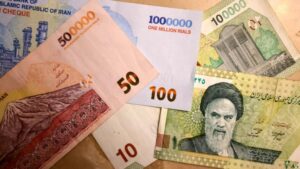
Iran currency redenomination is back in focus as policymakers push a plan to simplify the country’s currency system by removing four zeros from the rial. The move would make prices, accounting, and daily transactions easier to manage, but it would not by itself strengthen the currency or solve the deeper forces behind inflation and depreciation. That is the key point behind Iran’s redenomination plan: it changes the unit of account, not the underlying value of money.
For traders and investors, this makes iran currency redenomination an important policy story, but not a complete stabilisation story. The market impact of this currency reform depends far less on the technical act of redenomination and far more on whether broader conditions improve, including inflation, FX pressure, and public confidence.
In that sense, iran currency redenomination is best understood as a monetary reset designed to simplify the system, not a guaranteed cure for the rial’s weakness heading into 2026.
What the Iran Currency Redenomination Entails
The initiative involves removing four zeros from the national currency, effectively converting 10,000 old rials into one new unit, which is expected to be formally named the ‘toman’.
This plan represents one of the most significant monetary changes in the country’s recent history, aimed squarely at addressing the unwieldy nature of the currency following years of high inflation. The core of the iran currency redenomination is to simplify accounting, payment processing, and daily commerce for citizens and businesses.
The Projected 2026 Transition Timeline
Implementation of the iran currency redenomination is contingent upon a phased approach that requires comprehensive legislative approval and logistical planning. The process, projected to advance through 2026, involves several key stages:
- Legislative Finalisation: Securing final parliamentary approval is the first critical hurdle. Debates centre on the timing, costs, and the technical framework for the transition.
- Dual Circulation Period: A transition period of up to two years is anticipated, during which both the old rial and the new toman will be in legal circulation. This allows for the gradual withdrawal of old banknotes and the recalibration of financial systems.
- Public Awareness Campaigns: Extensive public education will be necessary to inform households and businesses about the changes, prevent confusion, and minimise disruptions in daily economic life.
From Rial to Toman: Clarifying the New System
The formal introduction of the toman is less a creation and more an official recognition of common practice. For decades, Iranians have colloquially used the toman (equal to 10 rials) to simplify prices. The iran currency redenomination seeks to formalise a new toman, where 1 toman will equal 10,000 old rials.
This move aims to bridge the gap between official accounting units and everyday language, thereby streamlining transactions and improving price transparency. It is a key component of the overall iran currency redenomination strategy.
The Rationale Behind Removing Zeros from Currencies
Jurisdictions remove zeros from their currencies primarily to combat the practical inconveniences and negative psychological effects of sustained high inflation.
When the nominal value of a currency is severely eroded, simple transactions may require millions or even billions of units, complicating accounting, straining payment systems, and damaging public confidence. A iran currency redenomination aims to restore a sense of normalcy and efficiency to the monetary system.
Historical Precedents in Currency Redenomination
Many countries have undertaken currency redenomination, with varying degrees of success. The outcome typically depends on whether the redenomination was paired with substantive economic reforms to curb inflation. Below is a comparison of notable historical examples:
| Country | Year | Details of Redenomination | Outcome |
| Turkey | 2005 | Removed 6 zeros (1 New Lira = 1,000,000 Old Lira) | Initially successful, as it was accompanied by strong anti-inflationary policies. However, recent economic challenges have seen renewed inflation. |
| Zimbabwe | 2006, 2008, 2009 | Multiple redenominations, removing over 25 zeros in total. | Failed due to the absence of reforms to address hyperinflation, leading to the eventual abandonment of the local currency. |
| Brazil | 1994 | Introduced the Real, replacing the Cruzeiro Real at 1 to 2,750. | Largely successful as part of the comprehensive ‘Plano Real’, which stabilised the economy and controlled inflation effectively. |
Why the Iran Currency Redenomination Won’t Automatically Strengthen the Rial
The act of redenomination is fundamentally a numerical exercise; it does not alter the core economic conditions that determine a currency’s purchasing power or its exchange rate on international markets.
The value of a currency is a reflection of economic fundamentals such as inflation rates, fiscal discipline, and production capacity. The iran currency redenomination, in isolation, addresses none of these. Therefore, to expect a stronger rial simply from slashing zeros would be to mistake the symptom for the disease.
The Root Cause: Persistent Inflationary Pressures
The need for the iran currency redenomination is a direct result of decades of high and persistent inflation. This economic phenomenon has systematically eroded the value of the rial, forcing the issuance of banknotes with ever-higher denominations.
Key drivers of this inflation include chronic budget deficits financed through monetary expansion, supply-side bottlenecks, and external economic pressures. Unless these structural drivers are addressed, the new currency (toman) will inevitably face the same depreciation pressures as the old rial.
The Limits of Monetary Reform Without Structural Change
Cosmetic monetary reforms, such as an iran currency redenomination, are destined to fail if not supported by deep structural economic changes. True currency stability is built on a foundation of credible and sustainable economic policy. This includes:
- Fiscal Consolidation: Aligning expenditures with revenues to eliminate the need for inflationary financing of deficits.
- Independent Monetary Policy: An autonomous central bank focused on a clear price stability mandate.
- Market-Oriented Reforms: Policies that boost productivity, encourage investment, and enhance competitiveness in the economy.
Without these accompanying measures, the redenomination will simply reset the clock, and a new cycle of zero-addition will likely begin in the future.
Differentiating Redenomination from Authentic Inflation Control
Effective inflation control involves implementing disciplined fiscal and monetary policies that anchor inflation expectations and stabilise prices, whereas redenomination merely changes the unit of account.
The former is a complex, often painful process of economic adjustment; the latter is a simpler, logistical change. The iran currency redenomination should not be confused with a genuine anti-inflationary programme.
Why Issuing Larger Banknotes Signals Economic Stress
The continuous need to issue higher denomination banknotes is a clear and unambiguous indicator of uncontrolled inflation. It shows that the existing currency is losing value so rapidly that smaller notes become impractical for daily transactions.
While the iran currency redenomination aims to reverse this by simplifying the currency, the underlying problem remains. The issuance of notes worth millions of rials is a symptom of deep-seated economic instability, not a sign of recovery.
Practical Implications for Traders and Businesses in 2026
For traders and businesses, the iran currency redenomination will necessitate significant operational adjustments in accounting, pricing, and contract management, introducing short-term logistical risks and costs. The transition period will be a critical time for careful management and strategic planning. While the long-term goal is simplification, the immediate impact will be one of complexity.
Adjusting to New Pricing and Financial Reporting
Businesses must prepare for a complete overhaul of their financial infrastructure. Key challenges during the iran currency redenomination include:
- Software Updates: Accounting, payroll, and point-of-sale (POS) systems must be updated to handle the new currency unit and manage dual-currency displays during the transition.
- Price Conversion: All prices for goods and services must be accurately converted. This carries the risk of ’rounding inflation’, where businesses round up prices, leading to a one-off increase in the price level.
- Financial Statements: Historical financial data will need to be restated in the new currency to allow for meaningful year-on-year comparisons, a process that can be complex and costly.
Navigating Contractual and Legal Ambiguities
A critical risk for traders lies in long-term contracts denominated in rials. The iran currency redenomination could create legal ambiguities if contracts do not specify the conversion terms clearly.
It is advisable for businesses to review all existing financial agreements—including loans, leases, and supply contracts—to insert clauses that clarify how monetary values will be treated post-redenomination. For new contracts, specifying amounts in both old and new currency units during the transition can prevent future disputes.
A Trader’s Outlook on the Rial’s Future
Traders and investors should view the iran currency redenomination primarily as a logistical event, not a fundamental shift in the rial’s value trajectory. The core focus must remain on the underlying macroeconomic indicators, particularly the inflation rate and the direction of fiscal policy.
The redenomination may provide a temporary psychological boost and will certainly simplify transactions, but it will not create lasting value. The long-term outlook for the currency hinges entirely on the successful implementation of credible and sustained economic reforms that tackle inflation at its source.
Watch for policy announcements related to fiscal discipline and central bank operations, as these will be far more telling than the removal of zeros from banknotes.
Frequently Asked Questions (FAQ)
What is the Iran currency redenomination plan?
The Iran currency redenomination plan is a proposal to remove four zeros from the rial and introduce a simplified new unit. In practical terms, 10,000 old rials would be converted into one new unit, which would formalise a system already familiar in everyday use.
Why are larger banknotes being issued alongside redenomination talks?
Larger banknotes are being issued because high inflation has reduced the practical value of smaller notes. This reflects the pressure of currency weakness in daily transactions and helps explain why redenomination has returned to the policy discussion.
Does currency redenomination reduce inflation?
No, currency redenomination does not reduce inflation on its own. It changes the nominal scale of prices and transactions, but it does not fix the underlying causes of inflation, such as currency weakness, monetary instability, or weak confidence.
What is the difference between the rial and the toman?
The rial is Iran’s official currency unit, while the toman has long been the more commonly used unit in daily life. Under the redenomination plan, the toman would become the simplified reference unit, replacing large rial figures with a smaller and easier-to-use denomination.