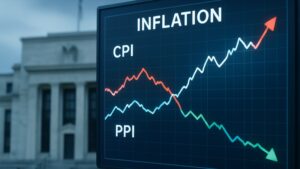
How traders use CPI and PPI is a key question in inflation-driven markets because these two reports often shape the biggest moves in currencies, gold, stock indices, and bond yields. The Consumer Price Index and Producer Price Index both measure price pressure, but they offer different signals on inflation, rate expectations, and market direction. For active traders, understanding how traders use CPI and PPI is less about theory and more about reading inflation data in a way that improves timing, risk control, and trade decisions.
The real value in how traders use CPI and PPI comes from knowing how each report affects market sentiment and policy expectations. CPI usually has the stronger short-term impact, while PPI helps traders spot upstream inflation trends before they reach consumers. That is why inflation analysis for traders should focus not only on the data itself, but also on forecasts, core readings, and how markets react once the numbers are released.
Why Inflation Releases Are Crucial for Traders
Understanding how traders use CPI and PPI starts with one key fact: inflation data can quickly change rate expectations and move major markets. That is why CPI and PPI are among the most important releases for anyone trading currencies, gold, stock indices, or bond yields. For active traders, using CPI and PPI in trading is less about the headline alone and more about spotting whether inflation is cooling, holding firm, or re-accelerating.
This is also why inflation data for traders matters so much. When inflation runs above expectations, markets often price in tighter policy conditions. When inflation comes in softer, markets may shift toward a looser rate outlook. A practical approach to how traders use CPI and PPI is to read these reports as signals for future policy direction and cross-asset volatility.
Understanding CPI as a Measure of Consumer Inflation
A core part of how traders use CPI and PPI is understanding what CPI actually shows. The Consumer Price Index measures changes in the prices paid by consumers for a broad basket of goods and services. Because it reflects consumer inflation directly, CPI is usually the report markets react to most aggressively.
For traders, CPI matters because it has a strong link to rate expectations, the US dollar, gold, and equity indices. A higher-than-expected reading can signal stronger inflation pressure and trigger a fast repricing across markets. That is why how traders use CPI and PPI often begins with CPI as the primary short-term market driver.
Understanding PPI as a Leading Indicator for CPI
Another important part of how traders use CPI and PPI is knowing why PPI still deserves attention. The Producer Price Index measures price changes received by producers, making it a useful gauge of producer inflation and upstream cost pressure. It tracks inflation earlier in the supply chain than CPI.
For traders, PPI is valuable because it can offer an early signal of future consumer inflation. Rising producer costs may later flow through to final prices, which is why consumer inflation and producer inflation should be read together. Even so, how traders use CPI and PPI is not about assuming PPI always leads CPI. It is about using PPI as directional context while treating CPI as the stronger short-term market catalyst.
The 5-Step Framework for Analysing CPI and PPI Data
A structured approach is essential to avoid emotional reactions during volatile post-release periods. This five-step framework provides a logical sequence for interpreting inflation data, forming a core part of understanding how traders use CPI and PPI effectively.
Step 1: Check the Forecast Before the Release
A key part of how traders use CPI and PPI is comparing the actual number with the forecast. Markets are forward-looking, so the biggest move usually comes from the surprise, not the inflation number alone. If CPI or PPI matches expectations, the reaction may be limited. If the data comes in clearly above or below consensus, volatility often rises quickly.
That is why using CPI and PPI in trading starts with knowing the market forecast before the release. For traders, the real opportunity often comes from the gap between expected inflation and actual inflation.
Step 2: Compare the Actual Data vs. Consensus Estimates
Once the data is released, the immediate task is to compare the actual figures with the forecasts from Step 1. This comparison determines the initial market direction. There are three possible outcomes:
- Higher than forecast (a ‘beat’): Indicates stronger inflationary pressure. This is typically perceived as hawkish, suggesting the central bank may need to raise rates, leading to a stronger currency.
- Lower than forecast (a ‘miss’): Indicates weaker inflationary pressure. This is seen as dovish, implying less pressure on the central bank to tighten policy, often leading to a weaker currency.
- In line with forecast: Suggests the status quo. The market has already priced this outcome in, often leading to a muted or choppy reaction as traders look for other catalysts.
Step 3: Separate Headline Inflation from Core Inflation
Another important part of how traders use CPI and PPI is separating headline inflation from core inflation. Headline data includes all items, while core data removes more volatile categories such as food and energy. This makes core inflation a cleaner guide to underlying price pressure.
For traders, inflation data analysis is not just about whether the headline beats expectations. If headline inflation is strong but core inflation is softer, the market reaction can become mixed. That is why how traders use CPI and PPI often depends on reading both numbers together and identifying which one is more likely to drive the follow-through move.
| Scenario | Headline CPI vs. Forecast | Core CPI vs. Forecast | Likely Market Interpretation & Reaction |
| Clear Inflationary Pressure | Beat | Beat | Hawkish. Stronger currency, higher bond yields. |
| Transitory Inflation | Beat | Miss | Conflicting. Initial spike may fade as market focuses on weak core. Less pressure on central bank. |
| Clear Disinflation | Miss | Miss | Dovish. Weaker currency, lower bond yields. |
Step 4: Read Month-on-Month Before Year-on-Year
A practical part of how traders use CPI and PPI is focusing on month-on-month data before year-on-year headlines. YoY shows the broader inflation trend, but MoM gives a faster read on current momentum. Because annual figures can be distorted by base effects, many traders use the monthly change to spot whether inflation pressure is cooling, holding, or building again.
This is why using CPI and PPI in trading is not just about reading the headline number. In many cases, a softer MoM print can matter more than a still-high YoY figure because it may signal that inflation is starting to peak.
Step 5: Confirm with Yields, Dollar, Gold, and Equity Futures
Another key part of how traders use CPI and PPI is checking how other markets react after the release. Inflation data should be read alongside Treasury yields, the US dollar, gold, and equity futures. If the report is truly hawkish, yields and the dollar often rise, while gold and stock futures may weaken.
This cross-asset reaction is a core part of inflation analysis for traders. If the data looks hot but yields fail to rise, the market may be reading the release differently. That is why how traders use CPI and PPI is not only about the report itself, but also about whether price action confirms the trading view.
How Different Asset Classes React to Inflation Data
The application of the five-step framework varies depending on the asset being traded. An essential aspect of how traders use CPI and PPI is adapting the analysis to the specific characteristics of each market, from Forex to gold to equity indices.
How Forex Traders Use CPI and PPI
For foreign exchange traders, inflation data is primarily a tool for forecasting interest rate differentials. A country with rising inflation is likely to see its central bank raise interest rates, which increases the ‘yield’ on its currency. This attracts foreign capital, causing the currency to appreciate. Therefore, a higher-than-expected US CPI print will typically strengthen the USD against other currencies like the EUR, JPY, or GBP.
However, the risk is that if inflation becomes so high that it is perceived as a sign of economic instability, it can perversely weaken the currency. This sophisticated understanding of how traders use CPI and PPI allows for a more nuanced approach than simply buying a currency on a high inflation print.
How Gold Traders Use CPI and PPI
Gold has a complex and often misunderstood relationship with inflation. On one hand, it is seen as a traditional hedge against inflation because it is a real asset that can preserve value when fiat currency is being debased. This suggests high inflation should be bullish for gold.
On the other hand, the primary response to high inflation is higher interest rates. Gold is a non-yielding asset, so as interest rates (and bond yields) rise, the opportunity cost of holding gold increases, making it less attractive. This dynamic makes trading gold around CPI releases challenging.
The outcome often depends on real yields (nominal yields minus inflation). If inflation rises faster than nominal yields, real yields fall, which is bullish for gold. If the central bank responds aggressively and pushes nominal yields up faster than inflation, real yields rise, which is bearish for gold.
How Index Traders Use CPI and PPI
The reaction of stock indices like the S&P 500 or FTSE 100 to inflation data depends heavily on the prevailing economic context. In a post-recession recovery, a moderate increase in inflation can be seen as a positive sign of strengthening economic demand and corporate pricing power, which can be bullish for stocks.
However, once inflation rises to a level that forces the central bank into an aggressive tightening cycle, it becomes a major headwind for equities. Higher interest rates increase corporate borrowing costs, reduce the present value of future earnings, and can slow the economy, all of which are negative for stock valuations. A crucial skill in how traders use CPI and PPI for indices is correctly identifying which regime the market is currently in.
What Traders Often Misread in Inflation Reports
Inexperienced traders often fall into several common traps when interpreting CPI and PPI data. Avoiding these pitfalls is what separates a nuanced analysis from a simplistic, and often incorrect, one. Acknowledging these common errors is part of developing a robust method for how traders use CPI and PPI.
The Mistake of Equating High Inflation with a Stronger Dollar
While the textbook reaction is that high inflation leads to higher rates and a stronger currency, this is not always true. If inflation is accompanied by weak economic growth (stagflation), or if it is perceived to be spiralling out of control due to policy errors, it can severely damage investor confidence. In such scenarios, capital may flee the currency, causing it to weaken despite the prospect of higher interest rates. The context of economic growth is paramount.
The Mistake of Ignoring Confirmation from Bond Yields
The bond market is often considered ‘smarter’ than the currency or stock markets. It is the most direct transmission mechanism of monetary policy expectations. If the CPI report is hot, but bond yields fail to rise or even fall, the bond market is sending a clear signal that it does not believe the central bank will (or can) tighten policy aggressively, likely due to underlying economic weakness. Ignoring this divergence is a common and costly error.
The Mistake of Focusing Only on the Headline Number
As discussed in the framework, the details matter immensely. An initial price spike based on a surprising headline number can quickly reverse if the core figures, the MoM trend, or specific components of the report (e.g., shelter, services inflation) tell a different story. Professional traders dissect the report’s internals rather than just reacting to the most prominent figure.
The Mistake of Misjudging the Prevailing Market Context
Market reactions are path-dependent. After a long period of aggressive rate hikes, a high inflation print might cause a smaller reaction because much of the hawkish policy is already priced in. Conversely, during a period of stable low rates, the first sign of rising inflation can trigger a massive repricing. Understanding the broader market narrative and sentiment is as important as analysing the data itself. It is a dynamic process that defines how traders use CPI and PPI successfully over time.
A Simple Pre-Release and Post-Release Checklist
To consolidate the framework into an actionable routine, here is a practical checklist for traders to use around CPI and PPI releases.
| Phase | Action Item | Rationale |
| Pre-Release (T-60 mins) | Identify consensus forecasts for Headline and Core, MoM and YoY. | Establishes the baseline for a market surprise. |
| Note current price levels of key assets (e.g., EUR/USD, Gold, 2-Year Yield). | Provides a reference point to measure the impact of the release. | |
| Define risk parameters and potential trade scenarios (e.g., ‘If core misses, I will…’). | Prevents impulsive decisions in the heat of the moment. | |
| Post-Release (T+1 to T+15 mins) | Compare actual data to forecast for all key metrics. | Identifies the nature and magnitude of the surprise. |
| Observe the immediate reaction in bond yields and the dollar index first. | Validates the initial interpretation of the data (Step 5 of the framework). | |
| Execute trade based on pre-defined plan if the market reaction aligns with the data. | Ensures a disciplined, non-emotional entry. |
In conclusion, a mastery of how traders use CPI and PPI data moves far beyond a simple ‘high is good, low is bad’ binary view. It requires a multi-layered, systematic approach that accounts for market expectations, underlying details like core inflation, recent momentum, and crucial confirmation from inter-market analysis. By adopting the framework and checklist outlined above, traders can move from being reactive to proactive, interpreting inflation data with the analytical rigour required to navigate its market-moving potential.
Frequently Asked Questions (FAQ)
What is the main difference between CPI and PPI for a trader?
The main difference is where inflation appears in the pricing chain. CPI measures prices paid by consumers, so it usually has a more direct impact on market pricing and rate expectations. PPI measures prices at the producer level, making it more useful as an early signal of upstream cost pressure.
How quickly do markets typically react to CPI and PPI releases?
Markets usually react within seconds of the release. The first move is often driven by algorithms reacting to the headline surprise, while the next phase comes as traders assess core data, forecasts, and market implications. More sustained direction often develops over the next several minutes.
Is a higher-than-expected CPI report always bullish for the US Dollar?
No, not always. A hot CPI print often supports the US dollar because it can lift rate expectations, but market context still matters. If traders see the data as a sign of economic stress rather than strength, the dollar reaction can become mixed.
Which is more important for traders: core or headline inflation?
Core inflation is usually more important for trend analysis, while headline inflation often drives the first reaction. Headline data gets attention first, but core inflation gives a cleaner view of underlying price pressure. That is why traders usually watch both, with more weight on core for follow-through.