Decoding the Numbers: Your First Step into Foreign Exchange 💡
Ever stared at a currency converter and wondered what’s happening behind the scenes? You’re not alone. For many, the foreign exchange (Forex) market seems like a complex beast, with rates that fluctuate by the second. Whether you’re planning a holiday, investing in overseas stocks, or running a business with international clients, understanding how to work out foreign exchange rate movements is a fundamental skill. It’s the difference between getting a fair deal and unknowingly losing money in hidden fees and poor rates.
This guide will demystify the process, transforming you from a passive observer to an informed participant. We’ll break down the formulas, expose the costs you don’t see, and give you the practical knowledge to calculate rates with confidence in 2026—an approach widely adopted by professional platforms such as Ultima Markets.
The Core Mechanic: How to Calculate Rates Between Two Currencies 💱
At its heart, an exchange rate is simply the price of one currency in terms of another. Think of it like buying apples; you need to know the price per apple to know how many you can get for £10. It’s the same with currency. To calculate exchange rate between two currencies, the key is understanding which currency is the ‘apple’ (the base currency) and which is the ‘money’ (the quote currency).
Base vs. Quote Currency: The Foundation of Every Calculation
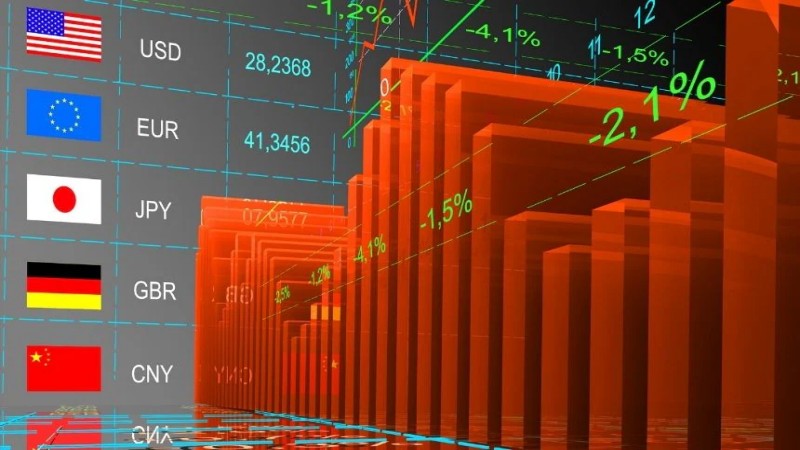
When you see a currency pair like GBP/USD, this is what it means:
- Base Currency (GBP): This is the first currency in the pair. It’s the ‘commodity’ you are buying or selling. It always has a value of 1.
- Quote Currency (USD): This is the second currency. It’s the ‘price’ you pay to buy one unit of the base currency.
So, if the GBP/USD exchange rate is 1.2500, it means that for every £1, you will get $1.25. This relationship underpins every foreign exchange rate formula used in trading platforms such as Ultima Markets MT5.
The Magic Formulas: Manual Conversion Made Easy
Once you grasp the base/quote concept, the calculations are straightforward. There are only two main scenarios you need to master, and both rely on a simple foreign exchange rate formula.
Scenario 1: Converting from the Base Currency
This is when you have the base currency (e.g., GBP) and want to know how much you’ll get in the quote currency (e.g., USD).
Formula: Amount of Base Currency × Exchange Rate = Amount of Quote Currency
Example: You have £500 and want to convert it to USD. The GBP/USD rate is 1.2500.
Calculation: £500 × 1.2500 = $625
Scenario 2: Converting to the Base Currency
This is when you have the quote currency (e.g., USD) and want to find its equivalent value in the base currency (e.g., GBP).
Formula: Amount of Quote Currency ÷ Exchange Rate = Amount of Base Currency
Example: You have $1,000 and want to convert it back to GBP. The GBP/USD rate is still 1.2500.
Calculation: $1,000 ÷ 1.2500 = £800
Beyond the Basics: Understanding the Bid-Ask Spread 📊
Here’s a crucial piece of the puzzle that many people miss. The exchange rate you see on the news (the ‘mid-market rate’) is not the rate you will actually get from a bank or currency exchange service. This is where bid-ask spread explained becomes essential knowledge.
What Are the Bid and Ask Prices?
- Bid Price (The ‘Buy’ Rate): This is the price at which the provider will buy the base currency from you. It’s always the lower of the two prices.
- Ask Price (The ‘Sell’ Rate): This is the price at which the provider will sell the base currency to you. It’s always the higher of the two prices.
The difference between these two prices is the spread. This hidden cost structure is also a major consideration when assessing broker fund handling and safety standards, such as those outlined in Ultima Markets fund safety.
A Practical Example: The Real Cost of Conversion
Let’s say you’re going to the US and need to ‘buy’ dollars with your pounds. You check your bank’s rates for GBP/USD:
- Bid (They Buy GBP): 1.2350
- Ask (They Sell GBP): 1.2650
When you buy USD with GBP:
The bank is ‘selling’ you USD, which means you are ‘selling’ them GBP. You will get the lower bid price for your pounds. So, to get the USD rate, you must use their ‘buy’ rate for the base currency (GBP).
Calculation: £1,000 × 1.2350 = $1,235
When you return with USD and want GBP back:
Now you are ‘selling’ your USD to the bank, which means the bank is ‘selling’ GBP back to you. You must pay their higher ask price. To convert your dollars back, you’ll divide by this higher rate.
Calculation: $1,235 ÷ 1.2650 = £976.28
After a round trip, you end up with £976.28 from an original £1,000—purely due to the spread. This is exactly why bid-ask spread explained matters far more than headline ‘zero commissio’ claims.
Finding the Best Deal: How to Compare Bank Rates vs. Specialists 💰
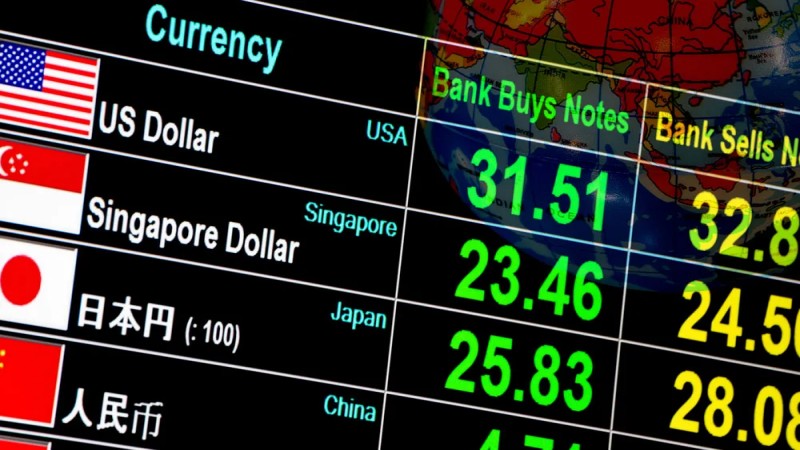
To truly optimise your outcome, you must compare bank exchange rates UK providers against specialist platforms. Traditional banks prioritise convenience; specialists prioritise pricing efficiency.
Digital platforms and brokers—especially those offering transparent fee structures and fast Deposits & Withdrawals—typically deliver exchange outcomes much closer to the real market rate.
Comparative Analysis: Where You ‘Chang Qian’ Matters
Below is a typical comparison you might find in 2026. Note that these are illustrative rates; always check live rates before making a transaction.
| Provider | GBP/EUR Exchange Rate Offered | Commission / Fees | Total Euros Received for £5,000 |
|---|---|---|---|
| Major High Street Bank (e.g., Barclays) | 1.1450 | £0 – £25 | €5,725 |
| Airport Currency Exchange | 1.1100 | £0 (but hidden in the poor rate) | €5,550 |
| Post Office | 1.1520 | £0 | €5,760 |
| Online Specialist Broker (e.g., Wise, Revolut) | 1.1680 | ~£15 (Transparent Fee) | €5,823 (after fee) |
Key Takeaways for Getting the ‘Most Dǐ’ Rate
- Avoid Airports: Airport exchange kiosks are notorious for offering the worst rates due to their captive audience. Avoid them at all costs.
- Look Beyond the Headline Fee: Many providers claim ‘0% commission’, but they build their profit into a very wide spread. The final amount you receive is the only true measure of value.
- Online is Often Better: Digital platforms and specialist brokers have lower overheads and can offer rates much closer to the mid-market rate. They are usually the best option for larger transfers.
- Plan Ahead: Last-minute exchanges are almost always more expensive. Shopping around online a few days before you need the currency will save you a significant amount.
Advanced Concepts: Factors That Make Rates Move 📈
While you don’t need to be a professional trader, having a basic understanding of what influences exchange rates can help you time your conversions better. These are complex, interconnected factors, but here are the main drivers:
Economic Indicators and Central Bank Policy
- Interest Rates: This is a big one. Higher interest rates, set by a country’s central bank (like the Bank of England), tend to attract foreign investment, which increases demand for and strengthens the currency.
- Inflation: A country with consistently lower inflation exhibits a rising currency value, as its purchasing power increases relative to other currencies. High inflation typically erodes currency value.
- Economic Health: Data like GDP growth, employment figures, and manufacturing output give a snapshot of a country’s economic health. Strong economic performance usually leads to a stronger currency.
Market Sentiment and Geopolitical Stability
- Political Stability: Countries with stable political environments are seen as safer for investment, which supports their currency. Unexpected elections or political turmoil can cause a currency’s value to drop.
- Market Speculation: In the short term, the vast majority of currency transactions are speculative. If traders believe a currency is going to rise, they will buy it, and that demand can cause a self-fulfilling prophecy. This can lead to high volatility.
Conclusion: Take Control of Your Currency Conversions
Once you understand how to work out foreign exchange rate values, apply the correct foreign exchange rate formula, and account for the bid-ask spread explained earlier, currency conversion stops being guesswork. By taking the time to compare bank exchange rates UK providers with specialist alternatives, you retain more value with every transaction—whether for travel, business, or investment.
FAQ🧭
1. What is the ‘mid-market rate’ I see on Google or XE.com?
The mid-market rate is the midpoint between the bid and ask prices of a currency. It’s considered the ‘purest’ rate before any spread or fees are applied by a financial institution. While it’s a great benchmark for the true value, it’s not a rate available to retail customers. You should use it to judge how fair the rate you’re being offered is.
2. How do I work out a ‘cross rate’ (e.g., GBP to JPY) if I only have rates against the USD?
You can calculate a cross rate by using a common third currency, usually the US Dollar. For example, if you have GBP/USD = 1.2500 and USD/JPY = 145.00, you can find the GBP/JPY rate by multiplying the two: 1.2500 × 145.00 = 181.25. So, £1 would be worth approximately ¥181.25.
3. Is it better to use a credit card abroad or exchange cash?
Often, using a credit or debit card designed for travel can offer better exchange rates than exchanging cash. However, be aware of potential foreign transaction fees charged by your bank. Always choose to be billed in the local currency, not in pounds, as the conversion rate offered by the merchant’s machine (known as Dynamic Currency Conversion) is usually very poor.
4. What is a ‘forward contract’ in foreign exchange?
A forward contract is an agreement to exchange a specific amount of currency on a future date at a rate agreed upon today. This is used by businesses and investors to hedge against the risk of unfavourable rate fluctuations. It allows them to lock in a rate for a future transaction, providing certainty over costs or revenues.
*This article represents the author’s personal views only and is for reference purposes. It does not constitute any professional advice.*