Entering the world of foreign exchange trading can feel like navigating a labyrinth. You hear stories of vast fortunes made and lost, see complex charts flashing across screens, and are bombarded with jargon that sounds like another language. For many aspiring traders in the UK, the first question is the most daunting: where on earth do I even begin? You’re not just looking for a simple definition; you’re seeking a practical, no-nonsense roadmap for how to trade foreign exchange effectively and responsibly in 2025. This isn’t about getting rich overnight. It’s about understanding the largest financial market in the world, mastering the tools at your disposal, and developing the discipline required to navigate its currents.
Whether you’re aiming to supplement your income, build a new skill set, or take the first steps towards financial independence, this guide is designed for forex trading for beginners. We’ll strip away the complexity, demystify the terminology, and provide a clear, structured path from absolute beginner to confident market participant. We will cover the foundational knowledge, practical steps to place your first trade, strategies employed by seasoned professionals, and the critical importance of managing risk. Let’s get started on the best way to trade foreign exchange.
💡 Understanding the Foreign Exchange Market: The Fundamentals
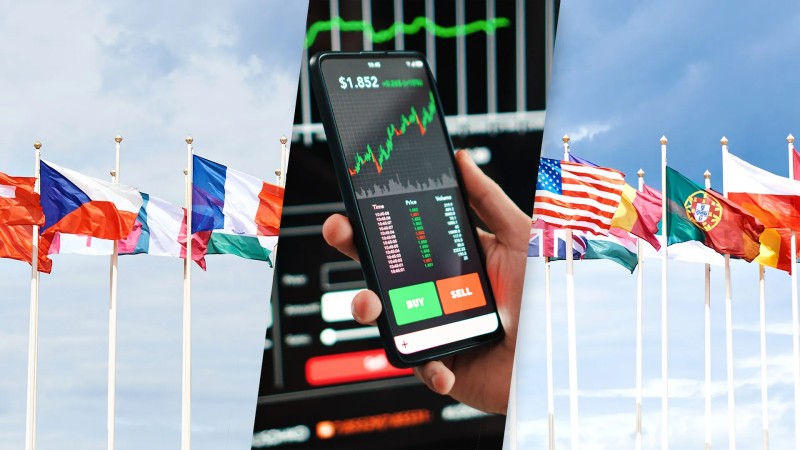
Before you even think about placing a trade, it’s crucial to grasp what the foreign exchange market is. At its core, the forex market is a global, decentralised marketplace where the world’s currencies are traded. It’s the largest and most liquid market globally, with trillions of dollars changing hands every single day. Unlike the London Stock Exchange, it has no central location; trading is conducted electronically over-the-counter (OTC), meaning all transactions occur via computer networks between traders worldwide.
For UK traders looking for the best way to trade foreign exchange, the first step is understanding what moves the market.
What Drives the Forex Market?
Currency values are in a constant state of flux, influenced by a multitude of factors. Understanding these drivers is fundamental to making informed trading decisions.
- Economic Data: Reports such as Gross Domestic Product (GDP), inflation rates (like the UK’s CPI), employment figures (e.g., the US Non-Farm Payrolls), and retail sales can significantly impact a currency’s value. A strong economy typically leads to a stronger currency.
- Central Bank Policy: Decisions made by central banks, such as the Bank of England (BoE) or the US Federal Reserve (Fed), are paramount. Interest rate changes are a primary driver; higher rates often attract foreign investment, increasing demand for and the value of the currency.
- Geopolitical Events: Political stability (or instability), major elections, and international relations play a huge role. Events like Brexit have had a long-lasting, profound impact on the value of the Pound Sterling (GBP).
- Market Sentiment: Perceptions and expectations sometimes move markets more than data. Understanding trader sentiment helps in how to trade foreign exchange strategically.
Major, Minor, and Exotic Pairs Explained
In forex, you are always trading one currency against another. These are known as ‘currency pairs’. They fall into three main categories:
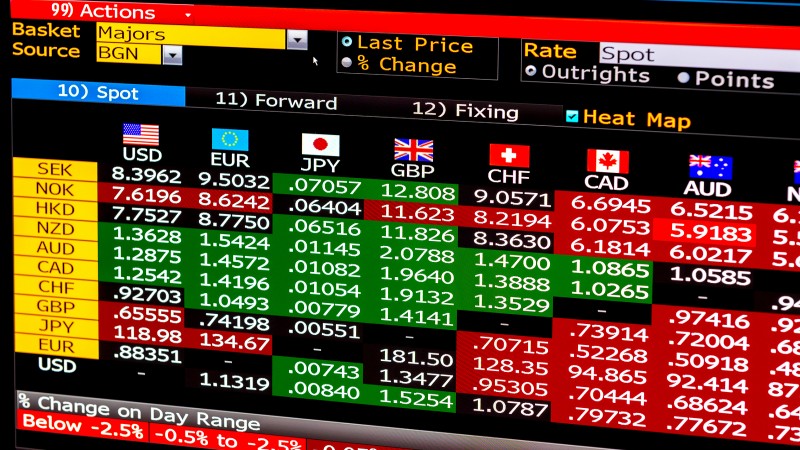
- The Majors: These are the most traded pairs and involve the US Dollar (USD) on one side. They are highly liquid and tend to have lower spreads (the cost of trading). Examples include: GBP/USD (Pound/Dollar), EUR/USD (Euro/Dollar), and USD/JPY (Dollar/Japanese Yen).
- The Minors (or Cross-Currency Pairs): These pairs do not involve the US Dollar. They consist of other major currencies traded against each other, such as EUR/GBP (Euro/Pound) or GBP/JPY (Pound/Yen). They are also quite liquid but can be more volatile than the majors.
- The Exotics: These pairs consist of one major currency paired with the currency of an emerging or smaller economy, e.g., GBP/TRY or EUR/SGD. These pairs are less liquid, have higher spreads, and can be extremely volatile, making them riskier for forex trading beginners.
🧭 Your Step-by-Step Guide to Trading Foreign Exchange
Now that you understand the basics, let’s explore the best way to trade foreign exchange.
Step 1: Choose a Reputable Forex Broker
Your broker is your gateway to foreign exchange trading. Choosing the right one is crucial. For UK traders, the number one priority is regulation. Ensure your broker is authorised and regulated by the Financial Conduct Authority (FCA).
If you want a reliable starting point, consider Ultima Markets, which offers FCA-regulated trading services and strong client protections. You can also review their fund safety measures for peace of mind.
Step 2: Open and Fund a Trading Account
Open an account online, providing proof of identity (passport/driver’s license) and proof of address (utility bill/bank statement). Fund the account via bank transfer, debit/credit card, or e-wallet. Ultima Markets Deposits & Withdrawals offers multiple convenient methods.
After verification, you can fund your account. Most brokers in the UK offer various methods, including bank transfer, debit/credit cards, and e-wallets like PayPal or Skrill.
Step 3: Start with a Demo Account
A demo account lets forex trading beginners practice risk-free:
-
Familiarise with trading platforms
-
Practice different order types (market, limit, stop)
-
Test trading strategies
-
Experience the emotional side of trading
Spend weeks or months until you can consistently apply your strategy.
Step 4: Placing Your First Live Trade
When you are ready to go live, the process is straightforward. Let’s say your analysis suggests the Pound Sterling (GBP) will strengthen against the US Dollar (USD). You would place a ‘buy’ order on the GBP/USD pair. If you believed the opposite, you would ‘sell’ the pair. You will need to define three key parameters for your trade:
- Entry Price: The price at which you want to open your position.
- Stop Loss: An order placed to automatically close your trade if the market moves against you by a specified amount. This is your primary risk management tool.
- Take Profit: An order that automatically closes your trade when it reaches a certain level of profit.
📈 Developing a Robust Forex Trading Strategy
Random trades fail. A strategy dictates what, when, and how to trade. Combine:
-
Technical Analysis: Candlestick patterns, support/resistance, RSI, Bollinger Bands
-
Fundamental Analysis: Economic, political, and social factors
The best way to trade foreign exchange blends both. Beginners often start with trend-following strategies on major pairs like GBP/USD.
Technical Analysis: Reading the Charts
Technical analysis involves studying historical price charts to identify patterns and predict future price movements. It operates on the belief that all known information is already reflected in the price. Key tools include:
- Candlestick Patterns: Patterns like ‘Doji’, ‘Hammer’, or ‘Engulfing’ bars can signal potential reversals or continuations in the market trend. Think of it like a market ‘body language’ – the shape of the candle tells a story about the battle between buyers and sellers.
- Support and Resistance: These are levels on a chart where the price has historically struggled to break through. Support is a price floor, while resistance is a price ceiling. Traders often buy near support and sell near resistance.
- Indicators: These are mathematical calculations based on price and/or volume. Common examples are Moving Averages (to identify trends), the Relative Strength Index (RSI) (to spot overbought or oversold conditions), and Bollinger Bands (to measure volatility).
Fundamental Analysis: The Big Picture
Fundamental analysis, as discussed earlier, focuses on the economic, social, and political forces that drive supply and demand for a currency. A fundamental trader might analyse the Bank of England’s inflation forecasts to predict the future direction of GBP. They read news, study economic calendars, and make decisions based on the health of a country’s economy.
Which Approach is the Best Way to Trade Foreign Exchange?
The truth is, most successful traders use a combination of both. Fundamental analysis helps you understand *why* a market might move (the long-term trend), while technical analysis helps you decide *when* to enter and exit a trade (the precise timing). For a beginner, starting with a simple, technical, trend-following strategy on a major pair like GBP/USD is often a good entry point.
💰 Critical Concepts: Leverage and Risk Management
Use platform calculators to determine lot size. Discipline here is key for foreign exchange trading survival.
-
Leverage: Controls a large position with small capital. Amplifies profits and losses.
-
Position Sizing: Risk only 1-2% of account per trade. For a £5,000 account, risk max £50 per trade. Ensures survival in losing streaks.
Example:
- Account size: £10,000
- Risk per trade: 1% (£100)
- Your strategy requires a 50-pip stop loss on GBP/USD.
- You would calculate the position size that ensures a 50-pip move against you results in a £100 loss.
Your trading platform or online calculators can help you with this calculation. Master this, and you are already ahead of the majority of novice traders.
Conclusion: Your Journey as a Forex Trader
Learning how to trade foreign exchange is a marathon. Education, discipline, and risk respect are key. Demo accounts, strategy development, and strict risk management pave the path to success.
FAQ
1. How much money do I need to start trading forex in the UK?
While some brokers allow you to open accounts with as little as £100, it’s advisable to start with a more substantial amount, such as £1,000 to £5,000. This allows you to practice proper position sizing (risking 1-2% per trade) without being over-leveraged. Trading with a very small account makes meaningful risk management almost impossible.
2. Is forex trading taxable in the UK?
Yes. For most retail traders in the UK, profits from forex trading are typically subject to Capital Gains Tax (CGT). However, if you trade through a financial spread betting account, your profits are currently free from CGT and stamp duty under UK law. It’s essential to consult with a tax professional to understand your specific circumstances and obligations.
3. Can I trade forex on foreign stock exchanges?
This question mixes two different concepts. Forex is the trading of currencies, which happens on a decentralised, over-the-counter market, not a specific stock exchange. Trading on foreign stock exchanges, like the New York Stock Exchange (NYSE) or NASDAQ, involves buying and selling shares of companies listed there. While some UK brokers offer access to international stock trading, it is a completely separate activity from forex trading.
4. What is the best time of day to trade forex?
The forex market is open 24 hours a day, five days a week. The most active and liquid times are when major market sessions overlap. The London and New York session overlap (approx. 1 pm to 4 pm UK time) is often considered the best time to trade as it sees the highest trading volume, which can lead to lower spreads and significant price movements.
*This article represents the author’s personal views only and is for reference purposes. It does not constitute any professional advice.*