

Navigating the world of foreign currency exchange can feel like walking through a minefield. For the savvy UK investor or the meticulous holiday planner, understanding how to exchange foreign currency efficiently is essential to protecting the value of your hard-earned pounds. The difference between a competitive rate and a poor one—often hidden behind complex fee structures—can materially impact your travel budget or investment returns. In 2025, with travel money UK options expanding far beyond the traditional bank counter, identifying the best way to exchange foreign currency has never been more important.
This guide is designed to be your definitive resource on how to exchange foreign currency in today’s market. We dissect modern options—from fintech apps and digital trading platforms to high-street banks—and provide a clear framework for evaluating foreign currency exchange rates, fees, and execution efficiency. Along the way, we demystify industry jargon and share practical strategies to help you consistently maximise value when you need to change money.
💡 The Core Contenders: Where Can You Exchange Currency?
Before comparing providers, it is critical to understand the main players in the currency exchange ecosystem. Each option addresses a different priority—cost efficiency, execution speed, regulatory security, or convenience—making this first decision central to identifying the best way to exchange foreign currency for your needs.
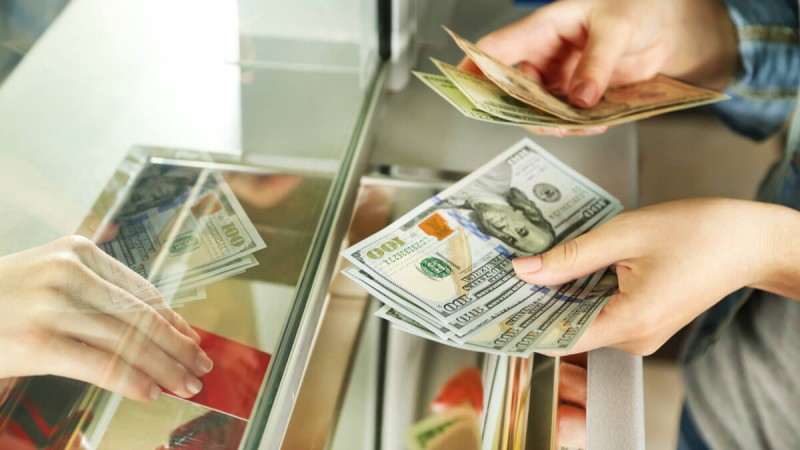
Understanding the Exchange Rate Spectrum
Not all foreign currency exchange rates are created equal. Knowing which rate you are being quoted is the single most effective defence against overpaying.
The Mid-Market Rate
Also known as the interbank rate, this is the “true” exchange rate used between financial institutions. It represents the midpoint between global buy and sell prices and serves as the benchmark for anyone serious about exchange foreign currency online or offline.
The Tourist Rate
This is the consumer-facing rate, typically marked up from the mid-market rate. Providers advertising “0% commission” often compensate by widening this spread, making the exchange more expensive despite the marketing claim.
Deconstructing the Costs: It’s More Than Just the Rate
When assessing how to exchange foreign currency, the real cost always combines the quoted rate and hidden or explicit charges:
-
Commission Fees: Flat or percentage-based service charges
-
Transfer Fees: Common with online or cross-border transfers
-
Hidden Margins: Embedded within unfavourable exchange rates
-
Delivery Charges: For ordered cash sent to your home
Platforms such as Ultima Markets operate with transparent pricing models, allowing users to evaluate costs clearly—an approach increasingly valued by both investors and international travellers.
📊 Head-to-Head Comparison: The Best Currency Exchange Methods in 2025
Below is a simplified comparison of the most common methods, assessed by rate quality, fees, and convenience—three pillars that define the best way to exchange foreign currency in practice.
| Method | Exchange Rate Quality | Typical Fees | Convenience | Best For |
|---|---|---|---|---|
| Online Currency Specialists (e.g., Wise, Remitly) | Excellent (close to mid-market) | Low, transparent transfer fees | High (fully digital, app-based) | Bank-to-bank transfers, sending money abroad, multi-currency accounts. |
| Challenger/Digital Banks (e.g., Revolut, Monzo) | Excellent (often mid-market rate up to a monthly limit) | Minimal to none on weekdays; weekend markups may apply | Very High (integrated into daily banking app) | Spending abroad, ATM withdrawals, frequent travellers. |
| High Street Banks (e.g., Barclays, HSBC) | Poor to Fair (significant margin on the rate) | Can include service fees, especially for non-customers | Moderate (requires visit or ordering in advance) | Existing customers exchanging large, pre-ordered amounts for security. |
| Local Bureau de Change | Variable (can be competitive in city centres) | Often ‘no commission’ but built into a poorer rate | Moderate (requires finding a physical location) | Last-minute cash needs, but requires shopping around for rates. |
| Airport Exchange Kiosks | Very Poor (worst rates on the market) | High fees and a very wide spread on the rate | Very High (conveniently located) | Emergency use only; exchanging the smallest possible amount needed. |
| Travel Money Cards (Pre-paid) | Fair to Good (rates are locked in) | Can have activation, reload, and inactivity fees | High (secure and widely accepted) | Budget-conscious travellers who want to lock in a rate before they go. |
The Verdict for Different Scenarios
-
Sending Money Abroad: Online specialists remain the cheapest and clearest solution for those seeking to exchange foreign currency online at near mid-market rates.
-
Spending While Travelling: Challenger bank cards paired with no-fee credit cards consistently outperform traditional travel money UK products.
-
Physical Cash Needs: Ordering online in advance offers better value than banks or airports.
💻 The Digital Frontier: Mastering Online Currency Exchange
In 2025, the most competitive foreign currency exchange rates are overwhelmingly found online. Digital platforms eliminate branch overheads, allowing them to pass savings directly to users while maintaining compliance and fund security.
Regulated trading and transfer platforms—such as those highlighting robust safeguards like Ultima Markets fund safety—have raised expectations around transparency and execution integrity.
Why Go Digital? The Unbeatable Advantages
For active users who already engage with financial tools like Ultima Markets MT5, digital familiarity makes exchange foreign currency online both intuitive and cost-effective.
A Step-by-Step Guide to Using an Online Platform
- Compare Providers: Don’t just pick the first one you see. Use comparison sites to check who offers the best rate and lowest fees for your specific currency pair and amount.
- Create an Account: Registration is usually straightforward. You will need to provide personal details and undergo a verification process (KYC – Know Your Customer), often involving uploading a photo of your ID (like a passport or driving licence) and proof of address. This is a regulatory requirement to prevent money laundering.
- Set Up Your Transfer: Enter the amount you want to send and the currency you’re converting to. The platform will show you the live exchange rate, the fee, and the final amount the recipient will receive.
- Lock in the Rate: Most services allow you to lock in the rate for a specific period (e.g., 24-72 hours) while you transfer the funds.
- Fund Your Transfer: You’ll typically fund the transfer by making a local bank transfer from your UK account to the provider’s UK account, or by using a debit card.
- Track Your Money: Once funded, the service will handle the currency conversion and send the money to the recipient’s bank account. You can usually track the progress in the app.
Efficient deposits and withdrawals—such as those outlined in Ultima Markets Deposits & Withdrawals—are now an expected standard rather than a premium feature.
The Rise of Challenger Banks: Your All-in-One Travel Companion
Firms like Revolut, Monzo, and Starling have disrupted traditional banking and are exceptionally useful for travellers. They often offer fee-free spending abroad and allow you to withdraw a certain amount of cash from foreign ATMs each month without charge. The exchange rate used is typically the mid-market rate, especially on weekdays (some apply a small markup at weekends when forex markets are closed). For most travellers, using one of these cards for daily spending is the simplest and one of the cheapest methods available.
🏦 Traditional Routes: When Do In-Person Exchanges Make Sense?
Despite digital dominance, traditional exchanges retain limited relevance.
High Street Banks
Security and familiarity appeal to some users, but poor rates mean this is rarely the best way to exchange foreign currency unless dealing with large, pre-arranged sums.
Airport Kiosks
A textbook example of convenience over value. Use only in emergencies and exchange the minimum required.
🧭 Advanced Strategies for the Savvy Traveller
Beyond choosing where to exchange your currency, a few key strategies can help you further minimise costs and avoid common pitfalls. These are the habits that separate the novice traveller from the seasoned expert.
Always Reject Dynamic Currency Conversion (DCC)
When using your card abroad, either at a shop or an ATM, you may be presented with a choice: pay in the local currency (e.g., EUR, USD) or pay in your home currency (GBP). It might seem easier to pay in pounds, but you must always choose the local currency.
If you choose GBP, the vendor or ATM provider will use their own exchange rate to convert the price. This process is called Dynamic Currency Conversion (DCC), and the rates are almost always terrible, containing a significant markup for the vendor. By choosing the local currency, you allow your own bank or card provider (e.g., Visa, Mastercard, Revolut) to handle the conversion at their much more favourable rate.
The No-Fee Credit Card: An Essential Tool
A credit card that charges no fees on foreign transactions is an essential piece of any traveller’s wallet. Not only does it provide an excellent exchange rate (the Mastercard or Visa wholesale rate, which is very close to the mid-market rate), but it also offers Section 75 protection on purchases over £100. This provides an extra layer of security. Just be sure to pay off the balance in full each month to avoid interest charges.
Cash vs. Card: Striking the Right Balance
In 2025, a card-heavy approach is best for most destinations. However, it’s always wise to carry a small amount of local currency for situations where cards aren’t accepted, such as small cafes, local markets, or for tipping. The optimal strategy is to use a challenger bank debit card or a no-fee credit card for the majority of your purchases, and withdraw a small amount of emergency cash from an ATM upon arrival.
Conclusion: Your Strategy for Smarter Currency Exchange
The modern answer to how to exchange foreign currency lies in preparation, comparison, and digital leverage. Whether you are managing travel money UK, transferring funds internationally, or monitoring exchange efficiency as part of a broader investment workflow, the principles remain the same: avoid hidden margins, target the mid-market rate, and prioritise transparency.
Platforms with strong user feedback—such as those reflected in Ultima Markets Reviews—illustrate how trust, clarity, and execution quality increasingly define best practice in global finance.

FAQ
1. Is it cheaper to exchange currency in the UK or at my destination?
For major currencies like the Euro, US Dollar, or Australian Dollar, it is almost always cheaper to get your currency sorted before you leave the UK, preferably via an online service or by using a specialist card. For more exotic currencies, you may get a better rate locally at your destination, but you should still avoid airport exchanges. Using a local ATM with a good travel card is often the best approach upon arrival.
2. How much physical cash should I take on holiday?
This depends on your destination, but for most places, the need for large amounts of cash is diminishing. A sensible approach is to take enough for one or two days’ worth of small expenses (e.g., £100-£200 worth of local currency). This covers immediate needs like a taxi from the airport or small purchases before you can get to an ATM. Rely on cards for everything else.
3. Can I exchange foreign coins back to pounds when I return?
Generally, no. Banks and exchange services do not accept or exchange foreign coins, only notes. It’s best to spend any coins you have before you leave the country. Some charities collect foreign coins at airports, which can be a good way to dispose of them.
4. What’s the smartest way to withdraw cash abroad?
The smartest way is to use a debit card from a challenger bank like Starling, Monzo, or Revolut in a local bank’s ATM. These cards typically don’t charge you for the withdrawal and give you an excellent exchange rate. Always withdraw larger amounts less frequently to minimise any potential flat fees from the local ATM provider, and always, always decline the Dynamic Currency Conversion (DCC) if offered.
This article represents the author’s personal views only and is for reference purposes. It does not constitute any professional advice.