You see the tickers on the news – GBP/USD, EUR/JPY – but what does it all mean? For many, the foreign exchange market feels like an exclusive club for bankers and institutional giants. Yet, it is the largest and most liquid financial market in the world, influencing everything from the price of your imported coffee to the cost of your holiday abroad. Understanding how does foreign exchange work is the first crucial step, whether you are looking to hedge business exposure, plan international spending, or explore forex trading UK opportunities in 2026.
This guide is designed to demystify the world of foreign exchange. We break down how exchange rates work, how this global marketplace operates, and how participants interact within it. Consider this your foundational briefing for navigating the complex yet fascinating world of currencies.
💡 The Core Engine: How the Foreign Exchange Market Operates
Unlike the London Stock Exchange or Wall Street, the foreign exchange market has no central physical location. It is a decentralised, over-the-counter (OTC) global network of banks, brokers, institutions, and individual traders. It operates 24 hours a day, five days a week, across global financial centres — from the Monday opening in Sydney to the Friday close in New York. This continuous cycle underpins global liquidity and is central to understanding how does foreign exchange work in practice.
Who Are the Main Players in the FX Arena?
The forex market is a tiered ecosystem with various participants, each playing a distinct role:
- Central Banks: Institutions such as the Bank of England and the US Federal Reserve act as the ultimate market anchors. Through interest rate decisions, quantitative easing, and currency interventions, they exert powerful influence on how exchange rates work. Their management of foreign exchange reserves is also a cornerstone of long-term forex risk management.
- Major Commercial Banks: Global banks like HSBC, Barclays, and JP Morgan form the interbank backbone of the foreign exchange market. Their large-volume transactions generate the bid–ask spreads visible on retail trading platforms.
- Investment Managers & Hedge Funds: These players trade currencies for speculative purposes or to hedge international portfolios. They manage large funds and can execute trades that influence short-term market movements.
- Corporations: Multinational companies use the forex market for operational necessity rather than speculation. A UK importer paying US suppliers must convert GBP into USD, making currency exposure an unavoidable part of international business and a key driver of forex risk management strategies.
- Retail Traders: Thanks to online brokers such as Ultima Markets, individual traders can now participate directly in forex trading UK and global markets using professional-grade platforms.
Understanding Currency Pairs: The Language of Forex
In forex, you never just buy ‘the dollar’. You always trade one currency against another. This is known as a currency pair. The first currency is the base currency, and the second is the quote currency.
For example, in the GBP/USD pair:
- GBP is the base currency.
- USD is the quote currency.
A rate of 1.2500 means one British Pound is worth 1.25 US Dollars. Buying this pair reflects an expectation that the pound will strengthen. Selling it implies the opposite view — a fundamental illustration of how exchange rates work.
Currency pairs are typically grouped into three categories:
- The Majors: The most traded pairs, all involving the US Dollar (e.g., EUR/USD, GBP/USD, USD/JPY). They offer the highest liquidity and typically the lowest spreads.
- The Minors (or Crosses): Pairs that do not involve the US Dollar but feature other major currencies (e.g., EUR/GBP, GBP/JPY, AUD/CAD).
- The Exotics: A major currency paired with a currency from an emerging economy (e.g., USD/ZAR for the South African Rand, GBP/TRY for the Turkish Lira). These are less liquid, more volatile, and have wider spreads.
📊 The Mechanics of Price: How Exchange Rates Are Determined
The value of a currency, like any other asset, is determined by supply and demand. If demand for a currency is high, its value rises. If demand is low, its value falls. But what factors drive this demand? It’s a complex interplay of economic, political, and market sentiment factors.
Key Drivers of Exchange Rates
- Interest Rates: Set by central banks, interest rates are a huge driver. Higher interest rates tend to attract foreign capital as investors seek higher returns on their money. This increases demand for the country’s currency, causing its value to appreciate. This is why Bank of England and Fed announcements are watched so closely.
- Economic Data: Reports on a country’s economic health, such as Gross Domestic Product (GDP), inflation (CPI), employment figures, and retail sales, directly impact currency value. Strong economic data suggests a robust economy, boosting confidence in its currency.
- Political Stability & Performance: A country with a stable political climate is a safer bet for investors than one with turmoil. General elections, government policies, and geopolitical events can all create volatility in the forex market.
- Market Sentiment & Speculation: Sometimes, the market moves based on what traders believe will happen in the future. If traders are optimistic (‘bullish’) about a currency’s prospects, they will buy it, driving the price up, and vice versa if they are pessimistic (‘bearish’).
Reading a Quote: Bid, Ask, and the Spread
When you look up a forex quote on a trading platform, you’ll see two prices:
- The Bid Price is the price at which the broker is willing to buy the base currency from you. This is the price you get when you sell.
- The Ask Price is the price at which the broker is willing to sell the base currency to you. This is the price you pay when you buy.
The difference between these two prices is the spread. This is essentially the broker’s fee for facilitating the trade. The spread is measured in ‘pips’ (percentage in point), which is the smallest unit of price movement. For most pairs, a pip is the fourth decimal place (e.g., 0.0001). A tighter spread means a lower cost to trade.
| Concept | Example (GBP/USD) | What it Means for a Trader |
|---|---|---|
| Quote | 1.2505 / 1.2507 | The two prices available for the pair. |
| Bid Price | 1.2505 | The price you get if you want to SELL GBP. |
| Ask Price | 1.2507 | The price you pay if you want to BUY GBP. |
| Spread | 2 pips (1.2507 – 1.2505) | The cost of the trade. The market must move 2 pips in your favour to break even. |
🧭 Navigating Forex: Trading, Hedging, and Practical Use
Now that we understand the market and the pricing, how does one actually interact with it? There are several ways, from speculative trading to practical risk management.
How Does Foreign Exchange Trading Work?
Retail forex trading involves speculating on the price movements of currency pairs with the goal of making a profit. Central to this are the concepts of leverage and margin.
- Lots: Forex is traded in specific amounts called lots. A standard lot is 100,000 units of the base currency. There are also mini-lots (10,000) and micro-lots (1,000), which allow traders with smaller capital to participate.
- Leverage: This is a tool provided by brokers that allows you to control a large position with a small amount of capital. For example, with 100:1 leverage, you can control a £100,000 position with just £1,000 in your account. Crucially, leverage magnifies both profits and losses. It’s a powerful tool that must be used with extreme caution.
- Margin: This is the capital required in your account to open and maintain a leveraged position. It’s not a fee, but a good-faith deposit.
Responsible brokers emphasise capital protection and transparency. For example, understanding account segregation and client fund protection is essential, which is why resources such as Ultima Markets fund safety matter when selecting a provider.
How Does Foreign Exchange Hedging Work?
Hedging focuses on forex risk management, not profit maximisation. For example:
- Corporate Hedging: A UK company agrees to buy £1 million worth of equipment from a German supplier in three months, payable in Euros. They are exposed to the risk that the EUR/GBP rate could rise, making the equipment more expensive in pounds. To hedge, they could use a forward contract to lock in the current exchange rate today for the transaction in three months, eliminating the uncertainty.
- Investor Hedging: A UK investor holds US stocks. If the USD weakens against the GBP, the value of their portfolio in pound terms will fall, even if the stock prices don’t change. They could sell the GBP/USD pair to offset potential losses from a rising pound.
Practical Application: Getting the ‘Best Rate’ When You ‘Chang Wang’
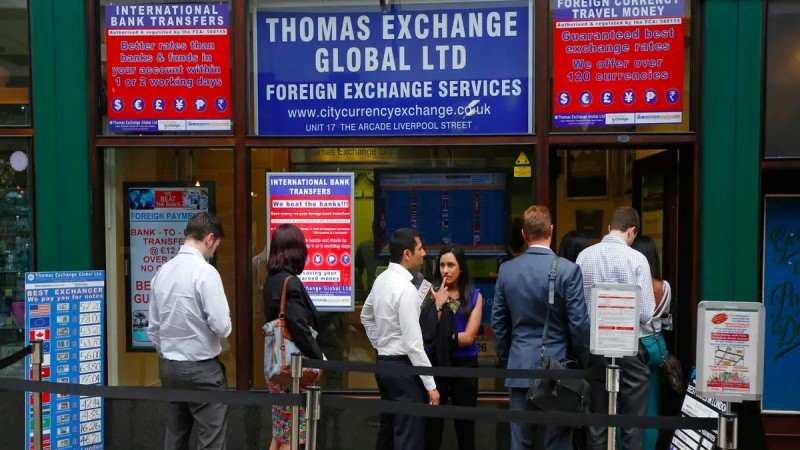
The principles of forex affect us all, especially when travelling. When you exchange money for a holiday, you are participating in the forex market. However, the rates you get on the high street are very different from the interbank rates traders see. Here’s a comparison of common options for exchanging £500 into Euros in 2026.
| Exchange Option | Typical Spread/Fee Structure | Pros | Cons |
|---|---|---|---|
| High Street Bank | Wide spread + potential commission fee. | Convenient, trusted. | Often the worst exchange rate. |
| Airport ‘Bureau de Change’ | Extremely wide spread. The ‘captive market’ premium. | Last-minute convenience. | Almost always the most expensive option. |
| Online Currency Specialist | Tighter spread, low or no fees. | Competitive rates, home delivery. | Requires planning ahead. |
| Specialist Travel Card/App | Very tight spread, close to the interbank rate. | Excellent rates, secure, easy to use. | May have ATM withdrawal limits or weekend markups. |
Digital platforms and specialist providers increasingly offer competitive pricing, transparent fees, and streamlined processes. Understanding deposit flows and conversion mechanics — such as those outlined in Ultima Markets Deposits & Withdrawals — helps users better assess real transaction costs.
💰 Conclusion: Understanding Forex is Financial Literacy
The foreign exchange market underpins global trade, investment, and everyday financial decisions. From multinational corporations to individual travellers, everyone is affected by how exchange rates work.
Whether you engage in forex trading UK, manage international business exposure, or simply want to avoid poor exchange rates abroad, understanding how does foreign exchange work is no longer optional — it is a core component of modern financial literacy.
For those exploring market access, transparency and user experience remain critical, which is why many traders consult independent resources such as Ultima Markets Reviews before choosing a platform.

🙋 FAQ
1. Is forex trading suitable for beginners?
Forex trading can be complex and carries significant risk, especially due to leverage. While accessible, it’s not recommended for absolute beginners without proper education. It’s crucial to start with a demo account to practice without real money and to thoroughly understand risk management principles before committing any capital.
2. How much money do I need to start trading forex in the UK?
Technically, you can start with as little as £100 with many online brokers. However, trading with such a small amount is very risky, as even small market movements can wipe out your account. A more realistic starting capital to manage risk effectively would be in the range of £1,000 to £5,000, and you should only ever trade with money you can afford to lose.
3. What are the best times to trade forex?
The most active periods are when major market sessions overlap. The most significant overlap for UK traders is the London and New York session (approx. 1 PM to 4 PM GMT). This period usually has the highest trading volume and liquidity, offering more opportunities and tighter spreads.
4. Is the forex market regulated in the UK?
Yes. Reputable brokers offering forex trading services to UK residents must be authorised and regulated by the Financial Conduct Authority (FCA). Always check a broker’s regulatory status on the FCA register before opening an account. This provides a level of protection, including the Financial Services Compensation Scheme (FSCS).
5. Can you lose more than your initial deposit in forex?
In the UK and Europe, regulations require brokers to provide ‘negative balance protection’ for retail clients. This means you cannot lose more than the total amount of money in your trading account. However, you can still lose your entire deposit very quickly, so understanding and using tools like stop-loss orders is essential.
*This article represents the author’s personal views only and is for reference purposes. It does not constitute any professional advice.*