Planning a trip abroad, diversifying your portfolio with overseas stocks, or buying from an international website? If so, you’ve come face-to-face with the world of FX. You might wonder, how do foreign exchange rates work in such an unpredictable way? What are the invisible gears turning behind these numbers, and more importantly, how can you navigate this system to your advantage in 2026?
Many people simply accept the rate given at the bank, often losing a significant slice of their money. For investors using platforms like Ultima Markets, understanding these movements is vital. This guide is here to pull back the curtain on what determines foreign exchange rates, from macroeconomic forces to the practical steps of how to calculate currency exchange. By the end, you’ll have a clear, confident understanding of the forex market.
📈 The Engine Room: What Truly Determines Foreign Exchange Rates?
At its core, an exchange rate is the price of one country’s currency in terms of another. But how do foreign exchange rates work on a global scale? It is a combination of supply and demand driven by economics, politics, and market psychology.
💡 Economic Vital Signs: The Big Four Indicators
To understand what determines foreign exchange rates, we must look at a country’s economic health:
- Interest Rates: This is arguably the heavyweight champion of currency drivers. Central banks, like the Bank of England, set a base interest rate. When they raise rates, it means investors can earn a higher return on assets held in that currency (e.g., government bonds). This attracts foreign capital, a phenomenon known as ‘hot money flows’. Investors must buy the local currency (e.g., GBP) to purchase these assets, which increases demand and pushes the currency’s value up. The reverse is also true: cutting rates makes a currency less attractive, leading to a fall in value.
- Inflation: Inflation is the rate at which the general level of prices for goods and services is rising, and subsequently, purchasing power is falling. A country with consistently lower inflation exhibits a rising currency value, as its purchasing power increases relative to other currencies. High inflation, on the other hand, erodes value and typically causes the currency to depreciate. A little inflation is healthy, but when it gets out of control, it signals economic instability.
- Economic Growth & Outlook (GDP): A booming economy attracts foreign investment. When choosing a broker, traders often look at Ultima Markets Reviews to find reliable tools for tracking these GDP trends.
- Public Debt & Balance of Trade: A country with significant government debt may be seen as a less stable, riskier investment. If the market fears a country might default on its debt, it will sell off its currency. Furthermore, the Balance of Trade (the difference between a country’s exports and imports) is critical. If the UK exports more than it imports, it has a trade surplus. This means foreign buyers need to purchase Pounds to pay for British goods and services, increasing demand for GBP and boosting its value. A persistent trade deficit has the opposite effect.
🧭 Political Climate and Market Sentiment
Currencies are sensitive to political stability. Capital abhors uncertainty; during turmoil, investors flee to “safe-haven” currencies. This collective psychology is a major factor in what determines foreign exchange rates in the short term.
🏦 From Wholesale to Your Wallet: How Are FX Rates Actually Set?
You might see a rate on Google or a financial news channel and wonder why it’s different from the one offered at your local bank or when you buy something online. This difference is where financial institutions make their profit. The process involves a few key concepts.
The Interbank Rate: The ‘Real’ Rate You Never Get
The ‘true’ exchange rate at any given moment is the interbank rate. This is the rate at which large international banks trade massive volumes of currency with each other on the wholesale market. It’s the purest reflection of supply and demand, with no added mark-ups or fees. Unless you’re a major financial institution trading millions, you will not have access to this rate. Think of it as the wholesale price of carrots – the price a supermarket pays the farmer. You, the retail customer, will always pay a higher price in the store.
Decoding the Bid-Ask Spread: The Cost of Conversion
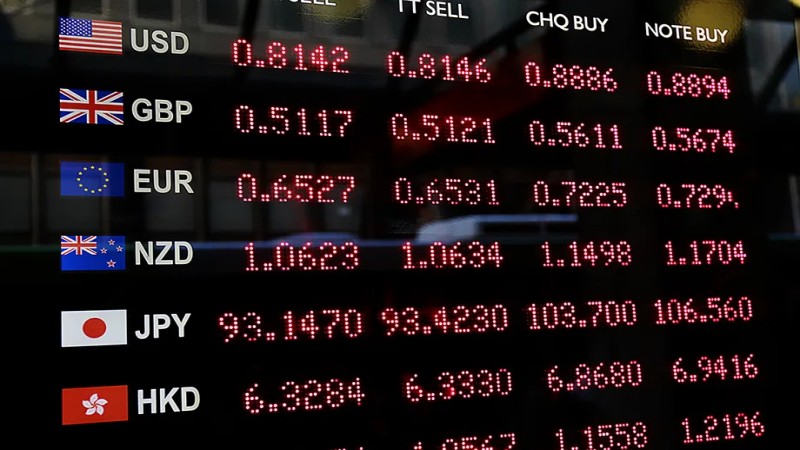
When you go to a bank, a broker, or a bureau de change, you’ll always see two prices listed for a currency pair: a ‘buy’ (bid) price and a ‘sell’ (ask) price. The difference between these two is the bid-ask spread. This is the commission or fee the service provider charges for converting your money.
- Bid Price: The price at which the provider will buy the base currency from you. For GBP/USD, this is the rate they give you to change your Pounds into Dollars.
- Ask Price: The price at which the provider will sell the base currency to you. This is the rate they give you to change your Dollars back into Pounds.
The provider buys the currency from you at a lower price (the bid) and sells it to others at a higher price (the ask). The spread is their profit margin. A wider spread means you are paying a higher fee. Generally, online platforms and specialist brokers have much tighter (smaller) spreads than high street banks or airport kiosks. When managing your account via Ultima Markets Deposits & Withdrawals, being aware of these conversion costs is essential for capital efficiency.
📊 UK Currency Exchange Comparison: Where to Get the Best Rate in 2026
Let’s illustrate this with a practical example. Imagine the GBP/USD interbank rate is 1.2500. You want to convert £1,000 into US Dollars. Here’s how different providers might present their rates and the final amount you’d receive:
As the table shows, knowing how to calculate currency exchange costs can save you a fortune.
⚖️ Fixed vs. Floating: The Two Core Exchange Rate Systems
Not all currencies are allowed to fluctuate freely. Globally, countries adopt one of two main systems for managing their currency’s value.
Floating Rates: The Dance of the Market
Values are determined by the open market. The British Pound and US Dollar are classic examples. This is the primary environment for those trading on Ultima Markets MT5.
Fixed (Pegged) Rates: An Anchor of Stability
A fixed, or pegged, exchange rate is where a government or central bank ties its currency’s official value to another country’s currency or a commodity like gold. The United Arab Emirates Dirham (AED), for instance, is pegged to the US Dollar at a rate of 3.6725 AED to 1 USD. To maintain this peg, the UAE’s central bank must hold large reserves of US Dollars to buy or sell its own currency to keep the value constant. This provides stability and predictability, which can be great for international trade and controlling inflation.
When comparing fixed vs floating exchange rates UK perspective, floating rates reflect true economic conditions but bring more volatility, whereas fixed rates offer stability but require massive reserves.
Pros and Cons at a Glance
💰 Practical Toolkit: Calculating and Managing Your Currency Exchange
Understanding how do foreign exchange rates work is only useful if you can apply it.
Reading Forex Quotes Like a Pro: Base vs. Quote Currency
In a pair like GBP/USD, GBP is the Base and USD is the Quote. The rate tells you how much of the quote you need to buy one unit of the base.
Example: If the GBP/USD exchange rate is 1.2500, it means:
1 British Pound will buy you 1.2500 US Dollars.
Step-by-Step: How to Calculate Your Exchange
The calculation is straightforward multiplication or division.
- Changing FROM the Base Currency: If you are converting the base currency (GBP in our GBP/USD example) into the quote currency, you MULTIPLY.
Example: You want to convert £500 into USD at a rate of 1.2500.
Calculation: £500 * 1.2500 = $625.00 - Changing TO the Base Currency: If you have the quote currency and want to convert it back to the base currency, you DIVIDE.
Example: You have $800 and want to know how many Pounds that is at a rate of 1.2500.
Calculation: $800 / 1.2500 = £640.00
For investors, ensuring Ultima Markets fund safety is just as important as getting the math right. Always use regulated entities when performing large-scale currency conversions or trades.
Smart Tips for Everyday Transactions
For holiday money or international payments, always check rates on a comparison site first. Avoid changing money at airports at all costs. For larger transactions, like buying property abroad, using a specialist foreign exchange broker can save you thousands compared to a high street bank. They offer tighter spreads and tools like forward contracts, which allow you to lock in an exchange rate for a future transaction, protecting you from adverse market movements.
Advanced Strategies for Investors: Hedging Your Bets
For those investing in international markets, currency risk is a major consideration. If you hold US stocks and the Pound strengthens against the Dollar, the value of your portfolio will decrease in GBP terms, even if the stocks themselves perform well. Investors can mitigate this risk through hedging. This can involve using financial instruments like currency forwards, futures, or options to lock in an exchange rate and protect your portfolio from volatility. This is an advanced topic, but it’s a crucial part of international investment management.
Conclusion: Mastering the Language of Global Finance
Foreign exchange rates are the pulse of the global economy. By understanding what determines foreign exchange rates—from interest rates to market sentiment—you shift from a spectator to an informed participant. Whether you are navigating fixed vs floating exchange rates UK markets or learning how to calculate currency exchange for a holiday, knowledge is your greatest asset.
FAQ
1. How often do foreign exchange rates change?
For floating currencies like the Pound, Euro, or Dollar, the exchange rates change constantly—second by second—during market hours. The foreign exchange market is open 24 hours a day, five days a week, operating across different time zones. The rate you see now will be slightly different in a few moments.
2. What’s the difference between the ‘real’ and ‘nominal’ exchange rate?
The nominal exchange rate is the one we’ve discussed: the direct rate of exchange between two currencies (e.g., £1 = €1.15). The real exchange rate is a more complex concept that takes into account the relative price levels (inflation) in both countries. It reflects the relative purchasing power of the currencies. For example, if a basket of goods costs £100 in the UK and €115 in Germany, the real exchange rate is 1:1 in terms of purchasing power.
3. Can you predict foreign exchange rate movements?
While we understand what determines foreign exchange rates, surprise events make 100% accuracy impossible.
4. What does a ‘strong’ vs. ‘weak’ Pound mean for me?
A strong Pound (high value relative to other currencies) is good for consumers who are travelling abroad or buying imported goods, as their money has more purchasing power. However, it can be bad for UK exporters, as their goods become more expensive for foreign buyers. A weak Pound is the opposite: it makes imports and foreign travel more expensive for UK residents but can boost the economy by making UK exports cheaper and more competitive on the global market.
*This article represents the author’s personal views only and is for reference purposes. It does not constitute any professional advice.*