In the fast-paced world of futures trading, relying on gut feelings is a surefire way to drain your account. To navigate the market’s volatility, traders need a disciplined, data-driven approach. This is where futures technical analysis comes in—it is the art and science of deciphering market psychology through charts. But with a bewildering array of futures trading indicators and strategies, where does one even begin? How do you distinguish actionable signals from market noise? And more importantly, how do you build a robust trading strategy that actually works for you?
This comprehensive guide is designed to cut through the complexity. We move beyond generic definitions and focus on the practical application of futures technical analysis in 2025. Whether you are new to the markets or refining an existing trading strategy, the goal is to help you read charts with confidence, make structured decisions, and develop a repeatable edge.
📈 What is Futures Technical Analysis? A Solid Foundation for Beginners
At its core, futures technical analysis is a methodology for forecasting price movements using historical market data—primarily price and volume. Unlike fundamental analysis, which examines economic variables, technical analysis assumes that all known information is already reflected in price. The chart becomes the primary source of truth.
This principle is especially relevant in futures markets, where speed and liquidity dominate. Platforms such as Ultima Markets provide real-time access to futures instruments, making disciplined chart-based decision-making essential.
The Three Pillars of Technical Analysis
The entire field is built upon three core tenets, often attributed to Dow Theory, which remain as relevant in 2025 as they were a century ago:
- The Market Discounts Everything: This is the cornerstone. It posits that any factor that could affect an asset’s price—be it economic data, political events, or investor sentiment—is already priced into the market chart. Therefore, a detailed study of the price action is all that’s required.
- Prices Move in Trends: Prices don’t move randomly. They move in identifiable trends (upward, downward, or sideways). A primary goal of the technical analyst is to identify the prevailing trend and trade with it, rather than against it. The old adage, “the trend is your friend,” stems directly from this principle.
- History Tends to Repeat Itself: Market movements are not random; they are the result of human psychology. Because human behaviour—driven by fear and greed—is consistent over time, identifiable and repeatable chart patterns emerge. By studying these historical patterns, we can create a statistical edge in predicting future outcomes.
The Basic Tools: Charts and Trends
Your primary tool is the price chart. The most common types you’ll encounter are:
- Line Charts: The simplest form, connecting closing prices over a period. Good for seeing the big picture but lacks detail.
- Bar Charts (OHLC): These show the open, high, low, and close prices for each period, offering much more insight into the trading session’s volatility and direction.
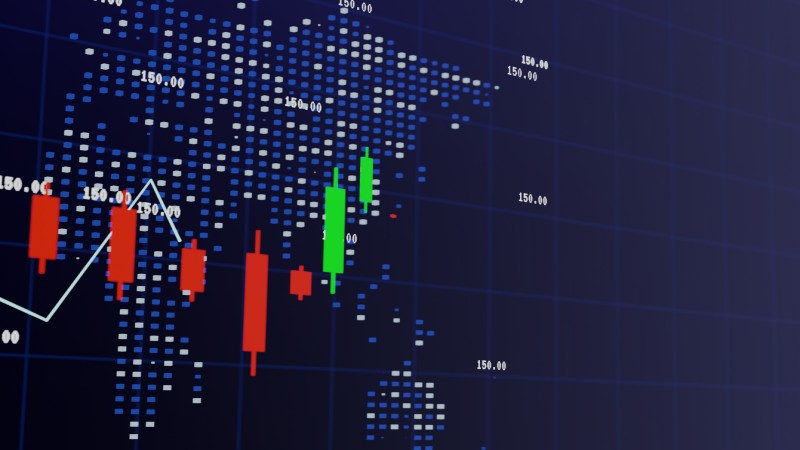
- Candlestick Charts: Originating from Japan, these are the most popular choice for traders. Like bar charts, they show the OHLC but do so in a more visually intuitive way, with the ‘body’ of the candle representing the open-to-close range and ‘wicks’ showing the session’s high and low. The colour of the candle (e.g., green for up, red for down) instantly tells you about the market’s momentum. We can draw an analogy here to Yin and Yang; the constant battle between buyers (bulls) and sellers (bears) is visually captured in the interplay of the candles, much like the balance of opposing forces in Tai Chi.
Understanding trends is the next step. An uptrend is characterised by a series of higher highs and higher lows. A downtrend is a series of lower highs and lower lows. A sideways trend (or range) occurs when price oscillates between two horizontal boundaries. Identifying these trends is the first and most critical step in any technical trading plan.
🧭 Mastering the Core Indicators: Your Technical Analysis Toolkit
Once trend structure is identified, traders apply futures trading indicators to confirm momentum, volatility, and participation. Indicators are decision-support tools—not prediction devices.
Categories of Indicators
Indicators generally fall into four main categories:
- Trend-Following Indicators: Help identify the direction and strength of a trend. (e.g., Moving Averages, MACD)
- Momentum Oscillators: Measure the speed and change of price movements. They often operate within a banded range and can signal overbought or oversold conditions. (e.g., RSI, Stochastic Oscillator)
- Volatility Indicators: Measure the rate of price fluctuation, helping you gauge market stability or instability. (e.g., Bollinger Bands, Average True Range – ATR)
- Volume Indicators: Use volume to confirm the strength of a trend. A price move accompanied by high volume is considered more significant. (e.g., On-Balance Volume – OBV)
Key Indicators Compared
Let’s break down some of the most popular indicators in a practical, comparative format. A common mistake is using indicators from the same category (e.g., two momentum oscillators), which often provide redundant signals. A better approach is to combine a trend indicator with a momentum indicator for a more robust signal.
Used correctly, futures trading indicators support—not replace—contextual market analysis.
💻 Choosing Your Arsenal: The Best Futures Analysis Software in 2025
The effectiveness of futures technical analysis depends heavily on your technical analysis software. In 2025, the platform must deliver speed, reliability, and flexibility.
Essential Features for a Modern Trading Platform
- Advanced Charting Suite: Must offer flawless candlestick, bar, and line charts with customisable timeframes and a comprehensive set of drawing tools (trend lines, Fibonacci retracements, etc.).
- Extensive Indicator Library: Should include all the standard indicators (MA, RSI, MACD) and allow for customisation of parameters. The ability to import or code custom indicators is a huge plus for advanced traders.
- High-Quality Data: Real-time, reliable data is non-negotiable for futures trading. Check the data provider and ensure there are no significant lags.
- Backtesting Capabilities: A crucial feature. This allows you to test your trading strategy on historical data to see how it would have performed, helping you refine your rules before risking real capital.
- Broker Integration: Seamless integration with your brokerage account allows for direct trading from the charts, which is essential for efficient execution.
- Alerts and Notifications: Customisable alerts for price levels, indicator signals, or trendline breaks can save you hours of screen time.
Many traders utilise MT5-based environments such as Ultima Markets MT5 for its balance between advanced analytics and execution efficiency.

Types of Analysis Platforms Compared
Here’s a breakdown of the typical platform types available to traders:
Capital protection and operational reliability should never be overlooked. Reviewing Ultima Markets fund safety policies and operational transparency is a critical due-diligence step.
⚠️ Navigating the Pitfalls: Identifying and Avoiding Analysis Scams
The popularity of futures technical analysis has also attracted misinformation. Traders must distinguish education from exploitation.
Common Red Flags 🚩
- Guaranteed Profits: This is the biggest red flag. There is no such thing as a ‘guaranteed’ return in trading. The markets are probabilistic, not deterministic. Anyone promising a 99% win rate or a fixed monthly income is lying.
- Overpriced Courses and ‘Gurus’: Be wary of self-proclaimed ‘gurus’ on social media flaunting a lavish lifestyle. They often make more money selling courses than from trading itself. While paid education can be valuable, vet the provider thoroughly. Look for transparent track records and verifiable student testimonials, not just screenshots of winning trades.
- ‘Secret’ or ‘Proprietary’ Indicators: Many scams involve selling a ‘holy grail’ indicator that supposedly predicts every market move. In reality, these are often just repackaged standard indicators like RSI or Stochastics, painted with new colours and sold for an exorbitant price. All effective indicators are built from the same data: price and volume.
- Signal Seller Services: Be cautious of services that charge a monthly fee for trading signals. Ask yourself: if their signals were so profitable, why would they need to sell them? Often, these services are not accountable for losses and can disappear overnight.
Professional traders rely on transparency, not promises. Reviewing independent sources such as Ultima Markets Reviews helps validate platform credibility.
Risk control remains paramount. Sound capital management—including position sizing and liquidity awareness—should always accompany any trading strategy. Operational clarity on Deposits & Withdrawals further supports disciplined execution.
How to Protect Yourself
- Education is Key: The best way to avoid being scammed is to understand the principles of technical analysis yourself. If you know how indicators work, you can’t be sold a ‘secret formula’. Invest in quality books and reputable educational resources, not get-rich-quick schemes.
- Focus on Risk Management: Professional traders focus on managing risk, not on finding the perfect entry signal. Your long-term success will be determined by your risk management rules (like the 1% rule, where you never risk more than 1% of your capital on a single trade) and your trading psychology.
- Backtest Everything: Before adopting any new strategy or indicator, test it rigorously on historical data. Does it have a statistical edge? What is its maximum drawdown? The data will give you an objective answer, free from marketing hype.
Conclusion: Building Your Personal Trading Framework
Futures technical analysis is not about prediction—it is about probability management. When combined with robust chart pattern analysis, carefully selected futures trading indicators, and reliable technical analysis software, it becomes a professional decision framework.
The objective is not to collect indicators, but to design a repeatable trading strategy grounded in structure, confirmation, and risk control. Master trends, validate signals, backtest relentlessly, and focus on execution discipline. Over time, this process—not prediction—creates consistency in the futures market.
💰 FAQ
1. Can I be profitable using only technical analysis?
Absolutely. Many successful short- to medium-term traders rely exclusively on technical analysis. It provides a complete framework for identifying opportunities, timing entries, and managing risk without needing to analyse complex fundamental data. However, some long-term investors find value in combining it with fundamental analysis for a more holistic view.
2. How many indicators should I use on my chart?
Less is more. A common beginner mistake is ‘analysis paralysis’ from a chart cluttered with too many indicators. A good starting point is a combination of 2-4 non-correlated indicators. For example, you might use Moving Averages to define the trend, RSI to gauge momentum and identify potential overbought/oversold levels, and Volume to confirm the strength of a move.
3. What is the most reliable chart pattern?
There is no single ‘most reliable’ pattern that works 100% of the time. However, classic patterns like Head and Shoulders, Double Tops/Bottoms, and Triangles have stood the test of time because they reflect underlying market psychology. The reliability of any pattern increases when confirmed by other factors, such as a breakout on high volume or a confirming indicator signal.
4. Is technical analysis just a self-fulfilling prophecy?
This is a common debate. To some extent, it can be. When a large number of traders observe the same key support/resistance level or indicator signal (like a 200-day moving average), their collective actions can cause the expected price movement. However, this doesn’t invalidate its usefulness. Instead, it confirms that these patterns and levels are significant because they are widely watched and acted upon.
*This article represents the author’s personal views only and is for reference purposes. It does not constitute any professional advice.*