

For anyone involved in the global marketplace—be it as a seasoned forex trader, an international business owner, or even a casual holidaymaker—the million-dollar question is always circulating: how often do foreign exchange rates change? The simple answer is constantly. But the reality is far more nuanced and fascinating. It’s a rhythm dictated by algorithms, global news, and the collective psychology of millions of traders.
Understanding this pulse is not just academic; it’s the bedrock of profitable trading, efficient business transactions, and getting the most value when exchanging money for a trip abroad. In this comprehensive 2025 guide, we explore not only how often do foreign exchange rates change, but also what makes exchange rates fluctuate, when volatility peaks, and how UK users can identify the best time to exchange currency UK without being caught out by hidden costs or poor timing.
The Pulse of the Market: How Frequently Do FX Rates Really Change? ⏱️
To say exchange rates change “daily” is a vast understatement. In the institutional interbank market—where major banks and liquidity providers operate—prices are in perpetual motion. This is where the question do exchange rates change every second finds its most literal answer.
Major trading platforms and liquidity hubs, including those accessed via professional tools such as Ultima Markets, reflect this near-continu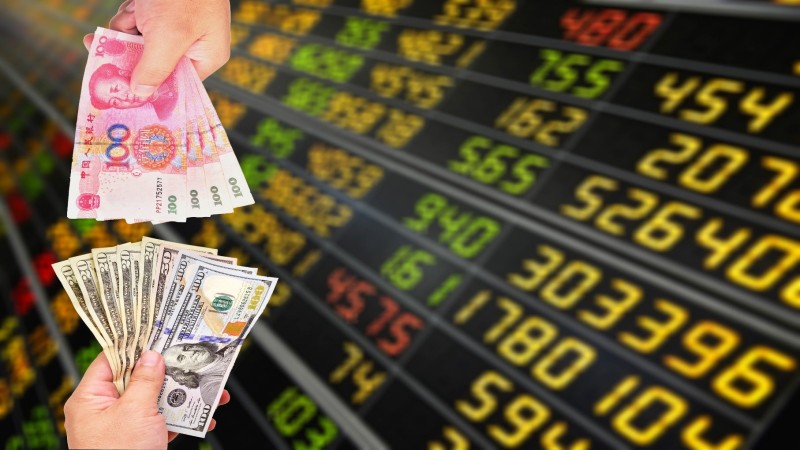 ous repricing driven by real-time order flow.
From Ticks to Trends: A Second-by-Second Look
For liquid currency pairs such as GBP/USD or EUR/USD, rates move in pips or ticks—often multiple times per second.
-
High-Frequency Trading (HFT): Algorithmic systems execute thousands of trades in milliseconds, reinforcing why many ask do exchange rates change every second—in the wholesale market, they effectively do.
-
Order Flow: Each buy or sell order alters supply and demand, nudging prices incrementally.
-
Liquidity: Highly liquid pairs move frequently but smoothly, while less liquid currencies move less often but more sharply.
Retail users may only see rate updates periodically, but the underlying price engine never sleeps.
The Interbank Market vs. Retail Rates: Why Your Rate Is Different
A common frustration arises when consumers compare quoted rates with those seen on financial news screens.
-
Interbank Rate: The wholesale rate traded between banks—fast-moving, margin-free, and inaccessible to most retail users.
-
Retail (Tourist) Rate: A buffered rate incorporating provider spreads and fees.
Retail platforms manage this risk by updating rates less frequently, shielding themselves from rapid market swings. Platforms that emphasise transparency and capital protection, such as those detailing Ultima Markets fund safety, aim to clearly distinguish between market pricing and client execution.
📊 Key Drivers: What Makes Currency Values Fluctuate?
Exchange rate movement is not random. Understanding what makes exchange rates fluctuate is essential for traders and travellers alike.
Economic Indicators: The Heavyweights
-
Interest Rates: Central bank policy remains the single most powerful driver. Expectations alone can move markets.
-
Inflation: Persistent inflation erodes currency value and alters rate expectations.
-
GDP Growth: Strong growth attracts capital inflows.
-
Employment Data: Labour market strength influences monetary policy outlooks.
These data releases are closely monitored by participants using analytical platforms such as Ultima Markets MT5, where real-time price reactions are immediately visible.
Political Stability and Geopolitical Events
Capital seeks safety and stability. Political turmoil, elections with uncertain outcomes, and geopolitical conflicts create uncertainty and can cause investors to flee a currency. A surprise election result in the UK, for example, could cause the Pound to ‘turn’ sharply as markets reassess the country’s economic future. Similarly, global tensions can drive investors towards ‘safe-haven’ currencies like the Swiss Franc (CHF) or the US Dollar (USD).
Market Sentiment and Speculation
The forex market is not just about hard data; it’s also driven by perception. Speculation—the act of buying or selling a currency in the hope of profiting from future price changes—accounts for the vast majority of daily forex volume. If traders believe a currency is set to rise, their collective buying pressure will, in fact, cause it to rise—a self-fulfilling prophecy. Market sentiment can shift rapidly based on news headlines, rumours, or a change in risk appetite.
🧭 Timing is Everything: When Do Exchange Rates Change Most?
The forex market operates 24 hours a day, five days a week, across global trading sessions. However, volatility is unevenly distributed—critical for anyone seeking the best time to exchange currency UK.
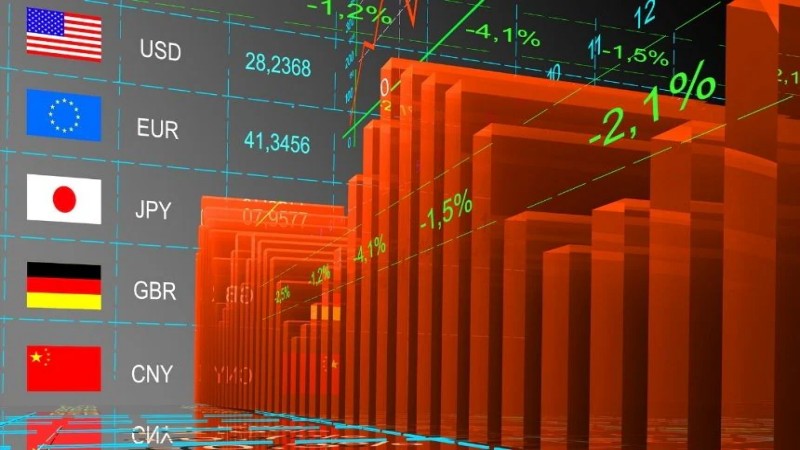
Understanding Forex Market Trading Sessions
The market day follows the sun around the globe, beginning in Wellington and Sydney, moving to Tokyo, then London, and finally New York. Each session has its own characteristics:
- Tokyo Session (approx. 12am – 9am GMT): Tends to be calmer, with the Japanese Yen (JPY) and Australian Dollar (AUD) seeing the most action.
- London Session (approx. 8am – 5pm GMT): This is the largest and most important session. As the heart of global forex, London’s opening brings immense liquidity and volatility, especially for GBP, EUR, and CHF pairs.
- New York Session (approx. 1pm – 10pm GMT): The second-largest session, heavily focused on the US Dollar. Key US economic data is released during these hours.
The London-New York Overlap: Peak Volatility Window
For traders seeking movement, the most critical period of the day is the four-hour window when both the London and New York sessions are open simultaneously (approximately 1pm – 5pm GMT). During this time:
- Liquidity is at its absolute peak.
- Volatility is at its highest.
- Spreads are often at their tightest.
- Major UK, European, and US economic news is often released.
This is when the most significant price swings typically occur, presenting both the greatest opportunities and the greatest risks for traders.
Do Exchange Rates Move on Weekends? The Reality of the ‘Weekend Gap’
Official retail forex trading closes on Friday evening and reopens Sunday night. However, the question do exchange rates change on weekends has a nuanced answer.
While retail prices are static, global events continue. Political developments or emergency announcements can shift perceived value. When markets reopen, prices may “gap,” reflecting accumulated information—hence do exchange rates change on weekends indirectly, even if you cannot trade them.
💰 Practical Strategies for UK Investors and Travellers
For Traders
High-impact data releases during peak sessions offer opportunity—but demand disciplined risk control and proper execution infrastructure, including efficient funding workflows like those outlined in Ultima Markets Deposits & Withdrawals.
For Travellers and Payers
-
Track rates ahead of large transactions.
-
Avoid weekend conversions where spreads may widen.
-
Compare providers carefully to identify the true best time to exchange currency UK.
User experience feedback, such as that reflected in Ultima Markets Reviews, highlights the importance of transparency when dealing with fast-moving exchange rates.
Conclusion: Embracing the Flow
So, how often do foreign exchange rates change? In reality—continuously. From algorithm-driven micro-movements to macroeconomic tides, the forex market is a living system. By understanding what makes exchange rates fluctuate, recognising when volatility is highest, and knowing whether do exchange rates change on weekends, UK traders and travellers alike can make smarter, better-timed decisions.
You cannot control the market—but you can control how prepared you are for its constant motion.
FAQ
1. Do exchange rates change every second?
Yes, in the underlying interbank market where major financial institutions trade, rates for major currency pairs like GBP/USD change multiple times per second due to high-frequency trading and constant order flow. However, the retail rate you see from your bank or a broker is updated far less frequently, perhaps once or several times a day.
2. What is the single biggest factor that changes exchange rates?
While many factors are at play, the monetary policy of a country’s central bank—specifically its stance on interest rates—is generally considered the most powerful driver. The prospect of higher interest rates typically strengthens a currency more than any other single factor, as it attracts international capital seeking higher yields.
3. Is there a ‘best day’ of the week to exchange currency?
Statistically, some studies suggest that exchange rates might be marginally better in the middle of the week (Tuesday to Thursday) compared to Monday or Friday. This is because liquidity is deepest, and the market has digested the news from the weekend and isn’t yet positioning for the next one. However, this is a minor effect and is easily overshadowed by major news events.
4. How are foreign exchange rates actually set or determined?
They are determined by the law of supply and demand on a massive, global scale. If demand for a currency (e.g., people wanting to buy GBP to invest in the UK) exceeds its supply (people selling GBP), its price, or exchange rate, will rise. This supply and demand are influenced by all the factors discussed: interest rates, economic health, political stability, and speculation.
This article represents the author’s personal views only and is for reference purposes. It does not constitute any professional advice.