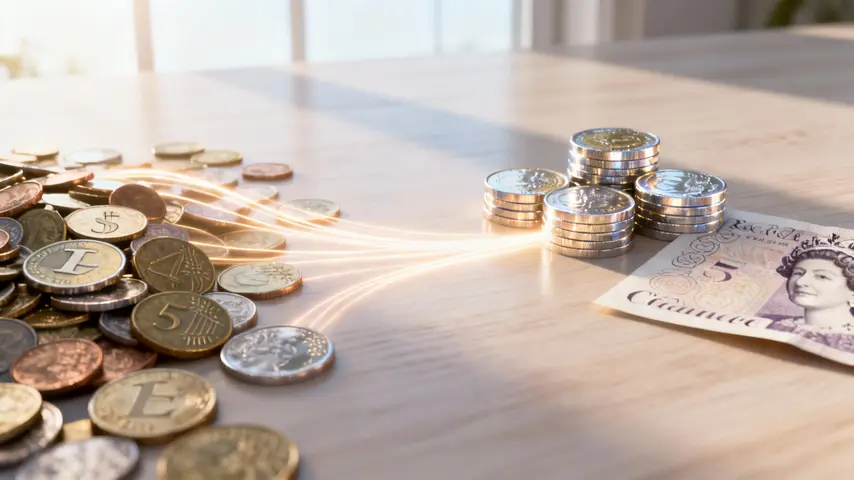
You are not alone. Many travellers returning to the UK quickly discover a familiar frustration: where can I exchange foreign coins for cash near me? While exchanging foreign banknotes is simple, trying to exchange foreign coins for cash UK is a very different story. Coins are heavy, low in individual value, and costly for institutions to handle, which is why many people struggle to find the best place to exchange foreign coins in 2026.
If you have ever asked whether banks that exchange foreign coins still exist, or whether you can exchange foreign coins Post Office style, this guide is designed to give you clear, practical answers. Rather than letting those coins gather dust, there are still workable options to reclaim value or put them to meaningful use.
The Hard Truth: Why Are Foreign Coins So Difficult to Exchange? 🪙
Before exploring solutions, it helps to understand why the search for where can I exchange foreign coins for cash near me so often ends in disappointment. The reason is simple: cost versus value.
It’s All About Weight and Volume
Compared to lightweight banknotes, coins present logistical problems. Financial institutions that consider whether to exchange foreign coins for cash UK must deal with:
- Collect and Store: Accumulate vast amounts of heavy, bulky coins.
- Sort: Manually or mechanically sort coins by denomination and currency. This is labour-intensive.
- Repatriate: Securely and expensively ship these heavy coins back to their country of origin to be deposited into the banking system.
The cost of this entire process often exceeds the face value of the coins themselves, making it a loss-making venture. For high-street banks and bureaux de change, which operate on thin margins for currency exchange, it’s a non-starter.
The Official Stance of UK High Street Institutions
In 2026, most high street banks — Lloyds, Barclays, HSBC, NatWest — do not provide a standard service for foreign coins. Despite common assumptions, there are effectively no mainstream banks that exchange foreign coins as part of their normal offering.
The same applies to the Post Office and supermarket travel money counters. Although widely trusted for banknotes, you cannot exchange foreign coins Post Office counters handle only paper currency. This policy has remained unchanged for years.
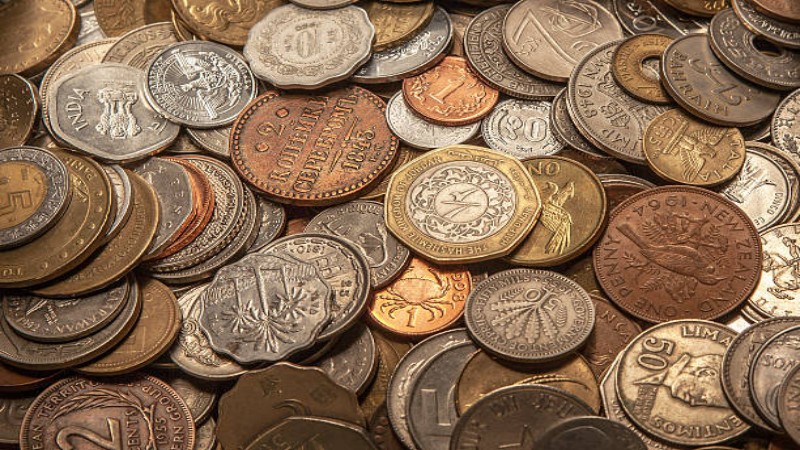
🧭 Your Definitive 2026 Guide to Cashing In Foreign Coins in the UK
Despite the reluctance of mainstream players, you are not out of options. A few specialist avenues exist specifically to solve this problem. Your best choice will depend on the amount you have, the currencies, and whether you want cash back or are happy to contribute to a good cause.
Option 1: Specialist Online Exchange Services 💻
For anyone determined to exchange foreign coins for cash UK, specialist online services remain the most viable solution. These businesses exist specifically to handle what banks refuse.
The process is remarkably straightforward:
- Collection & Sorting: Gather all your foreign coins and any old, out-of-circulation banknotes you might have. You don’t necessarily need to sort them, as these services handle mixed currency.
- Complete a Form: Visit their website, fill out a simple form with your details and an estimate of what you’re sending.
- Post Your Currency: Securely package your coins and notes and send them via a tracked service like Royal Mail Special Delivery for peace of mind.
- Processing & Payment: Once received, the service will sort, identify, and value your currency. They will then send you a valuation and transfer the money directly to your bank account, send a cheque, or even pay via PayPal.
This approach appeals to people familiar with online financial platforms such as Ultima Markets, where digital processing and clear settlement flows are standard expectations.
Why is this a good option?
- It’s Comprehensive: They accept almost everything, including current coins, obsolete coins, and out-of-circulation banknotes from dozens of countries.
- It’s Convenient: The entire process is handled from home, avoiding fruitless trips to the bank.
- You Get Cash: Unlike other options, this puts money back into your account.
What are the drawbacks?
- Exchange Rates: The rates won’t be as favourable as the interbank rate you see on Google. These companies have significant overheads (sorting, shipping, administration), which are factored into the price they offer.
- Minimum Amounts: Often, it’s only worthwhile if you have a decent amount—perhaps over a kilogram or two—as postage costs can eat into your return on a small collection.
- Trust: You are sending cash through the post, so it’s vital to use a reputable, well-reviewed service and a secure, insured postal method.
As with any financial transaction, users often review security practices and operational transparency — similar to how traders assess Ultima Markets fund safety before committing capital.
Option 2: Donating to Charity ❤️
If your goal is convenience rather than cash, donation is often the best place to exchange foreign coins in practical terms.
Charities partner with specialist processors who convert collected currency into sterling at scale. This is why donation boxes are common in:
- Charity Shops: Many high-street charity shops, such as those run by Oxfam, Cancer Research UK, or the RNIB, will happily take foreign coins off your hands. Just drop them in the designated collection box on the counter.
- Airport Collection Globes: You’ve likely seen these large transparent globes in airport terminals. They are a very popular way for travellers to offload leftover currency just before they fly home.
- In-Flight Envelopes: Some airlines provide envelopes in the seat-back pocket for collecting currency for their chosen charity partners.
This option eliminates the frustration of wondering where can I exchange foreign coins for cash near me while delivering social value instead.
Option 3: Your Local Bank (The Long Shot) 🏦
As we’ve established, this is highly unlikely to work. However, there are a few very specific, niche exceptions where a bank *might* consider helping:
- You are a long-standing, valued customer, particularly with a business or premium account.
- The coins are from a major currency, primarily Euros (€) or US Dollars ($). They will not entertain obscure currencies.
- You have a significant amount, usually well over £100 worth, and they are already sorted into denominations.
- The branch happens to have a specific need or an established, albeit rare, process for handling them.
Crucial Advice: ALWAYS phone your specific branch beforehand. Do not make a special trip. Speak to the branch manager, explain what you have, and ask if it’s a service they can possibly provide. In 99% of cases, the answer will be no, but a phone call costs you nothing and could prevent a wasted journey.
📊 At a Glance: Comparing Your Foreign Coin Exchange Options in 2026
To help you decide, here’s a side-by-side comparison of the methods. This table breaks down the key factors to consider for each approach.
| Method | Best For | Currencies Accepted | Payout Value | Convenience |
|---|---|---|---|---|
| Specialist Online Service (e.g., Cash4Coins) |
Larger quantities (1kg+) where you want a cash return. Also for obsolete notes. | Virtually all modern and old currencies, including notes and coins. | Fair, but below market rate due to processing costs. You get a percentage of the face value. | High – handled entirely via post from your home. |
| Charity Donation (e.g., Oxfam, Airport Bins) |
Small to medium quantities of mixed coins; when convenience and goodwill are prioritised. | All currencies are gratefully accepted. | Zero cash return for you, but 100% of the processed value goes to the charity. | Very High – simply drop them in a collection box during your daily routine. |
| High Street Bank (e.g., Lloyds, HSBC) |
A very long shot. Only for premium customers with large amounts of major currency coins (EUR/USD). | Usually only EUR and USD. Extremely restrictive. | Potentially the best rate if they accept, but this is highly unlikely. | Very Low – requires phone calls and a trip to the branch with no guarantee of success. |
| Keep For Next Trip (Self-storage) |
Frequently visited countries (e.g., Eurozone, USA) where you know you’ll return soon. | Currencies you will definitely use again. | 100% of face value, as you spend it yourself. The ‘most抵’ option. | Moderate – requires you to remember to take them with you! |
💡 Maximising Your Return: Pro Tips & Common Pitfalls
Before deciding where can I exchange foreign coins for cash near me, take time to sort your coins. Separate reusable currencies (euros, dollars) from low-value or obscure ones. High-denomination coins are often worth keeping for future travel.
Sort Your Coins Before You Decide
Take ten minutes to tip your coin collection onto a table and do a quick sort. Separate them by currency. This will help you see what you actually have. You might find you have £20 worth of Euro coins, which could be worth keeping for your next trip to Spain, but only 50p worth of Thai Baht, which is a prime candidate for a charity box. High-value coins like the €2, €1, £1 (from Crown Dependencies), and US Quarter are worth setting aside.
Check Your Banknotes Too!
While sorting your coins, you might stumble upon old paper money. Perhaps some old Francs, Deutsche Marks, or even old UK £10 notes. High street banks will not exchange these. However, specialist online services often specialise in exchanging obsolete currency. National central banks in their home countries are often legally obliged to honour old notes indefinitely. The exchange services act as a middleman, consolidating these notes and dealing with the central banks for you, giving you a percentage of the value. Don’t throw them away!
Addressing Common Misconceptions: Coinstar, Post Office & Supermarkets
It’s easy to assume that services dealing with UK coins might also handle foreign ones. Let’s clear this up:
- Coinstar Machines: These familiar green machines in supermarkets are calibrated for UK sterling coins only. They will reject foreign currency.
- The Post Office: As a key provider of travel money, it’s a logical place to ask. However, their service is strictly limited to buying and selling foreign banknotes. They do not have facilities to handle foreign coins.
- Supermarket Bureaux: Like the Post Office, travel money counters at large supermarkets deal exclusively in notes for operational efficiency. They may, however, have a collection box for a partner charity.
Conclusion: A Clear Strategy for Your Foreign Shrapnel
The question where can I exchange foreign coins for cash near me has a clear answer in 2026 — just not on the high street. If you want cash, specialist online services remain the most practical route. If convenience matters more, charity donation is the simplest solution.
Either way, those leftover coins do not have to remain forgotten. With the right approach, even small amounts can be handled efficiently — just as informed users rely on transparent reviews, such as Ultima Markets Reviews, before making financial decisions.
FAQ ❓
1. Can I exchange foreign coins for cash at the UK Post Office?
No. The Post Office’s travel money service, while extensive, only deals with foreign banknotes. They do not accept any foreign coins for exchange into Pound Sterling.
2. Which UK banks will definitely accept foreign coins?
No UK high street bank offers a guaranteed service for exchanging foreign coins. In extremely rare cases, a branch *might* help a premium customer with a large, sorted amount of Euros or US Dollars, but this is at the branch manager’s discretion and not official policy. You should always assume the answer is no.
3. How can I find out how much my foreign coins are worth?
For a rough idea, you can use an online currency converter (like XE or Google) to check the exchange rate for the currency. However, remember that specialist exchange services will offer a rate below this to cover their processing costs. Their websites often provide an estimate of the rate they pay per kilogram for mixed coins.
4. Is it worthwhile sending a very small amount of coins to an online service?
Generally, no. The cost of secure, tracked postage (which is highly recommended) could be more than the value you get back for a small handful of coins. Most services are best used for collections weighing at least 1kg. For smaller amounts, donating to charity is a much more practical option.
5. Can I use my leftover Euros or Dollars in a Coinstar machine in the UK?
No. Coinstar machines located in UK supermarkets are calibrated to accept and sort only UK Pound Sterling (£) coins. Any foreign currency will be filtered out and returned to you via the reject slot.
*This article represents the author’s personal views only and is for reference purposes. It does not constitute any professional advice.