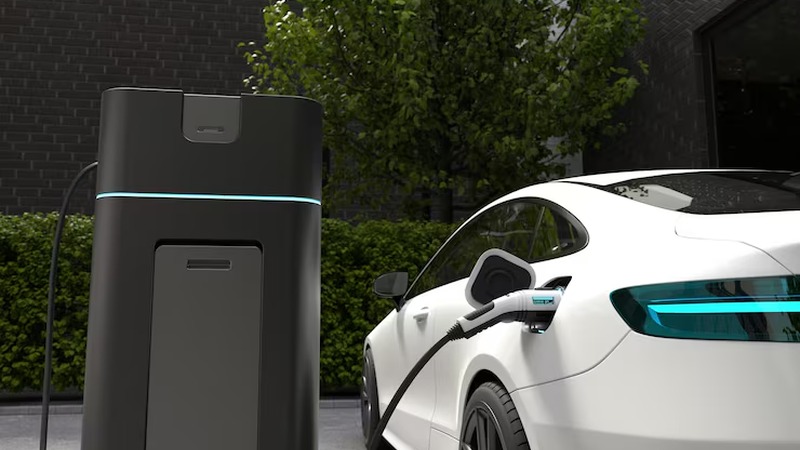
The accelerated adoption of electric vehicles (EVs) creates a vast investment universe that extends far beyond the automotive manufacturers themselves. While carmakers capture the headlines, the critical enablers of the EV transition—battery innovation and charging accessibility—remain core bottlenecks and, for many investors, represent a more targeted opportunity.
For those looking ahead, the landscape of EV battery and charging stocks 2026 offers a compelling second-layer investment thesis, distinct from the intense brand competition seen among vehicle producers.
This analysis will dissect the distinct opportunities within the battery and charging sectors, providing a framework for evaluating companies, understanding the disparate business models, and identifying the underappreciated risks inherent in this dynamic market.
Why Invest in EV Battery and Charging Stocks Instead of Automakers?
Choosing to invest in the EV ecosystem’s infrastructure offers a different risk-reward profile compared to backing specific car brands. The rationale centres on decoupling from the fierce competition of the consumer auto market and gaining exposure to the non-negotiable components of EV proliferation.
Automakers Face Brand, Pricing, and Execution Risk
The global automotive industry is exceptionally competitive, with success dependent on brand loyalty, marketing effectiveness, complex supply chains, and consumer sentiment. Automakers must contend with fluctuating input costs, intense pricing pressure, and the significant execution risk of launching new models.
An investment in a single automaker is a bet on that specific brand’s ability to navigate these challenges successfully. In contrast, the entire portfolio of EV battery and charging stocks 2026 stands to benefit from the overall market growth, regardless of which car brand ultimately wins the sales race.
Battery and Charging Stocks Offer More Targeted EV Exposure
These companies provide what is often termed ‘pure-play’ exposure to EV adoption. A battery manufacturer’s success is tied to the total number of EVs produced, not the market share of a single brand. Similarly, a charging network’s value increases with every EV on the road.
This allows investors to formulate a thesis based on the macro trend of electrification rather than the micro-level competition between vehicle models. This targeted approach is a primary attraction for those seeking high-growth EV battery and charging stocks 2026.
But the Business Models Are Very Different
It is crucial to recognise that the operational and financial structures of these sub-sectors are distinct. Battery companies are primarily industrial manufacturers, heavily reliant on capital expenditure (CapEx), commodity pricing (lithium, cobalt, nickel), and R&D for technological advantage.
Charging companies, particularly network operators, often resemble utility or real estate models, where location, network density, and utilisation rates are the primary drivers of profitability. Understanding these differences is fundamental to analysing EV battery and charging stocks 2026.
The EV Battery Opportunity in 2026
The battery is the single most expensive and critical component of an EV, making it a focal point for both innovation and investment. The opportunity in the battery sector is multi-faceted, revolving around technological progress and industrial scale.
What Battery Investors Are Really Betting On
An investment in an EV battery stock is a wager on a company’s ability to deliver on several key fronts. These are the core value drivers that will separate the winners from the losers in the run-up to 2026:
- Cost Reductions: The relentless drive to lower the cost per kilowatt-hour (kWh) is paramount for making EVs accessible to the mass market.
- Energy Density: Increasing the amount of energy stored per unit of weight allows for longer range and lighter vehicles.
- Fast Charging Capability: Developing batteries that can safely accept higher rates of charge is crucial for consumer convenience.
- Chemistry Breakthroughs: Innovations in chemistries, such as solid-state batteries or those with reduced reliance on cobalt, could fundamentally disrupt the market.
- Supply Chain Scale: The ability to secure raw materials and scale manufacturing globally is a significant competitive advantage.
The 3 Types of EV Battery Stocks
The universe of EV battery and charging stocks 2026 can be segmented into distinct categories, each with its own risk profile:
- Battery Makers: These are the large-scale industrial companies that manufacture the battery cells and packs. They often have long-term contracts with major automakers.
- Battery Materials / Miners: This group includes companies that mine and process the key raw materials like lithium, nickel, and cobalt, as well as those that produce specialised chemicals like cathode and anode materials.
- Battery Technology / Next-Gen Developers: These are typically smaller, more speculative firms focused on developing breakthrough technologies such as solid-state batteries, silicon anodes, or novel manufacturing processes.
Best Battery Stock Categories for Different Investor Types
Aligning your investment with your risk tolerance is key. A conservative investor might favour established materials suppliers with diverse customers, while a speculative investor might allocate capital to a pre-revenue next-generation technology developer.
Growth investors may focus on the leading battery makers who are rapidly expanding production capacity to meet automaker demand. This tailored approach is vital when navigating the EV battery and charging stocks 2026 market.
The EV Charging Opportunity in 2026
If batteries are the heart of an EV, the charging network is its circulatory system. The build-out of reliable and ubiquitous charging infrastructure is a non-negotiable prerequisite for mass EV adoption, creating a significant investment theme.
Charging Growth Is Not the Same as Charging Profitability
This is perhaps the most critical distinction for investors to grasp. While the number of charging points is growing exponentially, achieving station-level and network-level profitability has proven elusive for many operators.
The business model is capital-intensive, and success hinges on factors far more complex than simply installing more chargers. Investors in EV battery and charging stocks 2026 must look beyond revenue growth and scrutinise the path to positive cash flow.
What Matters Most for Charging Stocks
Profitability in the charging sector is driven by a specific set of operational metrics. When analysing potential investments, these factors should be at the forefront:
- Utilisation: The percentage of time a charger is dispensing energy. This is the single most important driver of revenue and profitability.
- Expansion Economics: The ability to add new stations that quickly reach break-even utilisation rates.
- Network Density: Creating a concentrated network in key regions can create a competitive moat and improve operational efficiency.
- CapEx Discipline: Managing the high cost of hardware, installation, and grid connections is essential for long-term returns.
- Partnerships: Collaborations with automakers, fleet operators, and retail site hosts can secure high-traffic locations and drive utilisation.
The 3 Types of Charging Exposure
Similar to the battery sector, charging stocks are not monolithic. An investor can choose from several business models:
- Public Charging Networks: These companies own and operate the chargers that consumers use. Their success is tied to location, reliability, and pricing.
- Hardware Providers: These firms manufacture and sell charging equipment (from Level 2 AC chargers to high-powered DC fast chargers) to networks, businesses, and homeowners.
- Software / Fleet Charging / Infrastructure Support: This category includes companies providing the software to manage networks, services for commercial fleets, or engineering services for complex charging depots.
Best EV Battery and Charging Stocks to Watch in 2026
Identifying specific winners is challenging, but investors can focus on category leaders with clear competitive advantages. The following archetypes represent promising areas to monitor within the broader universe of EV battery and charging stocks 2026.
Group A: Best EV Battery Exposure
- Established Battery/Materials Name: In the EV battery and charging stocks space, established battery makers and key material suppliers stand out for scale, proven production, and strong automaker ties. Their main 2026 catalyst is new capacity coming online, while the main risk is margin pressure from pricing and raw-material costs.
- Next-Gen Battery Technology Name: A more speculative part of EV battery and charging stocks includes companies developing solid-state or silicon-anode batteries. The 2026 catalyst is automaker validation or pilot production, while the biggest risk is that the technology fails to scale or loses out to rivals.
- Supplier or Chemical/Materials Beneficiary: Another part of the EV battery and charging stocks theme includes suppliers of separators, electrolytes, and battery chemicals. The 2026 catalyst is winning next-generation platform contracts, while the key risk is commoditisation or being designed out of future battery systems.
Group B: Best EV Charging Exposure
- Best Public Charging Network Play: In the EV battery and charging stocks theme, a strong charging network operator stands out through market position, reliability, and improving station economics. The main 2026 catalyst is higher utilisation, while the biggest risk is weak profitability due to fixed costs and competition.
- Best Charging Equipment Play: Another angle within EV battery and charging stocks is a leading DC fast-charging equipment maker. The main 2026 catalyst is winning large network or fleet contracts, while the key risk is hardware commoditisation and pricing pressure.
- Best Diversified Infrastructure Exposure: A diversified industrial or energy company with a growing charging business offers broader exposure to EV battery and charging stocks with lower single-theme risk. The catalyst is the charging division reaching meaningful scale, while the main risk is that it fails to contribute enough to earnings.
Battery Stocks vs. Charging Stocks — Which Looks Better in 2026?
The choice between these two sectors depends heavily on an investor’s outlook on technology versus infrastructure adoption. There is no single correct answer, but a structured comparison can clarify the trade-offs.
| Category | Bull Case | Main Risk | Best For Investors… |
| Battery Stocks | Technological breakthroughs (e.g., solid-state) could create a massive valuation re-rating. Winners can establish a durable cost or performance advantage. | Technology risk (being leapfrogged), commodity price volatility, and high capital intensity. | …with a high tolerance for technology risk and a focus on industrial and R&D-heavy businesses. |
| Charging Stocks | Direct beneficiary of rising EV adoption (vehicle miles travelled). Potential for recurring revenue models and network effects in dense markets. | Profitability risk (difficulty in monetising utilisation), intense competition for prime locations, and high upfront CapEx. | …focused on infrastructure build-out and service models, willing to accept a longer and more uncertain path to profitability. |
Battery Stocks May Benefit Faster from Technology Breakthroughs
A genuine technological leap in battery chemistry or manufacturing could allow a single company to capture significant market share and command premium pricing. This creates a higher potential for outsized returns but also concentrates the risk in a smaller number of players. For EV battery and charging stocks 2026, the battery sector holds more potential for a game-changing event.
Charging Stocks May Benefit from Adoption, but Monetisation Is Harder
The growth driver for charging is simpler: more EVs on the road equals more demand. However, converting that demand into profit is the central challenge. Competition can drive down prices, and the high cost of electricity and maintenance can erode margins. The path to profitability is less about a single breakthrough and more about disciplined operational execution over many years.
Risk-Adjusted Returns May Differ Sharply
Ultimately, an investor’s portfolio of EV battery and charging stocks 2026 may benefit from exposure to both. The potential for high returns from a successful battery technology company could be balanced by the steadier, albeit more challenging, growth of an infrastructure player. A diversified approach may offer the most attractive risk-adjusted profile.
The Biggest Risks Investors Miss in EV Battery and Charging Stocks
Beyond the obvious competitive pressures, several less-apparent risks can trap unwary investors. A thorough due diligence process must account for these potential pitfalls.
Technology Winners Are Hard to Predict
In the battery sector, a dominant technology today could be obsolete tomorrow. Investing heavily in a company based on its current lithium-ion technology could be risky if a competitor achieves a breakthrough in solid-state batteries. This binary risk is a defining feature of the deep-tech side of the EV market.
Charging Growth Does Not Guarantee Charging Profits
This point bears repeating. Wall Street often rewards top-line growth, but for charging networks, a relentless focus on expansion without a clear line of sight to profitability can be a recipe for value destruction. Scrutinising unit economics and cash burn is more important than tracking the number of new chargers installed.
Some Stocks Have Weak EV Purity Despite Strong Marketing
Many large, diversified industrial or energy companies have tried to rebrand themselves as EV plays. It is essential to analyse what percentage of a company’s revenue and profit actually comes from its EV-related business. An investor might find they are buying a legacy business with only a small, speculative EV division.
Capital Intensity Can Crush Shareholder Returns
Both building gigafactories and deploying national charging networks require enormous amounts of capital. If this investment does not generate a sufficient return, it can lead to shareholder dilution through new equity issuance or a crippling debt load. Analysing a company’s return on invested capital (ROIC) is therefore critical.
How to Build an EV Battery and Charging Watchlist
A structured approach to building a watchlist for EV battery and charging stocks 2026 can help manage risk and capture opportunities across the value chain. Consider a ‘core-satellite’ strategy:
- Core Holding: Pick one established name, such as a leading battery maker or materials supplier with a strong balance sheet and a track record of execution.
- Satellite Growth: Add one charging/infrastructure name that is demonstrating progress on utilisation and has a strong position in a key market.
- Satellite Speculation: Allocate a smaller position to one speculative innovation name, like a next-gen battery technology developer, acknowledging the higher risk profile.
While monitoring these companies, focus on key metrics: CapEx trends, gross and operating margins, automaker and network partnerships, and macro EV adoption data. This disciplined approach provides a more robust framework than simply chasing headlines.
Conclusion
Investing in EV battery and charging stocks 2026 is not an automatically superior strategy to investing in automakers. However, it can offer cleaner, more direct thematic exposure to the electrification trend.
For investors who want to participate in the EV upside without being tethered to the outcome of a single brand war, this ecosystem of enabling technologies and infrastructure presents a rich and varied field of opportunity.
Success will require rigorous analysis of business models, a clear-eyed view of the risks, and an appreciation for the distinct value drivers that separate the battery and charging sectors.