ETFs remain one of the most practical tools for portfolio construction in 2026, but choosing the right ETF now requires more than checking performance or looking for the lowest fee. Investors need to think about market trends, capital flows, costs, tax efficiency, liquidity, and how each product fits inside a broader allocation plan.
This ETF investing guide 2026 is designed to bring those decisions into one framework. It walks through how ETFs compare with index funds, how to think about fees and liquidity, how to allocate between equity and bond ETFs, and how to build a portfolio that is easier to manage and more consistent with long-term goals.
In this guide:
1. Why ETFs still matter in 2026
2. Global ETF assets and inflow trends
3. ETF vs index fund: which is better in 2026?
4. ETF fees, taxes, and real ownership costs
5. Actively managed ETFs: growth and risks
6. Equity ETF vs bond ETF: how to allocate
7. ETF liquidity explained before you place an order
8. Dividend investing: when energy stocks still fit
9. How to build an ETF portfolio in 2026
10. Final checklist before buying any ETF
That is why a strong ETF strategy in 2026 starts with structure, not headlines. Some investors are comparing ETFs with index funds to decide which vehicle better fits their long-term goals. Others are looking at actively managed ETFs, equity versus bond ETF allocation, or the real impact of spreads and execution costs before placing an order. In other words, the ETF decision is now part product selection, part portfolio design, and part risk management.
Why ETFs still matter in 2026
ETFs still matter in 2026 because they combine diversification, transparency, and trading flexibility in a way that few other investment vehicles can match. For long-term investors, they offer efficient access to broad markets, sectors, themes, and fixed income exposures. For more active participants, they also provide intraday pricing, easier portfolio adjustment, and faster reaction to changing market conditions.
Another reason ETFs remain central is that they sit at the intersection of market access and portfolio structure. Investors are not only using ETFs to gain exposure to equities or bonds. They are also using them to express views on allocation, risk appetite, income strategy, and market rotation. That wider role makes ETFs more than a low-cost wrapper. It makes them a core building block for portfolio design in 2026.
The broader market backdrop reinforces that role. As global ETF assets continue to expand, investors can see more clearly how ETF adoption is moving from simple passive exposure toward more targeted portfolio use. Readers who want a deeper overview of this shift can start with our global ETF assets trend report, which explores how ETF demand is evolving across the market.
At the same time, inflow data often reveals more than price action alone. A sharp move in one asset class may reflect short-term sentiment, but sustained ETF subscriptions can tell a more useful story about where capital is actually going. For that reason, investors who want to read the market through participation, not just headlines, should also review this ETF inflows record analysis.
Global ETF assets and inflow trends
Global ETF assets and inflow trends matter because they help investors separate durable structural demand from short-term market noise. In 2026, the ETF market is no longer defined only by size. It is increasingly defined by where new assets are going, which strategies are attracting sustained demand, and how investors are using ETFs to express both conviction and caution.
One of the clearest signals is the continued expansion of ETF assets across major markets. This growth reflects more than product popularity. It suggests that ETFs are becoming a default solution for portfolio implementation, whether the goal is broad diversification, tactical allocation, or sector-specific exposure. Investors who want a more detailed look at this development can explore the global ETF assets trend report for a broader market view.
Inflows are equally important because they show where money is moving in real time. Prices can move on narrative, positioning, or temporary sentiment, but ETF flows often reveal whether investors are actually committing capital to a theme. That is especially useful when comparing risk-on versus defensive positioning, or when tracking how investors are reacting to valuation, rates, and macro uncertainty. For more on that angle, see this ETF inflows record breakdown.
Another major trend is the rising attention on actively managed ETFs. These products are attracting interest from investors who want more than static index exposure, especially in a market environment where flexibility and stock selection can matter more. But growth alone is not enough. Investors still need to assess turnover, execution quality, and whether an active strategy can preserve alpha after costs. That is why our actively managed ETF growth forecast is a useful next read for anyone evaluating this part of the ETF market.
Global ETF asset expansion in 2026
ETF asset growth in 2026 is best understood as a sign of institutional and retail normalization rather than short-lived enthusiasm. More investors are using ETFs as default portfolio tools, not just as tactical trading instruments. That matters because markets tend to reward structures that become embedded in routine allocation decisions. When ETF usage expands in that way, product scale, liquidity, and portfolio relevance often improve together.
Why ETF inflows matter more than headlines
ETF inflows matter more than headlines because they reflect actual capital commitment rather than temporary narrative momentum. A bullish story can dominate media coverage for days, but if ETF subscriptions do not follow, the move may lack depth. By contrast, persistent inflows often indicate that investors are reallocating with intention, which makes flows a stronger signal for identifying durable market preferences.
The rise of actively managed ETFs
The rise of actively managed ETFs shows that investors are increasingly looking for a middle ground between passive simplicity and active flexibility. In some parts of the market, broad index exposure still works well. In others, investors want managers who can adjust holdings, manage sector concentration, or react faster to changing conditions. That opportunity is real, but so is the need for stricter due diligence on strategy design, trading friction, and fund liquidity.
ETF vs index fund: which is better in 2026?
The ETF versus index fund decision in 2026 is not about choosing a universal winner. It is about choosing the structure that fits your investment style, tax profile, trading behavior, and portfolio needs. Both can provide diversified exposure at relatively low cost, but they operate differently, and those differences can matter more than many investors expect.
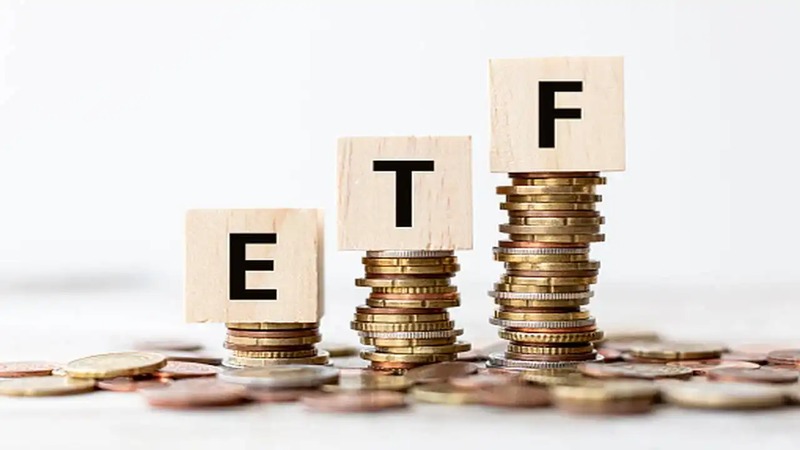
ETFs usually offer greater trading flexibility because they can be bought and sold throughout the day like shares. That makes them useful for investors who value intraday execution, tactical positioning, or more precise portfolio adjustments. Index funds, by contrast, are often simpler for investors who prefer automatic contributions, less trading activity, and a more hands-off long-term approach. For a wider structural comparison, readers can continue with our ETF vs index fund in 2026 guide.
Investors who want to compare visible cost differences can continue with our ETF vs index fund fees comparison. Those who are more focused on after-tax returns should also review our ETF vs index fund tax guide.
| Comparison Factor | ETF | Index Fund |
|---|---|---|
| Trading | Intraday | End-of-day |
| Pricing | Market price | NAV |
| Automation | Weaker | Stronger |
| Flexibility | Higher | Simpler |
| Tax / cost focus | Depends on structure & account | Depends on structure & account |
Key structural differences between ETFs and index funds
The core structural difference is that ETFs trade on an exchange, while index funds are usually bought and redeemed directly with the fund provider at end-of-day pricing. That difference affects liquidity, execution timing, and the degree of control investors have when entering or exiting a position. For some investors, that flexibility is a major benefit. For others, it introduces unnecessary complexity.
When flexibility matters more than simplicity
Flexibility matters more than simplicity when investors care about execution timing, tactical rebalancing, or managing entries during volatile sessions. In those cases, ETFs may offer a clear advantage. Simplicity matters more when the goal is to build steadily, automate contributions, and avoid the temptation to overtrade. The better choice depends less on product branding and more on investor behavior.
Which structure fits different types of investors
ETFs often fit investors who want intraday access, broader product variety, and more direct control over trading decisions. Index funds often fit investors who prioritize consistency, automation, and a lower-maintenance process. The right answer is not purely technical. It comes from matching the vehicle to the investor’s actual habits, risk tolerance, and portfolio workflow.
ETF fees, taxes, and real ownership costs
| Cost Layer | Why It Matters |
|---|---|
| Expense ratio | Ongoing visible fee |
| Bid-ask spread | Affects entry and exit cost |
| Slippage | Reduces realized execution quality |
| Trading commission | Adds direct transaction cost |
| Tax drag | Lowers after-tax return over time |
| Rebalancing friction | Increases total cost for active adjustments |
This is why ETF cost analysis should always move beyond the marketing number. Investors comparing funds should ask not only what the stated fee is, but also how the product trades, how long it is likely to be held, and how much performance may be lost to taxes and transaction costs. Readers who want to compare product costs more closely can continue with our ETF vs index fund fees comparison.
Taxes deserve a separate look because after-tax results can quietly change the real value of an investment over time. Readers who want to examine this side of ETF ownership in more detail can continue with our ETF vs index fund tax guide.
Liquidity belongs in this discussion as well because poor execution can quietly raise the cost of ownership. A product that looks cheap on paper can become less attractive if investors consistently pay more to enter or exit it. That is why our ETF liquidity explained guide is a useful companion to any fee or tax comparison.
Headline fees are only the starting point
Headline fees are only the starting point because they measure just one layer of cost. They do not fully reflect how the product trades, how easily it can be bought or sold, or how different account structures can affect the net outcome. Investors who focus only on the visible fee may underestimate the real gap between expected and realized returns.
How taxes reduce long-term returns
Taxes reduce long-term returns by creating drag that compounds alongside fees and market fluctuations. Even when two funds deliver similar gross performance, the one with better tax efficiency can produce a stronger net result over time. That is why after-tax performance matters more than surface-level returns for investors building positions with a multi-year horizon.
Why liquidity and spreads are part of total cost
Liquidity and spreads are part of total cost because they directly affect execution. Every time an investor buys at a slightly less favorable ask or sells into a weaker bid, some return is lost. That cost may look small on a single trade, but for larger positions, repeated rebalancing, or less liquid products, it becomes a meaningful part of ownership economics.
Actively managed ETFs: growth and risks
Actively managed ETFs are gaining more attention in 2026 because many investors want something more adaptive than broad passive exposure. In markets where concentration risk, valuation dispersion, and changing leadership all matter, active strategies can look appealing. Investors may hope that a manager can avoid weaker segments of an index, respond more quickly to changing conditions, or pursue opportunities that a passive structure may miss.
That opportunity is real, but so are the risks. Active ETFs ask investors to evaluate manager discipline, turnover, execution quality, and whether the strategy can preserve alpha after costs. Readers who want a deeper look at this area can continue with our actively managed ETF growth forecast, while those focused on execution and trading conditions should also review our ETF liquidity guide.
Why active ETFs are gaining momentum
Active ETFs are gaining momentum because they offer a middle path between passive simplicity and traditional active management. Investors can access manager-driven decisions inside a more flexible and often more transparent structure. In a market where broad index exposure is not always enough, that blend of discretion and accessibility can be attractive.
Where active ETF alpha can disappear
Active ETF alpha can disappear when the strategy generates ideas that do not survive costs, turnover, and execution friction. A portfolio may look smart on paper, but frequent repositioning, weak trade implementation, or inconsistent discipline can erode the very edge investors are paying for. That is why alpha should be judged on a net basis, not just on narrative appeal.
Liquidity risks that many investors ignore
Liquidity risks are often ignored because investors focus first on holdings and past performance. But in active ETFs, liquidity conditions can shape the actual user experience more than expected. Wider spreads, thinner trading, and sensitivity to underlying market depth can all affect how easily investors enter or exit the product, especially during volatile periods.
Equity ETF vs bond ETF: how to allocate
| Portfolio Need | Equity ETF | Bond ETF |
|---|---|---|
| Long-term growth | Stronger fit | Limited |
| Income stability | Moderate | Stronger |
| Volatility control | Lower | Higher |
| Risk-on positioning | Better fit | Weaker |
| Defensive allocation | Weaker | Better fit |
Flows can also help investors read how the market is positioning across these two segments. A rise in equity ETF demand may point to stronger risk appetite, while sustained interest in bond ETFs may suggest a shift toward defense, income, or capital preservation. Readers who want a more detailed comparison can continue with our equity ETF vs bond ETF guide.
For investors trying to interpret broader positioning, flow data adds another layer of context. Prices may rise or fall quickly, but inflows often reveal whether capital is genuinely rotating or just reacting short term. That is why our ETF inflows record analysis is a useful companion when thinking about allocation decisions in 2026.
When equity ETFs make more sense
Equity ETFs make more sense when investors are prioritizing long-term growth, inflation-beating return potential, and wider participation in economic expansion. They are often the default choice for portfolios with longer time horizons and greater tolerance for short-term volatility. In that context, temporary drawdowns may be a manageable trade-off for stronger long-run upside.
When bond ETFs deserve a larger weight
Bond ETFs deserve a larger weight when stability, income generation, or downside control becomes more important than maximizing return. They can help smooth portfolio volatility and may provide a more defensive anchor when equity valuations are stretched or risk appetite weakens. Their role is not just to reduce risk, but to create balance.
How ETF inflows can help you read risk appetite
ETF inflows can help investors read risk appetite because they show where capital is being committed, not just how prices are moving. A risk-on market often draws stronger participation into equity exposures, while a more cautious environment may favor bond-oriented allocation. Flow data is not perfect, but it often adds practical context to allocation decisions that price action alone cannot provide.
ETF liquidity explained before you place an order
ETF liquidity deserves a dedicated place in any investing guide because many investors still misunderstand what it really means. In 2026, liquidity is not just about how many shares traded yesterday. It also includes bid-ask spreads, market depth, the liquidity of the underlying holdings, and how efficiently an investor can execute an order without giving up unnecessary value.
That matters because poor liquidity can quietly damage returns. A product may appear attractive based on theme, fee, or recent performance, but if entering and exiting the position is consistently expensive, the investor’s realized result may be much weaker than expected. This becomes even more important for larger orders, niche exposures, and periods of market stress, when the difference between theoretical value and actual execution can widen.
For that reason, ETF selection should always include a trading quality check. Investors should ask how tight the spread is, whether the underlying assets are themselves liquid, and how much execution may vary across different times of day. Readers who want a deeper breakdown should continue with our ETF liquidity explained in 2026 guide, which looks at the mechanics in more detail.
Liquidity also connects back to broader ownership cost. A fund that looks efficient by fee alone may become less attractive when trading friction is added to the equation. That is why liquidity should be treated as a core due diligence factor, not a technical afterthought.
Why trading volume does not tell the full story
Trading volume does not tell the full story because visible turnover is only one part of ETF liquidity. A fund may trade lightly on screen yet still have decent execution potential if the underlying market is deep and market makers can efficiently facilitate flow. By contrast, a fund with eye-catching volume may still become expensive to trade if spreads widen or market conditions deteriorate.
How spreads and market depth affect execution
Spreads and market depth affect execution because they determine how close investors can trade to fair value and how much size the market can absorb without meaningful price impact. Tight spreads and deeper books usually support better entry and exit conditions. Wider spreads and shallow depth often mean higher hidden costs, especially when volatility rises.
What to check before buying a less liquid ETF
Before buying a less liquid ETF, investors should look at spread behavior, the liquidity of the underlying assets, and whether the position size fits the product’s trading profile. It is also wise to consider order timing and whether a limit order would reduce execution risk. These checks do not remove every problem, but they often prevent avoidable mistakes.
Dividend investing: when energy stocks still fit
Dividend investing still matters in 2026 because some portfolios need more than growth alone. Investors may want part of their allocation to generate cash flow, support income goals, or provide a more defensive return profile. In that context, dividend strategy can still complement an ETF-based portfolio.
Energy stocks can fit that role, but they should be treated as a selective extension rather than a replacement for diversified fund exposure. Their appeal often comes from cash generation, shareholder distributions, and sector-specific upside, but they also carry cyclical and concentration risk. Readers who want to explore this area further can continue with our best energy stocks for dividend income guide.
How to build an ETF portfolio in 2026: an ETF investing guide
Building an ETF portfolio in 2026 starts with clarity about purpose. A good portfolio is not simply a list of funds with recent performance or low fees. It is a structure in which each position has a clear role. Some ETFs are there to provide broad market exposure. Others are there to add defense, target income, express a tactical view, or create more selective upside. The quality of the portfolio comes from how those roles fit together.
That is why many investors benefit from a core-and-satellite framework. The core usually holds the largest share of capital and is built from diversified exposures designed to anchor the portfolio. The satellite layer can then add more targeted themes, active strategies, sector tilts, or tactical positioning. This structure helps investors stay organized while avoiding the common mistake of owning many products that all do the same thing.

Portfolio construction should also reflect the trade-off between growth, defense, and income. Equity ETFs may carry the growth burden, bond ETFs may improve stability, and selective dividend ideas may support income. Liquidity, taxes, and trading costs should still be part of the design process, because implementation quality affects outcomes just as much as product selection.
The most effective ETF portfolio is usually the one that is simple enough to manage, diversified enough to survive different conditions, and disciplined enough to stay aligned with the investor’s actual goals. That makes process more important than prediction. A well-structured portfolio does not need to guess every market move correctly. It needs to remain functional across many different ones.
A core and satellite approach
A core and satellite approach works because it separates long-term portfolio foundation from higher-conviction or more tactical ideas. The core provides consistency and broad exposure, while the satellite positions allow for flexibility and targeted expression. This can reduce clutter and make it easier for investors to understand why each holding exists.
How to balance growth, defense, and income
Balancing growth, defense, and income means deciding which objective needs the greatest emphasis at the current stage of the investor’s plan. Some portfolios can lean heavily toward growth, while others may need more stability or cash generation. The right mix is rarely static, but it should always be intentional rather than accidental.
Common mistakes when building an ETF portfolio
Common mistakes include overlapping exposures, chasing recent winners, underestimating liquidity and costs, and adding too many products without a clear role for each one. Another mistake is building a portfolio around themes before establishing a stable core. A better process begins with structure, then adds complexity only where it truly improves the portfolio.
Conclusion
Before buying any ETF in 2026, investors should confirm that the product fits a clear role inside the portfolio. A useful ETF should make sense not only on paper, but also in terms of cost, liquidity, holding period, and overall portfolio purpose.
In simple terms, a strong ETF decision usually comes down to four things: knowing what you own, understanding what it costs, recognizing how it trades, and being clear about why it belongs in the portfolio at all.
checklist
- Do I understand the ETF’s structure and holdings?
- Does this ETF have a clear role in my portfolio?
- Have I compared total costs, not just the headline fee?
- Could taxes reduce my net return more than expected?
- Is the ETF liquid enough for my order size?
- Am I buying it for a reason I can still defend in six months?