
The term ‘cryptocurrency’ is everywhere. From news headlines about Bitcoin’s dramatic price swings to discussions about the future of finance, it’s a topic that’s impossible to ignore. Yet, for many, a fundamental question remains: what precisely *is* a cryptocurrency? It’s often described in complex, technical jargon that can feel intimidating and exclusionary. Are they digital money? A speculative asset? A technological revolution? The truth is, it’s a bit of all three.
This guide is designed to cut through the noise. We will provide a clear, comprehensive, and practical definition of a cryptocurrency, specifically for a UK-based investor in 2025. We’ll break down the core technology that powers it, explore the different types you’ll encounter, and, most importantly, navigate the crucial aspects of regulation and taxation here in the United Kingdom. By the end, you’ll not only understand the definition but also the context that makes this innovation so compelling and controversial.
📊 Deconstructing the Definition: What is a Cryptocurrency?
At its simplest, a cryptocurrency is a digital or virtual currency that is secured by cryptography, making it nearly impossible to counterfeit or double-spend. This definition, however, only scratches the surface. To truly grasp its meaning, we need to break down its three fundamental properties.
The Core Concept: Digital, Decentralised, and Encrypted
- Digital: This is the most straightforward aspect. Cryptocurrencies exist only in the digital realm. There are no physical Bitcoin notes or Ethereum coins to carry in your wallet. They are entries on a digital ledger that is stored across a vast network of computers.
- Decentralised: This is arguably the most revolutionary feature. Traditional currencies, like the British Pound (GBP), are ‘centralised’. They are issued and controlled by a central authority—in our case, the Bank of England. Cryptocurrencies, on the other hand, are decentralised. There is no single bank, government, or company in charge. Instead, transactions are verified and the network is maintained by a distributed network of participants, operating on a peer-to-peer basis.
- Encrypted: The ‘crypto’ in cryptocurrency refers to cryptography. This is the advanced encryption technology used to secure transactions and control the creation of new units. It ensures the integrity and security of the network, making it incredibly difficult for unauthorised parties to tamper with the transaction history.
How is it Different from ‘Normal’ Money?
The differences between digital currencies and the fiat money we use daily are stark. Understanding them is key to grasping the potential and the risks involved.
| Feature | Fiat Currency (e.g., GBP) | Cryptocurrency (e.g., Bitcoin) |
|---|---|---|
| Issuer & Control | Central bank (Bank of England) and government. Centralised control. | No central authority. Controlled by a distributed network of users via code. |
| Transparency | Transactions are private, processed by intermediaries like banks. | Transactions are pseudonymous and recorded on a public, immutable ledger (blockchain). |
| Supply | Unlimited. Can be printed by the central bank (quantitative easing). | Often finite and predictable. Bitcoin has a hard cap of 21 million coins. |
| Transaction Method | Requires intermediaries (banks, payment processors). Subject to their rules and hours. | Peer-to-peer. Transactions can be sent directly between users, 24/7, globally. |
| Security | Relies on regulated financial institutions and legal frameworks. | Secured by cryptographic algorithms and network consensus. |
💡 The Engine Room: How Does Cryptocurrency Actually Work?
Understanding the definition is one thing; understanding the mechanism is another. The magic behind cryptocurrency lies in a combination of groundbreaking technologies that work in concert to create a secure and decentralised system.
Unpacking Blockchain Technology
The foundation of almost every cryptocurrency is Blockchain technology. Imagine a digital receipt book that isn’t held by one person but is copied and spread across thousands of computers worldwide. This is essentially a blockchain. It’s a distributed, immutable ledger.
- Blocks: Transactions are bundled together into ‘blocks’. Each block contains a set of recent transactions, a timestamp, and a reference to the previous block.
- Chain: Once a block is filled and verified by the network, it’s added to the end of the chain, creating a chronological and unbroken history of all transactions. This linking process is what makes it a ‘blockchain’.
- Immutable: Once a block is added to the chain, it cannot be altered. Changing the data in one block would require changing all subsequent blocks across the majority of the network, a feat that is computationally infeasible. This immutability is what provides trust in the system without needing a central authority.
The Role of Cryptography 🔐
As the name suggests, cryptography is the lynchpin of the entire system’s security. It’s used in several ways, but the most important concept for a user to understand is that of public and private keys.
- Public Key: This is like your bank account number. You can share it with others to receive funds. It’s derived from your private key but cannot be used to reverse-engineer it.
- Private Key: This is like your bank account PIN or password. It is a secret code that grants you access to your cryptocurrency and allows you to authorise transactions. It is absolutely critical to keep this private. If someone else gains access to your private key, they have full control of your funds. The phrase “not your keys, not your crypto” is a fundamental tenet of the space.
Mining and Consensus: Creating and Validating Coins
How are transactions confirmed and new coins created without a central bank? This is achieved through a ‘consensus mechanism’. It’s a set of rules by which the decentralised network agrees on the validity of transactions. The two most common methods are:
- Proof-of-Work (PoW): Used by Bitcoin, this method involves network participants (called ‘miners’) using powerful computers to solve complex mathematical puzzles. The first to solve the puzzle gets to add the next block to the blockchain and is rewarded with a certain amount of newly created cryptocurrency. This process is highly secure but consumes a significant amount of energy.
- Proof-of-Stake (PoS): An alternative model used by networks like Ethereum (since its 2022 ‘Merge’). In PoS, participants (called ‘validators’) ‘stake’ or lock up a certain amount of their own cryptocurrency as collateral. The network then randomly selects a validator to create the next block. Validators are rewarded with transaction fees. This method is far more energy-efficient than PoW.

💰 A Universe of Digital Coins: Major Types of Cryptocurrencies
The term ‘cryptocurrency’ is an umbrella term for thousands of different digital assets. While they all share the basic principles of cryptography and blockchain, their purposes and technologies can vary wildly. Understanding the main categories is essential for any aspiring investor.
The Pioneers: Bitcoin (BTC) and Ethereum (ETH)
These are the two titans of the crypto world, and they serve different primary functions.
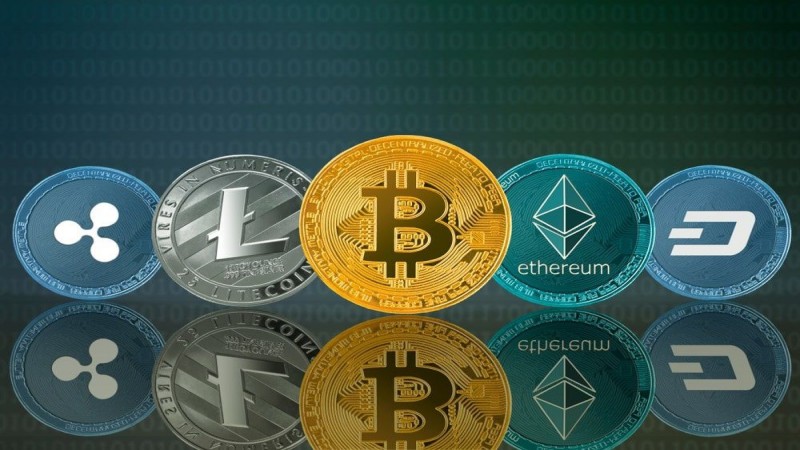
- Bitcoin (BTC): The original cryptocurrency, created in 2009. Its primary use case has evolved into being a ‘store of value’, often referred to as ‘digital gold’. Its key features are its security, decentralisation, and finite supply of 21 million coins, which makes it resistant to inflation.
- Ethereum (ETH): Launched in 2015, Ethereum expanded on Bitcoin’s concept. It is not just a digital currency but a decentralised computing platform. Its key innovation is ‘smart contracts’—self-executing contracts with the terms of the agreement directly written into code. This functionality enables a vast ecosystem of applications, including decentralised finance (DeFi) and non-fungible tokens (NFTs).
Altcoins and Meme Coins: Beyond the Giants
Any cryptocurrency that isn’t Bitcoin is technically an ‘altcoin’ (alternative coin).
- Altcoins: These often aim to improve upon Bitcoin’s or Ethereum’s designs, offering faster transaction speeds, lower fees, or different functionalities. Examples include Solana (SOL), known for its high throughput, and Cardano (ADA), which focuses on a research-driven approach to development.
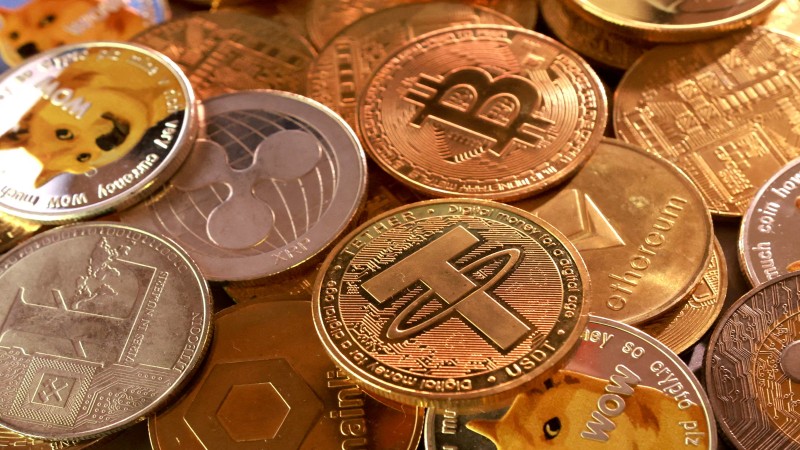
- Meme Coins: These are cryptocurrencies that originated from internet memes or jokes, such as Dogecoin (DOGE) and Shiba Inu (SHIB). While they can build surprisingly strong communities, their value is often driven purely by speculation and social media hype, making them extremely volatile and high-risk investments.
Stablecoins: Bridging the Fiat and Crypto Worlds
Stablecoins are a special category of cryptocurrency designed to minimise price volatility. They achieve this by pegging their value to a stable external asset, most commonly a fiat currency like the US Dollar. Examples include Tether (USDT) and USD Coin (USDC). Their purpose is to provide a stable medium of exchange within the crypto ecosystem, allowing traders to move in and out of volatile assets without having to ‘cash out’ back to traditional currency.
🧭 Investing in Cryptocurrency: A UK Perspective 🇬🇧
For UK residents, engaging with cryptocurrency isn’t just a matter of technology; it’s a matter of regulation and taxation. The landscape is evolving, and staying informed is non-negotiable.
Navigating the Regulatory Landscape
The UK’s approach to crypto is one of cautious engagement. The key body to be aware of is the Financial Conduct Authority (FCA). It’s crucial to understand their role:
- Anti-Money Laundering (AML) Registration: Any firm carrying out specific cryptoasset activities in the UK must be registered with the FCA for AML and counter-terrorist financing supervision. You should always check if a platform you intend to use is on the FCA’s register.
- Financial Promotions: As of late 2023, crypto promotions to UK customers must be fair, clear, and not misleading. This is an attempt to curb irresponsible advertising.
- Lack of Investor Protection: This is a critical point. In most cases, your crypto investments are not protected by the Financial Services Compensation Scheme (FSCS). If the platform you use goes bankrupt or you are a victim of fraud, it is highly unlikely you will get your money back. The FCA’s mantra is clear: be prepared to lose all your money.
Understanding Your Tax Obligations
HMRC is very clear that cryptoassets are considered property for tax purposes. This means you may be liable for tax when you ‘dispose’ of your crypto. A disposal includes:
- Selling your crypto for fiat currency (e.g., GBP).
- Exchanging one cryptocurrency for another (e.g., swapping Bitcoin for Ethereum).
- Using your crypto to pay for goods or services.
- Gifting crypto to another person (in most cases).
Any profit (or ‘gain’) you make from these disposals is potentially subject to Capital Gains Tax (CGT). You have an annual CGT allowance (£3,000 for the 2025/26 tax year), but any gains above this threshold must be declared to HMRC via a Self Assessment tax return. Keeping detailed records of all your transactions is essential. For official, detailed guidance, you should always consult the GOV.UK page on crypto tax.
The Inherent Risks: Volatility, Security, and Scams
A definition of cryptocurrency would be incomplete without a stark warning about the risks.
- Extreme Volatility: Prices can and do swing by double-digit percentages in a single day. This is not an asset class for the faint-hearted.
- Custody Risks: If you manage your own private keys, you are solely responsible for their security. If you lose them, your funds are gone forever. If you leave your crypto on an exchange, you are trusting their security and solvency.
- Regulatory Changes: The rules are still being written. A sudden change in government policy in the UK or abroad could significantly impact the value of your investments.
- Scams and Fraud: The crypto space is rife with scams, from fraudulent investment schemes to phishing attacks. Always be vigilant and follow the principle: if it sounds too good to be true, it almost certainly is.
🤔 FAQ
1. Is cryptocurrency legal in the UK?
Yes, it is legal to buy, sell, and hold cryptocurrency in the UK. However, the industry is becoming increasingly regulated. You must comply with FCA regulations regarding the platforms you use and declare any relevant gains to HMRC for tax purposes.
2. Can I lose all my money in crypto?
Absolutely. This is a high-risk, speculative investment. Prices are extremely volatile, platforms can be hacked or go bankrupt, and you are not covered by investor protection schemes like the FSCS. You should only invest an amount you are fully prepared to lose.
3. What is the difference between a coin and a token?
A ‘coin’ (like Bitcoin or Ethereum) operates on its own native blockchain. A ‘token’ is built on top of an existing blockchain, most commonly Ethereum (known as ERC-20 tokens). Tokens don’t have their own blockchain; they leverage the security and infrastructure of the parent chain to power decentralised applications.
4. Do I need to be a tech expert to invest in crypto?
No, you don’t need to be a computer scientist. User-friendly exchanges and wallets have made it much easier for beginners to get started. However, you absolutely must take the time to understand the basic concepts: what you are buying, how to store it securely, and the risks involved. A lack of understanding is a direct path to losing money.
5. How do I declare crypto gains on my tax return?
If your total capital gains from all sources (including crypto) exceed the annual exempt allowance, you must file a Self Assessment tax return. You’ll need to fill in the ‘Capital Gains Summary’ section (SA108), detailing your total disposals, gains, and losses. Keeping meticulous records of every transaction date, value in GBP, and associated fees is vital.
Conclusion
So, what is the definition of a cryptocurrency in 2025? It is a decentralised digital asset, secured by cryptography and built upon blockchain technology, that represents a fundamental departure from our traditional, centralised financial systems. It is both a medium of exchange and a highly speculative investment asset class.
To engage with it responsibly as a UK investor means looking beyond the hype. It requires an understanding of the technology, an awareness of the different asset types, and, crucially, a firm grasp of the regulatory and tax obligations overseen by the FCA and HMRC. The potential for high returns is matched only by the potential for total loss. Approach with curiosity, educate yourself relentlessly, and never invest more than you can afford to lose.
**This article represents the author’s personal views only and is for reference purposes. It does not constitute any professional advice.