
In the ever-evolving landscape of finance, the term ‘cryptocurrency’ has transitioned from niche forums to global headlines. For many investors in the UK, it represents a tantalising, if not confusing, new frontier. Is it the future of money, a speculative bubble, or a complex technology reserved for the tech-savvy? The sheer volume of information can be overwhelming, leaving many wondering where to even begin. The first crucial step is to cut through the noise and establish a clear understanding: what is the fundamental definition of a cryptocurrency?
This guide is designed to do just that. We will deconstruct the concept from the ground up, moving beyond buzzwords to provide a solid foundation for anyone looking to navigate this digital asset class. We’ll explore its core technology, uncover the problems it aims to solve, analyse its potential as an investment, and look ahead to what the future holds in 2025 and beyond. Whether you’re considering your first crypto purchase or simply want to understand the technology shaping our world, this comprehensive breakdown will provide the clarity you need.
💡 What Exactly Is a Cryptocurrency? Deconstructing the Digital Coin
At its core, a cryptocurrency is a digital or virtual token that exists on a decentralised computer network. Unlike the Pound Sterling or US Dollar, which are controlled by central banks and governments (known as fiat currency), cryptocurrencies are typically managed by a distributed network of users. This seemingly simple difference is the key to their entire value proposition. To truly grasp the concept, we need to look at its two defining pillars: cryptography and decentralisation.
Beyond Digital Money: The Core Principles
Think of a cryptocurrency as more than just digital cash; it’s a secure entry in a database that no one can change without fulfilling specific conditions. This security is achieved through a powerful technology called cryptography. This involves using advanced mathematical principles to encode and decode information, ensuring that transactions are secure and that the creation of new units is controlled.
- Cryptography: Every transaction is like a digital puzzle. It is scrambled into a complex code, making it secure and resistant to fraud. Only the intended recipient can ‘unscramble’ it. This process also verifies the transfer of funds and prevents counterfeiting.
- Decentralisation: There is no central server, company, or government in charge. Instead, the transaction ledger, known as the blockchain, is distributed across thousands of computers worldwide. This means no single point of failure exists, and no single entity can dictate the rules or manipulate the currency.
- Anonymity & Transparency: While transactions are recorded on a public ledger for anyone to see (transparency), the identities of the participants are typically pseudonymous, represented by alphanumeric wallet addresses rather than personal names (anonymity).
The Problem It Solves: Why Was Cryptocurrency Created?
The genesis of cryptocurrency, marked by the release of Bitcoin in 2009, was a direct response to the 2008 financial crisis. The crisis exposed deep-seated vulnerabilities in the traditional financial system, which relies heavily on trusted third parties like banks. Cryptocurrencies were proposed as a new model that could operate without these intermediaries.
Consider the pain points of traditional finance:
- Middlemen: Every bank transfer, especially international ones, involves intermediaries that add costs and delays.
- Censorship & Control: A government can freeze your bank account, or a bank can block a transaction. You don’t have absolute control over your own money.
- Inflation: Central banks can print more money, devaluing the currency held by citizens and eroding savings over time.
- Accessibility: Billions of people worldwide are ‘unbanked,’ lacking access to basic financial services.
Cryptocurrency offers a potential solution by enabling direct peer-to-peer transactions, giving individuals full sovereignty over their assets, operating with a predictable and limited supply (in many cases), and being accessible to anyone with an internet connection.

⚙️ How Does Cryptocurrency Actually Work? The Engine Behind the Asset
Understanding the definition of cryptocurrency requires a look under the bonnet at the technology that powers it. This technology is primarily the blockchain, a revolutionary concept that provides the framework for security, transparency, and decentralisation.
Understanding Blockchain Technology: The Digital Ledger
Imagine a shared digital notebook that is duplicated and spread across a vast network of computers. This notebook is the **blockchain**. Every time a transaction occurs, it is recorded as a ‘block’ of data. Each new block is then cryptographically linked to the previous one, forming a chronological ‘chain’.
- Transparency: Because the ledger is public, anyone can view the transactions that have taken place. This creates an unprecedented level of transparency.
- Immutability: Once a block is added to the chain, it cannot be altered or deleted. To change a historical block, a hacker would need to alter that block and all subsequent blocks on more than half of the network’s computers simultaneously—a feat considered practically impossible. This makes the blockchain incredibly secure and tamper-proof.
This distributed and immutable ledger is what allows cryptocurrencies to function without a central authority. The network itself, through a consensus mechanism, validates and records all activity.
Mining and Staking: How New Coins Are Created and Secured
If there are no banks, how are transactions verified and new coins brought into circulation? This is done through two primary consensus mechanisms: Proof-of-Work (PoW) and Proof-of-Stake (PoS).
Proof-of-Work (PoW): This is the original mechanism used by Bitcoin. Network participants, called ‘miners,’ use powerful computers to solve complex mathematical problems. The first miner to solve the puzzle gets to add the next block of transactions to the blockchain and is rewarded with a certain amount of new cryptocurrency. This process is highly energy-intensive but provides robust security.
Proof-of-Stake (PoS): This is a more energy-efficient alternative used by networks like Ethereum. In this system, participants, known as ‘validators,’ lock up a certain amount of their cryptocurrency as collateral (their ‘stake’). The network then randomly selects a validator to create the next block. Validators are rewarded with transaction fees. By staking their own coins, they are incentivised to act honestly, as any malicious behaviour would result in them losing their stake.
Here’s a simple comparison:
| Feature | Proof-of-Work (PoW) | Proof-of-Stake (PoS) |
|---|---|---|
| Method | Competitive puzzle-solving (Mining) | Locking up coins as collateral (Staking) |
| Participants | Miners | Validators |
| Energy Consumption | Very High | Low (~99% less than PoW) |
| Example | Bitcoin | Ethereum, Solana |
| Reward Source | Block rewards (new coins) + transaction fees | Mainly transaction fees |
📊 Navigating the Crypto Universe: Major Types of Cryptocurrencies
While Bitcoin might be the most famous cryptocurrency, the market has expanded to include thousands of different digital assets, each with unique characteristics and use cases. Understanding the main categories is essential for any aspiring investor.
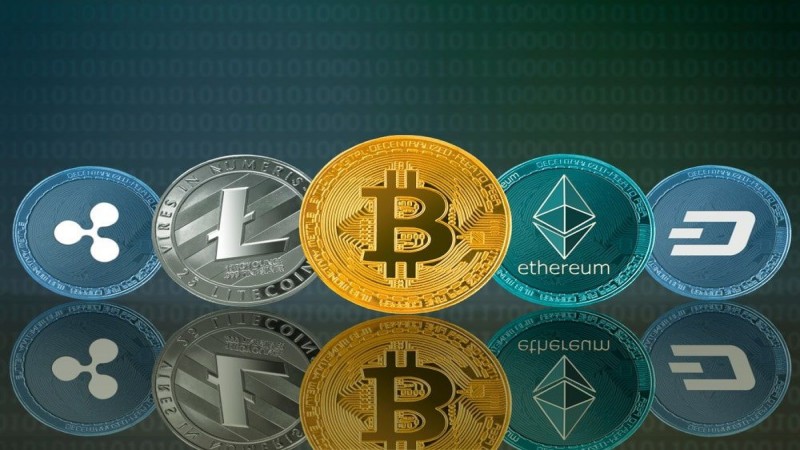
Bitcoin (BTC): The Original and Market Leader
As the first cryptocurrency, Bitcoin holds a special place in the market. Its primary function has evolved into being a **’store of value,’** often referred to as ‘digital gold.’ Investors are drawn to its fixed supply of 21 million coins, which makes it resistant to inflation. While its technology is slower than newer cryptocurrencies, its brand recognition, security, and large network make it the bedrock of the crypto market.
Altcoins: Beyond Bitcoin
The term ‘altcoin’ simply refers to any cryptocurrency that is not Bitcoin. Many altcoins aim to improve upon Bitcoin’s design or serve entirely different purposes.
- Ethereum (ETH): The second-largest cryptocurrency, Ethereum is much more than just a digital currency. It is a decentralised computing platform that introduced the concept of **smart contracts**—self-executing contracts with the terms of the agreement directly written into code. This innovation has enabled the development of thousands of decentralised applications (dApps), from decentralised finance (DeFi) protocols to NFT marketplaces.
- Stablecoins (e.g., Tether – USDT, USD Coin – USDC): These are a special type of altcoin designed to minimise price volatility. Their value is pegged to a stable asset, most commonly the US dollar. For every one USDT in circulation, there is meant to be one US dollar held in reserve. Stablecoins act as a crucial bridge between the volatile crypto world and the stability of traditional fiat currency, allowing traders to hedge against market downturns without cashing out.
- Meme Coins (e.g., Dogecoin – DOGE, Shiba Inu – SHIB): Initially created as jokes, meme coins have grown into a significant, albeit highly speculative, corner of the market. Their value is driven almost entirely by community sentiment, social media hype, and celebrity endorsements. While they can produce extraordinary returns, they carry extreme risk and lack the fundamental utility of other major cryptocurrencies.
📈 Is Cryptocurrency a Good Investment for 2025? A Balanced View
With a clear definition, the next logical question is whether cryptocurrency has a place in your investment portfolio. The answer is complex, as the potential for high rewards is intrinsically linked to significant risks. A balanced perspective is crucial.
The Potential Rewards: Why Investors Are Attracted
- High Growth Potential: The crypto market is still relatively young, and many investors are betting on its long-term adoption. Early investors in projects like Bitcoin and Ethereum have seen life-changing returns, and the potential for similar gains (asymmetric upside) continues to attract capital.
- Hedge Against Inflation: Assets like Bitcoin with a fixed supply are seen by some as a hedge against the devaluation of fiat currencies caused by central bank money printing.
- Innovation and Disruption: Investing in cryptocurrency is also a bet on the underlying blockchain technology. Many believe this technology will disrupt numerous industries, from finance and supply chain management to art and gaming.
- Increasing Institutional Adoption: The approval of Bitcoin ETFs (Exchange-Traded Funds) by major regulators has opened the doors for large institutional investors, lending legitimacy and potentially bringing trillions in new capital to the market.
The Inherent Risks: What You Must Consider
- Extreme Volatility: This is the single greatest risk. Prices can surge or plummet by double-digit percentages within a single day. You must be prepared for wild price swings and the possibility of significant losses.
- Regulatory Uncertainty: Governments worldwide, including in the UK, are still developing their regulatory frameworks for crypto. Future regulations could significantly impact the market’s value and accessibility. In the UK, the Financial Conduct Authority (FCA) oversees the industry, and profits are subject to Capital Gains Tax.
- Security Risks: While blockchain networks themselves are secure, the platforms where you buy, sell, and store crypto (exchanges) can be vulnerable to hacks. Furthermore, scams like phishing and rug pulls are rampant. Protecting your assets requires diligence and robust security practices.
- Technical Complexity: Unlike buying stocks, investing in crypto involves understanding new concepts like digital wallets, private keys, and blockchain transactions. A lack of knowledge can lead to costly mistakes.
🧭 The Future of Cryptocurrency: What Lies Ahead?
As we look towards the rest of 2025 and beyond, the cryptocurrency industry is at a pivotal juncture. The initial phase of pure speculation is gradually giving way to a new era focused on utility, regulation, and integration with the traditional economy.
The Road to Mainstream Adoption
The journey from a niche asset to a mainstream component of the financial system is accelerating. The introduction of spot Bitcoin and Ethereum ETFs in major markets has been a game-changer, providing a familiar and regulated investment vehicle for everyday investors and pension funds. We are also seeing greater integration into payment systems, with major companies beginning to explore crypto for cross-border transactions and customer rewards.
The Evolving Regulatory Landscape
The Wild West era of crypto is coming to an end. Regulators globally are implementing clearer rules for exchanges, stablecoin issuers, and crypto service providers. While this may curb some of the market’s excesses, it is a crucial step for long-term stability and consumer protection. As discussed at forums like the World Economic Forum, harmonised international regulations will be key to fostering responsible innovation and preventing illicit activities.
Technological Evolution: Web3 and Decentralised Finance (DeFi)
Cryptocurrency is the foundational layer for two of the most exciting technological trends: Web3 and DeFi.
- Web3: This refers to the next evolution of the internet, envisioned as a decentralised web where users, not large corporations, control their own data and digital identity. Cryptocurrencies will function as the native currency for this new internet economy.
- DeFi: This is an effort to build a parallel financial system using blockchain technology. DeFi protocols offer services like lending, borrowing, and trading without traditional intermediaries like banks, promising greater efficiency and accessibility.
These innovations suggest that the ultimate impact of cryptocurrency will extend far beyond its role as a simple investment asset.
🤔 FAQ
What is the main difference between cryptocurrency and traditional money?
The primary difference is decentralisation. Traditional money (fiat currency) is issued and controlled by a central authority like a government or central bank. Cryptocurrencies are managed by a distributed network of computers, making them resistant to control or manipulation by any single entity.
Can I lose all my money in crypto?
Yes. Cryptocurrencies are highly volatile and speculative assets. Prices can fall to zero, and investments are not protected in the same way as bank deposits. You should only invest an amount that you are fully prepared to lose.
How many cryptocurrencies are there?
There are over 20,000 different cryptocurrencies in existence. However, the vast majority have very little value, trading volume, or utility. The top 100 cryptocurrencies, led by Bitcoin and Ethereum, account for the vast majority of the total market capitalisation.
Do I need a lot of money to start investing?
No. One of the advantages of cryptocurrency is that you can buy fractional amounts. You don’t need to buy a whole Bitcoin, for instance. Most exchanges in the UK allow you to start investing with as little as £10 or £20.
Is cryptocurrency legal in the UK?
Yes, it is legal to buy, sell, and hold cryptocurrency in the UK. However, the industry is regulated by the Financial Conduct Authority (FCA), and any profits you make from selling your crypto assets are potentially subject to Capital Gains Tax. It is important to keep accurate records of your transactions.
Conclusion
The definition of a cryptocurrency goes far beyond being just ‘digital money.’ It represents a fundamental shift in how we think about value, trust, and control. It is a technology built on the principles of cryptographic security and decentralisation, offering a potential alternative to a financial system reliant on intermediaries. While the path ahead is fraught with volatility and regulatory challenges, the underlying innovation of blockchain technology continues to pave the way for a more open and transparent financial future. For any investor, the journey begins not with a purchase, but with education. Understanding its core principles, its mechanics, and its inherent risks is the most critical first step in navigating this exciting and disruptive new asset class. Always conduct thorough research and consider your own risk tolerance before committing capital.
*This article represents the author’s personal views only and is for reference purposes. It does not constitute any professional advice.