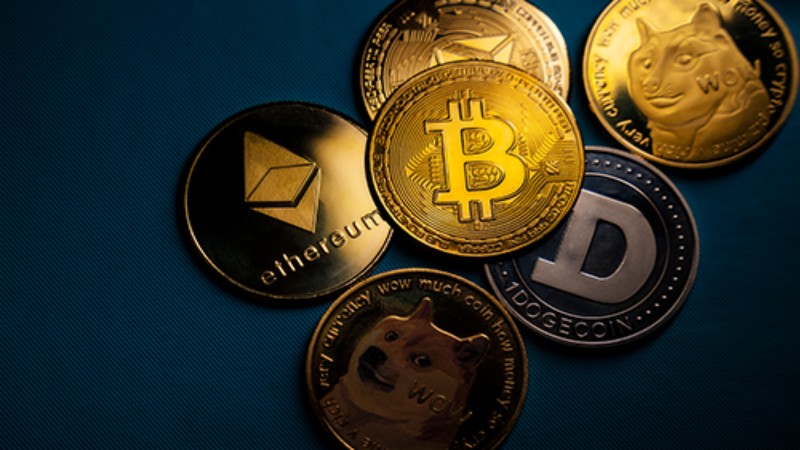
The term ‘cryptocurrency’ has exploded into the public consciousness, dominating financial news headlines and conversations among investors. Yet, for all its prevalence, a clear, practical understanding of what it truly is can remain elusive. Many see it as a complex, digital-only version of money, a high-risk gamble, or the future of finance. The truth, as is often the case, lies somewhere in a nuanced middle ground.
As an investor in 2025, moving past the hype and grasping the fundamental definition of a cryptocurrency is no longer optional—it’s essential. This isn’t just about chasing the next Bitcoin surge; it’s about understanding a technological and financial revolution that is reshaping how we view assets, ownership, and trust itself. This guide will demystify the jargon, break down the core concepts, and provide you with a robust framework for understanding what cryptocurrencies are, how they function, and their place within the modern investment landscape.
What Exactly is a Cryptocurrency? The Foundational Definition
At its heart, a cryptocurrency is a digital or virtual currency that is secured by cryptography, making it nearly impossible to counterfeit or double-spend. This is the textbook definition, but to truly appreciate its significance, we need to unpack its core principles.

💡 Beyond Digital Money: Core Principles
Unlike the digital money in your online bank account, which is simply a digital representation of traditional fiat currency (like the British Pound), a cryptocurrency’s value and security are inherent to its digital nature. It doesn’t exist in a physical form. Its existence is maintained on a global network of computers, and its integrity is protected by complex mathematical principles. The ‘crypto’ part of the name refers to the various encryption algorithms and cryptographic techniques, such as elliptical curve encryption and hashing functions, that safeguard these networks.
🌐 Decentralisation: The Key Differentiator
Perhaps the most revolutionary aspect of cryptocurrency is its decentralised nature. Traditional currencies are issued and managed by central authorities like the Bank of England. This central body controls the money supply, validates transactions, and maintains the ledger of who owns what.
Cryptocurrencies, by contrast, operate on a distributed ledger technology, most commonly a blockchain. There is no single bank, government, or company in charge. Instead, control is distributed among all the users on the network. This framework means that no single entity can dictate the rules, freeze your account, or reverse transactions. It creates a system that is transparent and resistant to censorship.
🛡️ Solving the Double-Spending Problem
For any digital cash system, the biggest challenge is the ‘double-spending problem’. With a digital file, it’s easy to make a copy. So, what stops someone from copying a digital coin and spending it twice? In traditional finance, banks solve this by centrally tracking all transactions. When you spend £10, your bank debits your account and credits the recipient’s, ensuring that same £10 cannot be spent again.
Cryptocurrencies solve this without a central authority. Through the blockchain, all transactions are broadcast to the network and grouped into blocks. These blocks are cryptographically linked together in a chain, creating an immutable and publicly verifiable record. Once a transaction is confirmed on the blockchain, it cannot be altered or deleted, thus preventing double-spending in a decentralised manner. For investors choosing trading infrastructure to explore decentralised assets, regulated brokers with strong fund safety protections become especially important.

🧭 How Does Cryptocurrency Actually Work? Unpacking the Technology
To grasp the definition of a cryptocurrency, one must understand the engine that powers it. This technology is not just an operational detail; it is the very foundation of its value proposition—security, transparency, and decentralisation.
The Engine Room: Blockchain Technology
Imagine a shared digital notebook that is duplicated and spread across thousands of computers. This notebook is the ‘ledger’, and the technology that manages it is the blockchain. Every time a transaction occurs, a record of it is added to every participant’s copy of the notebook. This is why it’s called a ‘distributed ledger’.
- Blocks: Transactions are bundled together into ‘blocks’.
- Chains: Each new block is cryptographically linked to the one before it, forming a chronological and unbreakable ‘chain’. Altering a single block would require altering every subsequent block in the chain, an almost impossible computational feat.
Mining and Consensus Mechanisms
If there’s no central authority, how are new transactions validated and added to the blockchain? This is achieved through a ‘consensus mechanism’. It’s a set of rules that allow the distributed network to agree on the state of the ledger. The two most prominent mechanisms are:
| Feature | Proof-of-Work (PoW) | Proof-of-Stake (PoS) |
|---|---|---|
| Concept | ‘Miners’ compete to solve a complex mathematical puzzle. The first to solve it gets to add the next block and is rewarded with new coins. | ‘Validators’ are chosen to create new blocks based on the number of coins they ‘stake’ or lock up as collateral. |
| Energy Consumption | Extremely high, as it requires immense computational power. | Significantly lower, as it does not rely on computational competition. |
| Examples | Bitcoin (BTC), Litecoin (LTC) | Ethereum (ETH), Cardano (ADA) |
| Security Model | Secured by the cost of energy and hardware required to attack the network. | Secured by the economic value staked by validators, who risk losing their stake if they act maliciously. |
📊 A Spectrum of Digital Assets: Major Types of Cryptocurrencies
The term ‘cryptocurrency’ is an umbrella for a vast and diverse ecosystem of digital assets. While they share the foundational principles of cryptography and decentralisation, their purposes and technologies can vary significantly.
The Pioneer: Bitcoin (BTC)
Launched in 2009, Bitcoin is the original cryptocurrency. It was created as a peer-to-peer electronic cash system, but its narrative has evolved. Today, many investors see it as ‘digital gold’—a store of value and a hedge against inflation due to its fixed supply of 21 million coins.
The Innovators: Altcoins (e.g., Ethereum)
Any cryptocurrency other than Bitcoin is referred to as an ‘altcoin’. While thousands exist, the most significant is Ethereum (ETH). Ethereum took the concept of blockchain a step further by introducing ‘smart contracts’. These are self-executing contracts with the terms of the agreement directly written into code. This innovation enabled the development of decentralised applications (dApps) and decentralised finance (DeFi), making Ethereum a global, programmable blockchain.
The Stabilisers: Stablecoins (e.g., USDT, USDC)
A major barrier for cryptocurrency adoption is extreme price volatility. Stablecoins are designed to solve this. They are cryptocurrencies pegged to a stable asset, usually a major fiat currency like the U.S. Dollar. For every one stablecoin issued, there is (in theory) one dollar held in reserve. This provides a stable medium of exchange within the crypto ecosystem, allowing traders to move in and out of volatile positions without converting back to traditional money.
The Community-Driven: Meme Coins (e.g., DOGE, SHIB)
Initially started as jokes, meme coins have grown into a significant, albeit highly speculative, category. Their value is driven almost entirely by community hype and social media trends rather than underlying technology or utility. They represent the most volatile and high-risk end of the cryptocurrency spectrum.
📈 Investing in Cryptocurrency: A Balanced View of Pros and Cons
Understanding the definition of cryptocurrency also means acknowledging its dual nature as both a technology and a speculative asset class. For investors, this presents a unique set of opportunities and risks. For investors navigating deposits, withdrawals, and funding efficiency, platforms like Ultima Markets Deposits & Withdrawals can offer smoother operational processes, especially for active traders.
| Potential Advantages (Pros) | Inherent Risks (Cons) |
|---|---|
| High Potential Returns: The asset class has historically delivered outsized returns, though past performance is not indicative of future results. | Extreme Volatility: Prices can swing dramatically in short periods, leading to significant potential losses. |
| Decentralisation: Independence from government and bank control offers a hedge against traditional financial system failures. | Regulatory Uncertainty: The legal landscape is still evolving globally, and new regulations could impact value. |
| Accessibility: Anyone with an internet connection can access cryptocurrencies 24/7, without needing a bank account. | Security Risks: While the blockchains themselves are secure, exchanges can be hacked, and individuals can lose funds through scams or losing their private keys. |
| Transparency: All transactions on most public blockchains are visible to anyone, creating a high degree of transparency. | Technical Complexity: Understanding the technology and managing private keys can be challenging for beginners. |
🏛️ The Regulatory Landscape in the UK (2025)
For UK-based investors, understanding the local regulatory environment is crucial. As of 2025, the UK’s approach is one of cautious engagement, aiming to balance consumer protection with fostering innovation.
The FCA’s Stance
The Financial Conduct Authority (FCA) is the primary regulator overseeing financial activities in the UK. The FCA has made it clear that cryptocurrencies are considered very high-risk, speculative investments. Their focus is on ensuring that crypto-asset firms comply with Anti-Money Laundering (AML) and Counter-Terrorist Financing (CTF) regulations. They also regulate the promotion of cryptoassets to ensure any marketing is clear, fair, and not misleading.
What’s Regulated and What’s Not?
It’s important to distinguish between different types of crypto activities:
- Unregulated: Buying, selling, and holding cryptocurrencies like Bitcoin and Ethereum is not, in itself, a regulated activity in the UK. This means investors may not be protected by the Financial Services Compensation Scheme (FSCS) if a provider goes out of business.
- Regulated: Certain derivatives based on cryptoassets, such as crypto futures, options, and Contracts for Difference (CFDs), are regulated. The FCA has banned the sale of these to retail consumers due to their high-risk nature.
Tax Implications for UK Investors
HM Revenue and Customs (HMRC) has provided clear guidance. For most individuals, profits from selling or exchanging cryptocurrencies are subject to Capital Gains Tax (CGT). This means if your total gains in a tax year exceed the annual exemption allowance, you must report and pay tax on them. Keeping detailed records of all transactions is essential.
Conclusion
The definition of a cryptocurrency transcends a simple line in a dictionary. It represents a fundamental shift in digital ownership, powered by the ingenious combination of cryptography and decentralised network theory, all built upon the bedrock of blockchain technology. It is a system that enables peer-to-peer trust without intermediaries, opening up a world of new financial possibilities.
For the prudent investor in 2025, understanding this definition is the first and most critical step. It allows you to see past the market noise and evaluate the technology’s true potential alongside its undeniable risks. A cryptocurrency is not just a token on a screen; it is a stake in a new, evolving financial architecture. Approach it with curiosity, educate yourself relentlessly, and always invest with caution.
FAQ
Q1: Is cryptocurrency real money?
While it can be used for payments in some contexts, it is not widely accepted as a medium of exchange like the British Pound. Its high volatility also makes it difficult to use as a stable unit of account. Most authorities classify it as a property or an asset rather than money.
Q2: Can I lose all my money in crypto?
Yes. The value of cryptocurrencies can and does fall to zero. Investments are speculative and highly volatile. You should only invest what you are prepared to lose entirely. There is no government or scheme to compensate you for losses from market volatility.
Q3: How many cryptocurrencies are there?
As of 2025, there are over 20,000 different cryptocurrencies in existence. The vast majority of these have very little trading volume or utility and are unlikely to succeed in the long term. A small handful, like Bitcoin and Ethereum, dominate the market’s total capitalisation.
Q4: Do I need a lot of money to start investing in crypto?
No. One of the advantages of cryptocurrencies is that they are divisible. You do not need to buy a whole Bitcoin. Most exchanges allow you to buy fractions of a coin for as little as a few pounds, making it accessible to start with a small amount of capital.
Q5: Is it too late to invest in Bitcoin in 2025?
This is a common question without a simple answer. While the days of turning a few pounds into millions overnight are likely gone, some analysts believe Bitcoin still has significant growth potential as a store of value. Others believe it is overvalued. It depends entirely on your investment thesis, risk tolerance, and long-term outlook.
This article represents the author’s personal views only and is for reference purposes. It does not constitute any professional advice.