One-Sentence Answer: Why Coinstar Is Not Your Foreign Currency Cashpoint
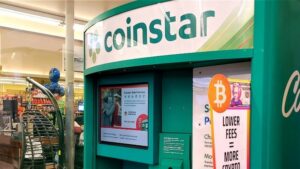
Let us be direct: Coinstar machines in the United Kingdom do not accept or process foreign currency. This is not a temporary limitation or a recent policy shift; it is a fundamental constraint of their business model and technology. 💡
Technological Decryption: Coinstar’s Design for Domestic Coinage
The core of a Coinstar machine’s functionality lies in its sophisticated image recognition and weight-sensing technology. Each British coin—from the one penny piece to the two-pound coin—has a specific weight, diameter, thickness, and metallic composition. The machines are meticulously calibrated to recognise these attributes for GBP coins exclusively. Foreign coins, with their varied specifications, are immediately identified as non-compliant and rejected into the return slot. This is a hardware-level limitation, not a simple software issue.
The Business Model: A Focus on High-Liquidity Domestic Operations
Coinstar’s value proposition is built on servicing the high volume of domestic coins already in circulation within a country. Their operational infrastructure, from collection logistics to partnerships with financial institutions, is optimised for repatriating GBP back into the UK’s financial system. Integrating a multi-currency capability would introduce significant complexities—logistics, fluctuating exchange rates, and regulatory overheads—that contradict their streamlined, high-efficiency business model. As confirmed on their official UK website, their service is strictly for ‘UK coins’.
A Financier’s Warning: Your True Enemy Isn’t the ‘Fee’, It’s ‘Exchange Rate Slippage’
In the City of London, we learn a critical lesson early on: the most significant costs are often the ones that are not explicitly stated. When it comes to foreign currency exchange, the retail consumer is frequently misled by prominent signs advertising ‘0% Commission’ or ‘No Fees’. ⚠️
Let’s be brutally honest: this is a marketing sleight of hand. The true cost of your transaction is not in the fixed fee; it is embedded within the exchange rate you are offered. This hidden cost is known as Exchange Rate Slippage or the ‘spread’.
Deconstructing the ‘0% Commission’ Myth
An exchange provider claiming ‘0% commission’ is not a charity. They generate revenue by creating a gap between the price at which they buy a currency from you and the price at which they sell it. The rate you, the consumer, receive is always less favourable than the real, institutional rate at which they trade. The difference is their profit margin. Thinking you are getting a ‘free’ service is a financially naive assumption that costs holidaymakers and investors billions annually.
Your 30-Second Practical Guide: Finding the Real ‘Mid-Market Rate’
The ‘Mid-Market Rate’ is the true exchange rate, the midpoint between the buy and sell prices on the global currency markets. This is the rate banks and trading services use when they trade with each other. It is the only legitimate benchmark for any currency exchange transaction. 🧭
You can find this rate in seconds:
- Open a web browser on your smartphone.
- Search for “GBP to EUR mid-market rate” (or your specific currency pair).
- Use authoritative sources like Reuters, Bloomberg, or the Bank of England’s official site for the most accurate, real-time data.
This is your benchmark. Any deviation from this rate is a cost to you.
Calculating Your Hidden Cost: The Slippage Formula
Now, you can quantify your actual loss. The formula is simple yet powerful:
(Mid-Market Rate - Your Quoted Rate) x Amount to Exchange = Your Real Cost
For example, if the mid-market rate for GBP to USD is 1.25, but your airport kiosk offers you 1.18, and you are exchanging £500:
(1.25 - 1.18) x 500 = £35.00
In this scenario, the ‘0% commission’ service has cost you £35. The failure to understand this fundamental principle is the single largest source of value destruction for individuals dealing with foreign currency. Effective risk management begins with identifying and quantifying these hidden costs.
The 2026 Showdown: Cost & Risk Ratings for Four Currency Exchange Channels
Now that we have established the critical metric of Exchange Rate Slippage, we can conduct a data-driven comparison of the primary channels available to a UK-based individual in 2026. This analysis moves beyond marketing claims to deliver a clear verdict on total cost and associated risks. 📊
The Contenders: High-Street Banks vs. Airport Kiosks vs. Specialist Online Services vs. Coinstar (Baseline)
Below is a quantitative breakdown. ‘Trust Index’ is rated out of 10, based on factors including FCA regulation, insurance, and public reviews.
| Channel | Fixed Fee (Est. 2026) | Exchange Rate Slippage (Est. %) | Processing Speed | Currency Range | Trust Index |
|---|---|---|---|---|---|
| High-Street Bank (e.g., HSBC, Barclays) | £0 – £5 for non-clients | 3% – 6% | Immediate (in-branch) to 3-5 business days (online) | Major currencies (EUR, USD, etc.); poor for exotic or coins | 9/10 |
| Airport Kiosk (e.g., Travelex) | Typically ‘0%’ | 7% – 15% | Immediate | Wide range of notes, very limited or no coin support | 7/10 |
| Specialist Online Service (e.g., Cash4Coins) | None (cost built into rate) | 2% – 5% (variable) | 5-10 business days (post-receipt) | Excellent for notes, coins, obsolete & exotic currency | 6/10 |
| Coinstar UK (Domestic Baseline) | 10.9% processing fee | N/A (Does not exchange foreign currency) | Immediate | GBP coins only | N/A |
🔍 Analyst’s Interpretation: The data is unequivocal. Airport kiosks, while convenient, represent the worst value proposition, with potential slippage reaching a punitive 15%. High-street banks offer security, but their rates are uncompetitive for the informed consumer. The specialist online services present a compelling mathematical case, especially for non-standard currency, but this comes with a slightly lower trust factor and slower processing times due to reliance on postal services. The key takeaway is the trade-off between cost, convenience, and security.
In-Depth Review: Use-Case Analysis of Three Coinstar Alternatives
Understanding the data is one part of the equation; applying it to specific, real-world scenarios is the next. A strategy that is optimal for a corporate treasurer is inappropriate for a tourist with leftover holiday coins. Here, we dissect the three primary alternatives to Coinstar, mapping them to distinct user profiles. 💰
Alternative 1 [The Safety Mandate]: High-Street Banks (HSBC, Barclays, Lloyds)
This is the default option for the risk-averse individual, particularly one who is an existing client of the institution.
- Ideal User Profile: Existing bank customers needing to exchange large sums (£1,000+) of major currency notes (e.g., USD, EUR, JPY) who prioritise institutional security above all else.
- Strengths: Unmatched security and peace of mind. The transaction is backed by a major, FCA-regulated institution. The process is straightforward, and funds are deposited directly into your current account.
- Weaknesses: As our table illustrates, this security comes at a significant cost. The exchange rates offered to retail customers are consistently poor. Banks have little incentive to be competitive in this space. Furthermore, their appetite for foreign coins or less common currencies is virtually zero. The process can also be bureaucratic, sometimes requiring appointments.
- Verdict: A suitable choice for large, mainstream currency transactions where the psychological comfort of a trusted institution outweighs the quantifiable financial loss from uncompetitive rates. For leftover coins or smaller amounts, this channel is inefficient.
Alternative 2 [The Comprehensive Solution]: Specialist Service (Cash4Coins)
Online services like Cash4Coins have emerged to fill the specific market gap left by banks and kiosks: the complex, low-value-per-unit world of mixed foreign coins and notes.
- Ideal User Profile: Individuals with a collection of mixed foreign coins and notes, including potentially obsolete or ‘exotic’ currencies, who want to liquidate the entire collection in one transaction. This also applies to charities and businesses that receive foreign currency donations.
- Strengths: Unparalleled scope. They are one of the few services that will process coins, low-denomination notes, and even pre-Euro currencies. Their business model is built around aggregating these small amounts, making them a viable ‘one-stop-shop’. Mathematically, their rates, even after accounting for slippage, are often superior to simply writing off the currency as worthless.
- Weaknesses & Risk Audit: The model relies on the customer physically posting their currency, introducing a risk of loss in transit. This is the primary source of user apprehension. Payment is not immediate. Critically, their trust profile must be scrutinised. As of 2026, Cash4Coins holds a ‘Great’ rating on Trustpilot (4.2/5), but prospective users must read recent reviews, understand the terms of service, and use a tracked, insured postal method. This is a pragmatic trade-off of risk for utility.
- Verdict: The most practical and comprehensive solution for the exact problem of ‘a jar full of mixed foreign coins’. It requires a degree of procedural diligence from the user but successfully monetises assets that would otherwise be inert.
Alternative 3 [The Convenience Play]: Automated Kiosks (Fourex)
Fourex kiosks represent a technological evolution, effectively a ‘reverse ATM’ or ‘multi-currency Coinstar’ found in high-traffic locations like London’s transport hubs.
- Ideal User Profile: Tourists, commuters, or individuals in major city centres (primarily London) with a small amount of mixed coins and notes (£5-£50) who prioritise immediate conversion over achieving the best possible rate.
- Strengths: Speed and simplicity. The user interface is intuitive; you simply deposit your coins and notes, and the machine identifies and values them, offering an immediate payout in GBP, EUR, or USD. It accepts coins from a wide range of countries, solving the problem Coinstar does not.
- Weaknesses: The exchange rates are better than airport kiosks but generally worse than online specialists or even banks. You are paying a premium for the convenience of an automated, instant transaction. Their physical footprint is also limited, making them inaccessible to most of the UK population outside of major travel hubs.
- Verdict: An excellent ‘point-of-need’ solution. If you are passing through King’s Cross Station and wish to dispose of leftover currency from a recent trip, it is a highly efficient option. It is not, however, a destination service for which one should make a special journey if maximising value is the primary objective.

FAQ
Can I still exchange old £1 ’round pound’ coins or obsolete Eurozone currencies?
The old ’round pound’ ceased to be legal tender in 2017. Most high-street banks will no longer accept them for exchange. The Bank of England’s head office in London may exchange them, but this is impractical for most. Specialist services like Cash4Coins are often the only viable route for exchanging these, as well as pre-Euro currencies (e.g., German Deutschmarks, French Francs), as they have channels to repatriate them to their respective national banks. Value is often low and subject to their specific rates.
Is exchanging foreign currency directly for Bitcoin (BTC) or other cryptocurrencies a viable option?
While the digital asset market has matured, direct ‘cash-for-crypto’ physical exchange points are rare in the UK and operate in a grey regulatory area. The most common route would be a two-step process: first, exchange your foreign currency into GBP through one of the channels mentioned above, then use the GBP to purchase cryptocurrency via a regulated UK-based exchange (e.g., Kraken, Coinbase). Attempting a direct physical swap is high-risk and not recommended.
Is charitable donation the best way to handle small amounts of leftover foreign currency?
From a purely financial perspective, it may not yield the highest return, but it is often the most efficient and socially beneficial method. Many large charities, particularly at airports, have well-established programmes for collecting and repatriating foreign currency. For very small, mixed amounts where the cost and effort of exchange would be prohibitive, donation is an excellent and highly recommended alternative. It eliminates the hassle while contributing to a good cause.
How do exchange rates for physical notes compare to digital transfers (e.g., Wise)?
Digital transfer services like Wise or Revolut operate with exceptionally low exchange rate slippage, often less than 0.5%. Their rates are almost always significantly better than any service dealing with physical cash. This is because their business model avoids the high overheads of security, transport, and storage associated with physical currency. If your goal is to send money abroad, a digital service is unequivocally superior. The services discussed in this article are specifically for dealing with physical foreign cash you already possess.
Conclusion & Investment Outlook
The landscape of foreign currency exchange in 2026 is one of sharp contrasts. While the Coinstar question is settled—it is a domestic tool, period—the real challenge for the consumer lies in navigating a market designed to obscure the true cost of transactions. The key takeaway is to shift focus from advertised ‘fees’ to the mathematically critical concept of Exchange Rate Slippage against the mid-market rate. For those seeking professional guidance on managing currency exposure, consider exploring advanced resources on financial markets. For instance, a deeper understanding of market dynamics, such as explained in our guide on SMC trading strategies, can provide valuable context on how institutional players view currency movements.
Your choice of exchange channel should be a deliberate decision based on your specific needs: the security of a bank for large sums, the comprehensive scope of an online specialist for mixed collections, or the convenience of a kiosk for immediate, small-scale needs. Empowering yourself with a 30-second check of the mid-market rate is the single most effective action you can take to protect your capital.