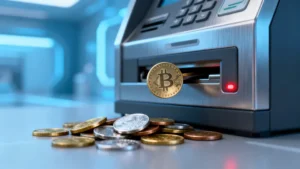
💡 The Core Issue: Why Does Coinstar Refuse Your Foreign Currency?
A One-Sentence Summary: Coinstar and foreign currency compatibility is limited by mechanical sorting systems calibrated exclusively for domestic coinage. This is not a policy choice but a fundamental operational limitation. The kiosks employ sophisticated weight, size, and metallic composition sensors designed to validate specific national coins. Consequently, when you try to exchange foreign coins, the machine identifies them as non-compliant to prevent system errors. Understanding this mechanical barrier is a crucial first point to internalise. 🧭
What This Means for You: Your Residual Travel Money is Dormant Capital. That jar of assorted coins sitting on your desk represents a tangible, albeit small, asset class. While a single Coinstar machine cannot process it, this capital is not worthless. The challenge is to find a liquidation channel where currency exchange fees do not exceed the asset’s underlying value. To effectively exchange foreign coins, you need a systematic approach to repatriation.
📊 2026 Ultimate Showdown: A ‘Total Cost’ Analysis of 5 Foreign Coin Exchange Solutions
Beyond the Commission: Unmasking the ‘Effective Exchange Rate’ That Erodes Your Capital.
Unmasking the ‘Effective Exchange Rate’ That Erodes Your Capital. The amateur investor focuses on the advertised commission, but the professional analyst scrutinises the total currency exchange fees. This metric includes the stated fee and the ‘slippage’ from the mid-market rate. For instance, a cash4coins review often highlights how ‘0% commission’ services may offer rates 15% below the market, significantly impacting your travel money. The UK’s Financial Conduct Authority (FCA) emphasizes transparency, yet this remains a grey area for those looking to exchange foreign coins. ⚠️
Data-Driven Decision Making: The 2026 Foreign Coin Exchange Comparative Matrix
The following matrix provides a quantitative framework for your decision. We benchmark how to manage coinstar and foreign currency alternatives against critical performance indicators.
| Service Provider & Type | Stated Commission | Effective Rate Deviation (Slippage) | Total Exchange Cost | Settlement Speed | Regulatory Oversight | Trustpilot Score (Illustrative) |
|---|---|---|---|---|---|---|
| Online Mail-In (e.g., Cash4Coins) | 0% – 10% (Tiered) | -8% to -15% | 8% – 25% | T+3 to T+10 Days | Typically Unregulated | 4.2 / 5 |
| Automated Kiosk (e.g., Fourex) | 0% | -10% to -20% | 10% – 20% | T+0 (Instant) | Varies by Location | 3.8 / 5 |
| High Street Bank (e.g., Barclays) | £5 – £10 Flat Fee (If service is offered) | -5% to -8% | Variable (High on small amounts) | T+1 to T+5 Days | FCA Regulated | N/A |
| Airport Exchange Counter | 0% – 3% | -15% to -30% | 15% – 33% | T+0 (Instant) | Varies (Often minimal) | 1.5 / 5 |
| Peer-to-Peer / Informal | 0% | 0% (If at mid-market) | 0% | Instant | None | N/A (High Risk) |
Expert Interpretation: Which Solution Aligns with Your Objectives?
- For Large Amounts (>£200) & Non-Urgent Needs: A high street bank, despite its procedural friction, offers the best blend of security and favourable rates, provided they accept coinage. The FCA’s regulatory umbrella provides a crucial layer of protection.
- For Medium Amounts (£50-£200) & Convenience: Online mail-in services present a viable, albeit higher-cost, alternative. The primary risk is logistical (loss in transit) and the lack of regulatory recourse. Diligence is paramount.
- For Small Amounts (<£50) & Immediate Liquidity: Automated kiosks like Fourex are engineered for this specific use case. You are paying a significant premium for the convenience of instant conversion of small, otherwise illiquid, assets.
- Under All Circumstances to be Avoided: Airport exchange counters. Their business model is predicated on a captive audience with no alternatives. The ‘Total Cost of Exchange’ is consistently punitive and should be considered a last resort for financial emergencies only. 📈
🔍 In-Depth Audits: Strengths, Weaknesses, and Risks of Major Exchange Providers
Online Mail-In Services (e.g., Cash4Coins): Convenience vs. Logistical & Counterparty Risk
Strengths: These platforms are built to solve the exact problem of mixed foreign coins. They remove the need for sorting and offer a single point of disposal. The process is simple: register, mail your coins, and await payment via bank transfer or cheque.
Weaknesses & Risks:
1. Counterparty Risk: You are mailing legal tender to a company that is often not regulated by the FCA as a deposit-taking institution. If the company becomes insolvent while possessing your funds, your recourse may be limited.
2. Logistical Risk: The value of your package is at risk of loss or theft during transit. While services recommend insured post, compensation caps may not cover the full value, and the claims process can be arduous.
3. Valuation Opacity: The final valuation is conducted by the company, out of your sight. Discrepancies regarding weight or authenticity are difficult to challenge. Trustpilot reviews for services in this sector frequently cite disagreements over final payout amounts.
Physical Currency Kiosks (e.g., Fourex): Immediacy vs. Punitive Exchange Rates
Strengths: Their primary value proposition is speed and simplicity for small, mixed amounts. Located in high-traffic areas like shopping centres and train stations, they offer an instant solution for converting pocket change into usable currency or vouchers.
Weaknesses & Risks:
1. Exorbitant Spreads: As indicated in our matrix, the convenience comes at a high cost. The effective exchange rate is often significantly detached from the mid-market rate, making it an unsuitable channel for any substantial sum.
2. Operational Failures: Kiosks can suffer from technical malfunctions, such as coin jams or misidentification, which can be frustrating to resolve with an off-site customer service team.
Traditional Banks: Security vs. Procedural Hurdles and Refusals
Strengths: For security and regulatory certainty, nothing surpasses a major bank. They are fully regulated by the FCA, ensuring your funds are handled within a robust compliance framework. For existing customers, they may offer the most favourable rates.
Weaknesses & Risks:
1. Widespread Refusal of Coins: A growing number of high street banks have ceased their foreign coin services entirely due to high processing costs. You must verify policy with your specific branch beforehand.
2. Bureaucracy: The process is rarely swift. It often requires paperwork, identity verification, and a waiting period for the funds to be credited to your account. They are not designed for walk-in, on-the-spot exchanges.
Airport Exchange Bureaux: The Option of Last Resort
Strengths: Availability. They are present at the final point of your journey where you might realise you have leftover currency.
Weaknesses & Risks:
1. Financially Damaging Rates: The business model leverages traveller immediacy and lack of choice to impose the widest possible bid-ask spreads. The ‘Total Cost of Exchange’ can realistically approach one-third of your money’s value.
2. High Minimums & Fees: Many will not even entertain the idea of exchanging low-value coins, or they will apply a flat fee that obliterates the value of the transaction. This is the least efficient channel for capital repatriation. ⚠️
Conclusion and Final Investment Outlook
The issue of coinstar and foreign currency rejection is a microcosm of minimising transactional friction. The key takeaway is to elevate your analysis from superficial fees to the total cost to exchange foreign coins, factoring in the hidden spread. For 2026, the trend of banks withdrawing from this service will continue. The optimal strategy remains proactive management: plan your budget to minimise leftover travel money. For the remainder, use our matrix to select a channel that balances speed, security, and currency exchange fees.
🧭 FAQ
Is Photographic Identification Required to Exchange Foreign Coins?
For small amounts at kiosks or mail-in services, typically not. However, for larger transactions, particularly at banks, be prepared to present government-issued ID. This is a requirement under UK Anti-Money Laundering (AML) regulations, which the FCA enforces. Any transaction exceeding certain thresholds (e.g., €10,000 equivalent) will trigger mandatory reporting.
Can Pre-Euro or Other Obsolete Currencies Still Be Exchanged?
Generally, no. Most commercial services will only accept currency that is still legal tender. However, some specialist online services may purchase obsolete coins and banknotes as collectible items, but the valuation is based on numismatic value, not face value, and is highly variable. The central bank of the issuing country (e.g., the Deutsche Bundesbank for German Marks) is often the only institution legally obligated to exchange old currency, but this usually requires an in-person visit.
Should I Exchange Leftover Currency Before Leaving a Country or Upon Returning Home?
From a purely financial standpoint, it is almost always better to convert currency back to your home currency *before* you depart, within the foreign country itself (at a city bank, not the airport). The reason is market liquidity; a bank in London has less demand for Thai Baht than a bank in Bangkok, leading to a less favourable exchange rate in London. Planning ahead and minimising the foreign currency you bring home is the most cost-effective strategy.
How Can I Find the Real-Time Mid-Market Exchange Rate?
To benchmark any offer, you must know the current mid-market rate. Use independent, real-time financial data providers. Reputable sources include Reuters, Bloomberg, or publicly accessible platforms like Google Finance or XE.com. Never rely on the rate displayed by the exchange service itself as the ‘true’ rate; it is their ‘retail’ rate. 💰