

The world of financial markets can seem like a labyrinth, especially for those new to the game. You hear terms like ‘leveraging’, ‘shorting’, and ‘derivatives’ thrown around, and it’s easy to feel out of your depth. This is exactly why cfd trading for beginners has become such a popular entry point into global markets.
But what is cfd trading, and why has cfd trading uk continued to attract both new and experienced traders in 2025? CFDs allow you to speculate on price movements across stocks, indices, forex, and commodities—without owning the underlying asset. Whether you’re exploring cfd trading for beginners or refining professional tactics, this guide is your complete roadmap.
We’ll break down the mechanics in plain English, explain what is cfd trading, help you evaluate the best cfd trading platform uk, outline practical cfd trading strategies, and show you how to manage risk responsibly.
💡 What Exactly is CFD Trading? A Plain English Breakdown
Before placing your first trade, understanding what is cfd trading is essential. A Contract for Difference (CFD) is an agreement between you and a broker to exchange the difference in an asset’s price between the opening and closing of a trade.
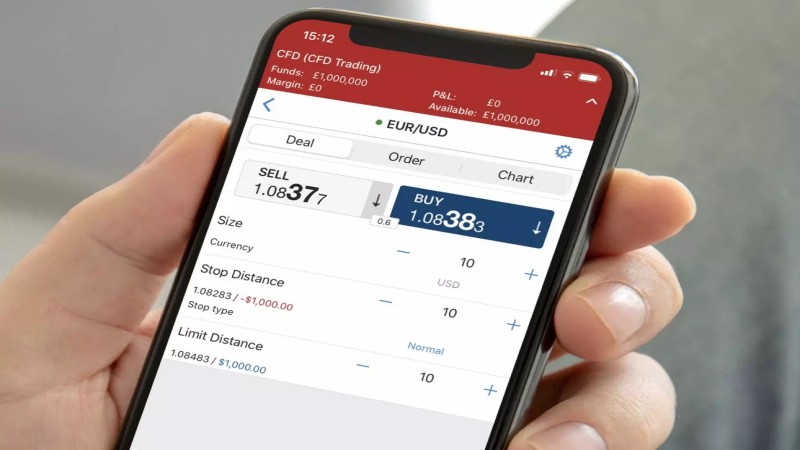
You never own the underlying asset. Instead, cfd trading uk focuses on price direction:
-
Buy (go long) if you expect prices to rise
-
Sell (go short) if you expect prices to fall
This flexibility is why cfd trading for beginners often appeals to those seeking exposure to both rising and falling markets.
Core Concepts of CFD Trading
- Leverage: Leverage allows traders to control larger positions with smaller capital. While this amplifies potential profits, it also magnifies losses—making risk management essential in cfd trading uk.
- Margin: This is the initial deposit required to open and maintain a leveraged position. It is not a fee, but rather a portion of your funds held by the broker to cover potential losses. If your position moves against you and your funds fall below the ‘maintenance margin’ level, you’ll face a ‘margin call’, requiring you to deposit more funds or close the position.
- Spreads and Commissions: Most brokers earn via spreads; some also charge commissions. These trading costs directly affect profitability and should be reviewed carefully when choosing the best cfd trading platform uk.
- Holding Costs: If you keep a CFD position open overnight, you’ll typically incur a small financing charge (or sometimes receive a credit), reflecting the cost of borrowing the capital you’re using from the broker.
🧭 Getting Started: Opening a CFD Trading Account in 2025
Starting cfd trading for beginners is more accessible than ever, but structure matters.
-
Educate Yourself
Guides like this one are the foundation of responsible cfd trading uk. -
Choose a Regulated Broker
FCA regulation ensures client fund segregation and investor protection. Platforms such as Ultima Markets highlight transparency and regulatory compliance. -
Use a Demo Account
Practice execution and test cfd trading strategies without financial risk. -
Complete the Application
Regulatory suitability assessments protect both traders and brokers. -
Fund Your Account Securely
Reliable platforms provide transparent payment handling, such as Ultima Markets Deposits & Withdrawals. -
Execute Your First Trade
Start small, define stop-loss levels, and focus on discipline.
📊 Choosing the Best CFD Trading Platform & App in the UK
Selecting the best cfd trading platform uk is about security, technology, and execution quality—not marketing claims.
Key Comparison Criteria for UK Brokers
When comparing platforms, it’s about more than just low fees. A holistic view is essential. Below is a comparison table outlining the key features you should consider.
| Feature | Why It Matters | What to Look For |
|---|---|---|
| FCA Regulation | Your ultimate security. Ensures client fund segregation and FSCS protection up to £85,000 if the firm fails. | A valid FCA registration number, clearly displayed on their website. Verify it on the FCA register. |
| Trading Costs (Spreads & Commissions) | Directly impacts your profitability. High costs eat into your potential gains. | Tight, competitive spreads on major pairs (e.g., EUR/USD, FTSE 100). Transparent commission structure. Watch for hidden fees like inactivity or withdrawal charges. |
| Market Range | Access to a wide variety of markets (Forex, Indices, Stocks, Commodities, Crypto) allows for diversification and opportunity. | A platform offering thousands of instruments across different asset classes. Check if they have the specific markets you’re interested in. |
| Platform Technology & App | A stable, fast, and user-friendly platform is crucial for analysis and execution. A poor mobile app limits your flexibility. | Advanced charting tools, a wide range of technical indicators, reliable order execution, and a fully-featured, intuitive mobile app for iOS and Android. |
| Customer Support | When money is on the line, you need quick and effective support if issues arise. | 24/5 support via live chat, phone, and email. UK-based support is a significant plus. Test their responsiveness before funding your account. |
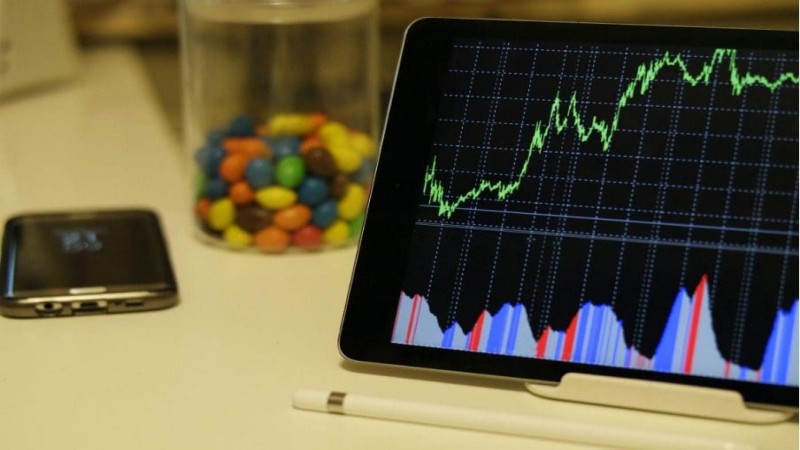
A professional platform is essential for executing consistent cfd trading strategies.
📈 Core CFD Trading Strategies for Modern Markets
Effective cfd trading strategies are built on structure, not impulse.
1. Trend Trading
This is one of the most straightforward strategies. The goal is to identify the dominant direction of a market – the ‘trend’ – and trade in that direction. The old adage “the trend is your friend” holds true.
- How it works: In an uptrend (characterised by higher highs and higher lows), you look for opportunities to buy. In a downtrend (lower highs and lower lows), you look for opportunities to sell.
- Tools: Moving Averages (e.g., 50-day and 200-day), Trendlines, and indicators like the Average Directional Index (ADX).
- Example: If the price of the FTSE 100 is consistently staying above its 50-day moving average, a trend trader would wait for a small dip or ‘pullback’ towards that average to open a long (buy) position, anticipating the uptrend will continue.
2. Range Trading
Markets don’t trend forever. They often consolidate and trade within a predictable horizontal channel, bouncing between a clear level of support (a floor) and resistance (a ceiling).
- How it works: You identify these support and resistance levels and aim to buy near support and sell near resistance.
- Tools: Bollinger Bands, Relative Strength Index (RSI), and Stochastic Oscillators are excellent for identifying ‘overbought’ conditions near resistance and ‘oversold’ conditions near support.
- Example: If the GBP/USD currency pair has been trading between 1.2500 (support) and 1.2750 (resistance) for several days, a range trader might sell as the price nears 1.2750 or buy as it approaches 1.2500, placing stop-losses just outside the range.
3. Breakout Trading
This strategy is the opposite of range trading. It’s focused on what happens when the price *breaks out* of a consolidation range, often leading to a strong, new trend.
- How it works: You wait for the price to decisively move above a resistance level or below a support level, usually with an increase in volume, and then enter a trade in the direction of the breakout.
- Tools: Volume indicators are key here. Chart patterns like triangles, flags, and rectangles often precede breakouts.
- Example: After a period of consolidation, if Tesla’s stock price surges above a key resistance level on high trading volume, a breakout trader would quickly enter a long position to ride the subsequent upward momentum.
💰 Mastering Risk in CFD Trading: The Key to Longevity
Let’s be unequivocally clear: CFD trading is risky. Due to leverage, you can lose more than your initial deposit (though FCA rules require brokers to provide negative balance protection for retail clients). Successful trading is not about winning every trade; it’s about ensuring your winning trades are bigger than your losing trades. This is the essence of risk management.
Essential Risk Management Techniques
-
Risk control is the defining difference between gambling and professional cfd trading uk.
Key principles include:
-
Mandatory stop-loss usage
-
The 1% risk-per-trade rule
-
Defined risk-to-reward ratios
-
Conservative leverage, especially in cfd trading for beginners
-
Emotional discipline
UK-regulated brokers must provide negative balance protection, but capital preservation remains your responsibility.
-
Conclusion: Your Path Forward in CFD Trading
CFD trading uk offers access, flexibility, and opportunity—but only for those who approach it with education and discipline. Understanding what is cfd trading, selecting the best cfd trading platform uk, applying proven cfd trading strategies, and respecting risk are non-negotiable.
For cfd trading for beginners, the goal is not quick profit—it is longevity. Start small, learn continuously, and protect your capital.
FAQ
1. Is CFD trading tax-free in the UK?
For UK residents, profits from CFD trading are typically exempt from Stamp Duty. However, they are subject to Capital Gains Tax (CGT). This is in contrast to spread betting, where profits are currently free from CGT. It’s always best to consult with a tax professional for advice tailored to your personal circumstances, as tax laws can change.
2. What are the main market hours for CFD trading?
CFD market hours depend on the underlying asset. For example, Forex CFDs can be traded 24 hours a day, 5 days a week, following the global sessions from Sydney to New York. UK stock CFDs follow the London Stock Exchange hours (8:00 am to 4:30 pm UK time). Index CFDs like the FTSE 100 often have extended hours, including pre-market and post-market sessions.
3. Can I lose more than my deposit when trading CFDs?
For retail clients trading with a broker regulated by the FCA (and other major European regulators), the answer is no. Regulations mandate ‘Negative Balance Protection’, which means a broker must absorb the loss if your account goes into a negative balance due to trading activity. However, you can still lose your entire deposit very quickly.
4. What is the minimum amount I need to start CFD trading?
Many UK brokers allow you to open an account with a minimum deposit as low as £100. However, to practice proper risk management (like the 1% rule) and have enough flexibility to open meaningful positions, a starting capital of £1,000 to £5,000 is often recommended. The most important rule is to only ever trade with money you can afford to lose.
*This article represents the author’s personal views only and is for reference purposes. It does not constitute any professional advice.*