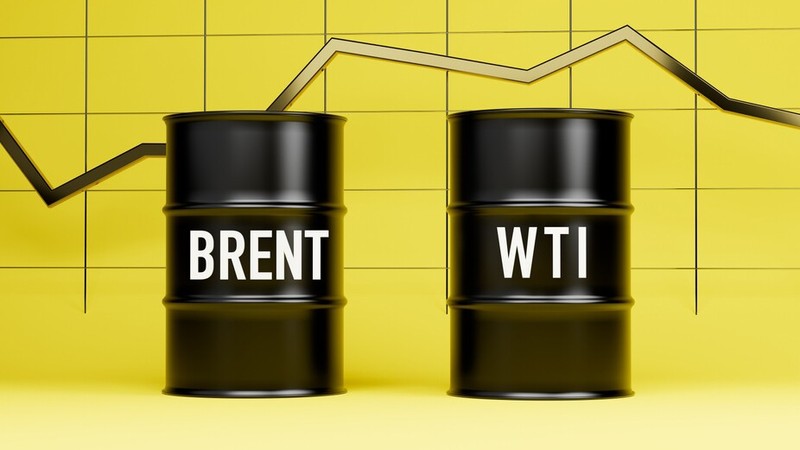
When a supply disruption erupts in the Middle East, the immediate question for oil traders is how the market will price the new risk. The dynamic of Brent vs WTI during a Middle East oil shock is not just an academic exercise; it is a critical determinant of market sentiment and trading strategy.
In short, Brent crude typically prices the geopolitical risk premium first due to its direct exposure to global seaborne trade. WTI follows, but its reaction is filtered through the logistics of the North American market. For a trader, understanding the nuance of the Brent-WTI spread is often more insightful than reacting to the headline price of either benchmark alone.
What Brent and WTI Actually Represent for a Trader
The two benchmarks represent different logistical and geographical realities, which is the foundational reason for their divergent reactions. A trader must look beyond their tickers and understand the physical markets they reflect to properly analyse the Brent vs WTI during a Middle East oil shock scenario.
Brent Crude: The Global Seaborne Benchmark
Brent is not a single type of oil but a blend of crude oils from North Sea fields. Its pricing point is intrinsically linked to the global seaborne market. Because it is waterborne, it serves as the primary price reference for approximately two-thirds of the world’s internationally traded crude oil.
When a crisis occurs in a major shipping lane or production centre like the Middle East, the impact on insurance, freight costs, and supply security is priced into Brent futures almost instantaneously. This makes it the world’s most sensitive barometer of global supply-side geopolitical risk, a crucial factor when considering Brent vs WTI during a Middle East oil shock.
WTI Crude: The North American Land-Based Benchmark
West Texas Intermediate (WTI) is a lighter, sweeter crude sourced primarily from US oil fields. Its main pricing and delivery point is Cushing, Oklahoma—a landlocked hub. While the US is a major crude exporter, WTI’s price is initially buffered by domestic logistics, including pipeline capacity and storage levels at Cushing.
Therefore, a disruption in the Strait of Hormuz does not immediately prevent a barrel of WTI from reaching its pricing point. Its reaction is secondary, often driven by how the global price surge (led by Brent) affects the economic incentive for US exports and the broader macroeconomic sentiment. This initial insulation is a key feature of the Brent vs WTI during a Middle East oil shock relationship.
Why Brent Usually Reacts First and Hardest to Gulf Disruptions
Brent’s immediate and often sharp reaction stems from its direct exposure to the chokepoints of global oil trade. The logistics of seaborne crude mean that any threat to passage or production in the Middle East is a direct threat to the physical supply chain that Brent pricing reflects. This is the core of the Brent vs WTI during a Middle East oil shock divergence.
The Strait of Hormuz: A Direct Chokepoint for Brent Pricing
The Strait of Hormuz is the world’s most critical oil transit chokepoint. Approximately 21 million barrels of petroleum liquids per day, or about 21% of global consumption, pass through it. Any military action, political instability, or even the threat of disruption in this narrow channel directly endangers a significant portion of the world’s seaborne oil supply.
Since Brent is the benchmark for crudes from this region and for buyers in Europe and Asia who depend on this route, its futures contract becomes the primary vehicle for hedging against or speculating on such events. The market immediately bakes a ‘Hormuz premium’ into the Brent price, a phenomenon central to the Brent vs WTI during a Middle East oil shock dynamic.
How Global Shipping Insurance and Freight Costs Fuel the Reaction
Beyond the raw supply risk, a Middle East shock triggers immediate and tangible increases in operational costs for seaborne crude. Insurers raise war risk premiums for tankers transiting the Persian Gulf, sometimes by a factor of ten or more overnight. Freight rates (the cost of chartering a tanker) also surge due to increased danger and higher demand for vessels on safer routes.
These costs are passed directly into the landed price of crude for refiners in Asia and Europe, and since Brent is their benchmark, its price reflects these new realities instantly. WTI, being land-based, is not subject to these specific maritime pressures, further explaining the initial price gap in a Brent vs WTI during a Middle East oil shock event.
Why WTI’s Reaction is Delayed but Inevitable
WTI’s delayed reaction should not be mistaken for immunity. The global oil market is a deeply interconnected system, and a price shock in one region will inevitably ripple through to others. The mechanisms for WTI’s response are just different, involving domestic storage, export arbitrage, and macroeconomic sentiment.
The Cushing, Oklahoma Factor: How Storage Levels Absorb Initial Shocks
The vast storage capacity at Cushing, Oklahoma, acts as a shock absorber for the WTI market. If a global disruption occurs, the immediate impact is not a shortage of physical barrels at the WTI delivery point. Instead, the market first looks to inventory levels.
High inventories can dampen WTI’s initial price spike relative to Brent, as there is a buffer of supply within the US system. Conversely, if inventories are already low, WTI can react more violently as the market prices in the potential for future tightness. This inventory dynamic adds another layer to the Brent vs WTI during a Middle East oil shock analysis.
From Local Price to Global Influence: The Role of US Exports
The modern oil market is defined by the role of the US as a major crude oil exporter, a significant shift from a decade ago. With the US exporting several million barrels per day, WTI is no longer just a domestic price. When a Middle East shock causes Brent prices to soar, it creates a powerful arbitrage opportunity.
It becomes highly profitable for traders to buy WTI, transport it to the US Gulf Coast, and sell it onto the global market at a price linked to Brent. This demand for US barrels pulls WTI prices higher, effectively linking the landlocked benchmark to the global seaborne crisis. The speed and scale of this export response is a critical factor in how quickly the Brent vs WTI during a Middle East oil shock gap closes.
What the Brent-WTI Spread Reveals to Traders During a Crisis
For a trader, the most valuable signal is often not the price of Brent or WTI in isolation, but the difference between them—the Brent-WTI spread. This spread is a powerful, real-time indicator of stress in the global oil market. Understanding its movements provides deeper insight than headline price changes alone when analysing the Brent vs WTI during a Middle East oil shock.
| Spread Movement | Primary Indication | What It Means for Traders |
| Widening Spread (Brent Premium Increases) | Heightened geopolitical risk impacting seaborne supply. | The market is pricing in a severe, internationally-focused supply disruption. It signals strong demand for US crude exports to fill the gap. |
| Narrowing Spread (Brent Premium Decreases) | Easing of global tensions OR a tightening of the US domestic market. | Could mean the geopolitical threat is subsiding, or alternatively, that US inventories are drawing down rapidly, causing WTI to strengthen independently. Context is key. |
Decoding a Widening Spread: A Clear Signal of Seaborne Supply Risk
When news of a Middle East disruption breaks, the spread almost always widens immediately. This happens because Brent rises faster than WTI. A widening spread is the market’s clearest signal that the perceived risk is concentrated in the seaborne market.
It reflects the rising insurance costs, freight rates, and the general premium for securing barrels that must traverse dangerous waters. For traders, a rapidly widening spread is a pure play on geopolitical risk. It indicates that the Brent vs WTI during a Middle East oil shock dynamic is in its first phase, dominated by the international benchmark’s reaction.
Interpreting a Narrowing Spread: Signs of Escalation or Resolution
A narrowing spread in the aftermath of a shock can mean one of two things. A ‘positive’ narrowing occurs if the geopolitical situation de-escalates. As the risk premium evaporates from Brent, its price falls back towards WTI, closing the gap. However, a ‘negative’ narrowing can also occur. If the disruption is severe and prolonged, the demand for US exports will surge, drawing down inventories and tightening the North American market.
In this case, WTI’s price may rise faster than Brent’s, narrowing the spread from below. This signals that the crisis has transitioned from a localized maritime risk to a broader global supply problem, fully engaging the US market. Distinguishing between these two scenarios is essential for any strategy concerning Brent vs WTI during a Middle East oil shock.
A Practical Framework for Trading Both Benchmarks
Instead of choosing one benchmark over the other, sophisticated traders use both to build a more complete picture of the market’s reaction. This dual analysis provides a more robust foundation for decision-making during the volatility of a Brent vs WTI during a Middle East oil shock event.
- Monitor Brent for the Initial Signal: Use Brent as the primary, real-time gauge of the market’s assessment of the geopolitical risk. The magnitude and speed of its initial move indicate the perceived severity of the supply threat.
- Watch the Brent-WTI Spread for Confirmation and Evolution: The immediate widening of the spread confirms the nature of the shock. Subsequently, monitor the spread’s direction. A continued widening points to escalating maritime risk, while a narrowing requires closer analysis to determine if it signals de-escalation or a broadening of the crisis to the US market.
- Use WTI and US Data to Gauge the Secondary Impact: Track WTI’s price action in conjunction with US inventory data (from the EIA) and export figures. A strong rally in WTI coupled with inventory draws suggests the global supply chain is actively pulling on US barrels, indicating a more sustained, global pricing impact.
Conclusion
In summary, the established pattern in the Brent vs WTI during a Middle East oil shock is clear. Brent is the first responder. Its price is the market’s initial, unfiltered reaction to the threat against global seaborne oil supplies.
WTI’s response, while just as important, tells the second half of the narrative: how the world’s largest producer and consumer is absorbing the shock and how its exports are being mobilised to balance the global market.
For a trader, ignoring one in favour of the other is to read only half the page. The real insight lies in analysing their relationship, embodied by the ever-telling Brent-WTI spread. True market understanding comes from seeing Brent as the indicator of the immediate shock and WTI as the barometer of the market’s broader, more sustained response.
Frequently Asked Questions (FAQ)
Why does Brent usually react more than WTI in Middle East crises?
Brent usually reacts more than WTI because Brent is the global benchmark for seaborne crude oil.
It is more directly exposed to supply disruptions in the Middle East and to shipping risks in chokepoints such as the Strait of Hormuz. By contrast, WTI is more closely linked to inland US crude flows, so its first move is often smaller.
Can WTI still surge during a Hormuz disruption?
Yes, WTI can still surge during a Hormuz disruption, even if Brent moves first.
When Brent rises sharply, US crude becomes more attractive to global buyers. That can increase exports, tighten US supply, and pull WTI higher as the international shock feeds into the domestic market.
What does a wider Brent-WTI spread mean?
A wider Brent-WTI spread usually means the market is pricing more stress into global seaborne oil than into US inland crude.
This often happens when traders expect higher shipping costs, rising tanker risk, or stronger geopolitical pressure on offshore supply routes. In short, a wider spread is a sign of stronger international market stress.
Which benchmark should traders watch first?
Traders should watch Brent first because it usually responds faster to Middle East geopolitical risk.
Brent gives the clearest early read on seaborne supply stress. After that, traders can watch the Brent-WTI spread to see how severe the disruption is and whether the shock is starting to lift WTI as well.