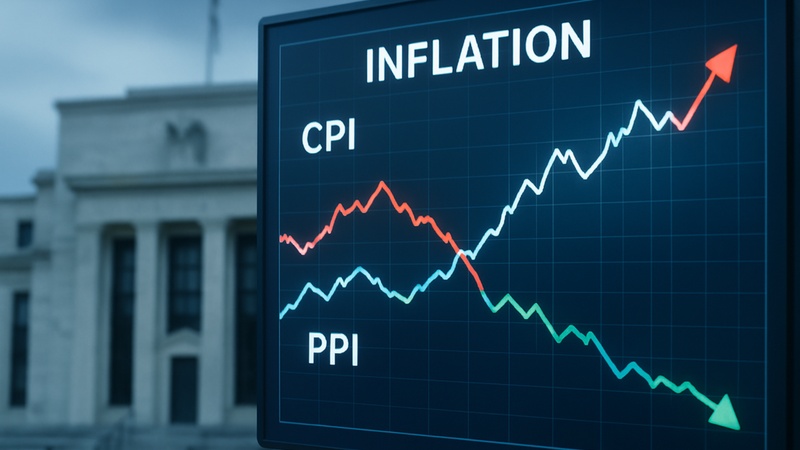
Best Inflation Indicator for Traders is a key question in 2026 because different inflation reports move markets in different ways. CPI often gets the fastest reaction in currencies, gold, stock indices, and bond yields, which makes it the most important inflation indicator for traders focused on short-term volatility. At the same time, PPI and PCE add deeper context, which is why the best inflation report for traders depends on whether the goal is to trade the first move or understand the broader inflation trend.
For active market participants, the best inflation gauge for traders is rarely just one report in isolation. CPI, PPI, and PCE each offer a different signal on price pressure, market expectations, and policy direction. The real edge comes from knowing which is the most useful inflation indicator for traders in the current market environment and how to use that signal in a practical trading framework.
The Short Answer: A Trader’s Quick Guide
The most effective inflation indicator is contingent on a trader’s specific objective and time horizon. There is no single ‘best’ metric, but rather a hierarchy of importance based on tactical goals. Understanding this is the first step to finding the best inflation indicator for traders in any given scenario.
- For Immediate Market Volatility: The Consumer Price Index (CPI) is unparalleled. Its timely release and widespread media coverage make it the primary catalyst for short-term price swings in equities, forex, and bond markets.
- For Central Bank Policy Clues: The Personal Consumption Expenditures (PCE) price index, particularly the core reading, is the preferred gauge for monetary authorities. Its comprehensive nature provides a clearer view of underlying inflation trends, directly influencing interest rate decisions.
- For Pipeline Pressure Insights: The Producer Price Index (PPI) serves as a forward-looking indicator. It measures input costs for domestic producers, offering a preview of potential price pressures that may later appear in consumer-facing data like the CPI.
- For Actionable Decisions: A combined approach is the only robust solution. Synthesising signals from CPI, PPI, and PCE, alongside market-based measures like inflation expectation surveys and bond yields, provides the most complete and reliable picture. This composite view is the true best inflation indicator for traders.
What Defines a ‘Good’ Inflation Indicator for Active Trading?
An indicator’s utility is measured by its ability to provide a tradable edge. For those active in the markets, academic precision is secondary to actionable intelligence. The criteria for what constitutes the best inflation indicator for traders are therefore highly pragmatic and focus on market impact.
Timeliness: Speed of Data Release
Markets are discounting mechanisms, meaning old news is no news. An indicator’s value is directly tied to how quickly it is released. The CPI is typically one of the first comprehensive inflation reports available for a given month, granting it a significant first-mover advantage in shaping market sentiment.
Market Sensitivity: The Immediate Impact Factor
The most useful indicator is the one the market watches most closely. Due to its direct link to household costs and prominent media focus, the CPI consistently generates the most significant immediate price reactions across asset classes, from the FTSE 100 to GBP/USD.
Policy Relevance: Clues to Central Bank Actions
Ultimately, the path of interest rates is a primary driver of asset prices. The PCE price index is the officially preferred metric for major central banks due to its broader scope and dynamic weighting. Traders who can anticipate policy shifts by watching PCE data gain a strategic, longer-term advantage.
Predictive Value: Forecasting Future Trends
While most indicators are backward-looking, some offer clues about the future. The PPI, by measuring costs at the wholesale level, can signal whether consumer price pressures are likely to build or recede. Similarly, inflation expectations surveys and breakeven inflation rates derived from the bond market provide a real-time gauge of future sentiment, making them a crucial part of a trader’s toolkit for finding the best inflation indicator for traders.
Ranking the Top Inflation Indicators for Traders
To determine the best inflation indicator for traders, a comparative ranking based on practical criteria is essential. The following table assesses the primary indicators on the factors that matter most to active market participants: immediate impact, policy relevance, and predictive value.
| Indicator | Immediate Market Impact | Policy Relevance | Predictive Value | Trader’s Summary |
| CPI (Headline & Core) | Very High | High | Low | The primary catalyst for short-term volatility. Essential for day traders and short-term strategies. |
| PPI (Headline & Core) | Medium | Medium | High | Excellent for identifying pipeline pressures. A key input for forecasting CPI and corporate margins. |
| PCE (Headline & Core) | Medium-High | Very High | Low | The most important indicator for anticipating monetary policy. Its impact is more sustained than immediate. |
| Inflation Expectations | Low-Medium | High | Very High | A crucial forward-looking gauge. Rising expectations can become self-fulfilling, influencing future policy. |
How the Best Indicator Changes Based on Your Trading Style
The optimal choice of inflation metric is not universal; it is tailored to the individual’s trading methodology, time horizon, and risk appetite. Different styles prioritise different aspects of the data, from immediate volatility to long-term structural trends. Therefore, the best inflation indicator for traders is context-dependent.
For the Day Trader and Scalper
This cohort thrives on volatility. The Consumer Price Index (CPI) is their primary tool. The seconds following the CPI release are often the most volatile of the month for major indices and currency pairs. The strategy involves anticipating the consensus, analysing the deviation (the ‘surprise’ factor), and executing trades based on the knee-jerk market reaction. For these traders, PCE is too slow and PPI is too indirect.
For the Swing Trader
Swing traders, holding positions for days or weeks, must look beyond the initial CPI noise. They are more interested in the emerging trend. A combination of Core CPI and Core PCE is crucial here. A higher-than-expected CPI followed by a similarly firm PCE report can confirm a new inflationary impulse, providing the conviction to hold a trade through short-term pullbacks.
For the Forex and Gold Trader
Currency and commodity markets are highly sensitive to interest rate differentials and real yields. As such, the Core PCE is arguably the best inflation indicator for traders in this space. Because it is the central bank’s preferred gauge, it has the most direct bearing on the future path of monetary policy, which in turn drives currency valuations. Gold traders also watch it closely, as unexpected inflation can boost demand for the metal as a store of value.
For the Macro and Index Trader
Macro-level investors must synthesise all available data. They use PPI to forecast corporate profit margins, CPI to gauge consumer health, and PCE to predict central bank reactions. Crucially, they also incorporate forward-looking market data, such as 2-year bond yields and inflation breakeven rates, to build a comprehensive mosaic of the economic landscape. For them, no single indicator suffices; the entire dashboard is the indicator.
Why No Single Inflation Indicator Is Ever Enough
Relying on a solitary data point for trading decisions is a significant, unforced error. The economic environment is too complex and dynamic for one metric to capture the full picture. This oversimplification ignores crucial context and exposes a trader to risks that a more holistic analysis would mitigate. The search for a single best inflation indicator for traders often leads to a flawed perspective.
Data Revisions and Lagging Information
Economic data is frequently revised after its initial release. An initial market-moving print can be adjusted in subsequent months, changing the narrative entirely. Furthermore, all these indicators are lagging; they report on what has already happened. A myopic focus on one can mean missing real-time shifts occurring in the economy.
Divergence Between Indicators
It is common for CPI, PPI, and PCE to tell slightly different stories. For example, a high PPI might suggest future consumer inflation, but if companies absorb the costs and sacrifice margins, it may not translate to a high CPI. Similarly, CPI could be elevated due to housing costs (which have a large weighting), while the PCE shows a more moderate trend. These divergences are where trading opportunities and risks lie.
Market Focus Can Shift Unexpectedly
The market’s obsession can change. In one environment, core inflation is all that matters. In another, following a commodity price shock, headline inflation becomes the focus. During a growth scare, markets may ignore inflation altogether and focus on employment data. A flexible approach that considers the prevailing narrative is superior to a rigid reliance on one indicator.
Building Your Ultimate Inflation Dashboard
The professional approach is to build an integrated dashboard that provides a multi-faceted view of price pressures. This system synthesises official statistics with real-time market signals to create a robust decision-making framework. This dashboard represents the true best inflation indicator for traders because it is a process, not a single number.
- Leading Indicators (Pre-Release): Before any official data, monitor commodity prices (e.g., oil, copper), shipping costs, and importantly, short-term bond yields like the 2-year note. The 2-year yield is extremely sensitive to near-term policy expectations and often moves in anticipation of inflation data.
- Primary Release (The Event): Focus on the Core CPI reading and its deviation from consensus expectations for the initial trade. This offers the cleanest signal for immediate volatility. Use the PPI release days before as a final calibration for your CPI expectation.
- Confirmation/Divergence (Post-Release): Analyse the subsequent Core PCE release. Does it confirm the trend shown in the CPI? If PCE is significantly weaker than CPI, it may suggest the initial market reaction was overdone, presenting a potential reversal opportunity.
- Market Response (Real-Time Gauges): Continuously monitor the US Dollar Index (DXY) and major equity futures (S&P 500, Nasdaq 100). Their reaction provides the ultimate confirmation of how the market is interpreting the data. A strong inflation print should theoretically lead to a higher DXY and lower equity futures, and vice versa.
Final Verdict: The Best Framework for 2026
The idea of one Best Inflation Indicator for Traders is too simple for real markets. In practice, the best inflation report for traders depends on the trading objective, the asset class, and the market environment. CPI is usually the most important for immediate volatility and short-term price action, PPI helps traders track upstream cost pressure and possible future pass-through, and Core PCE gives the clearest read on the broader inflation trend and policy direction.
That is why the Best Inflation Indicator for Traders is not a single number in isolation. The more effective approach is to use a layered framework: CPI for the first market move, PPI for forward inflation signals, and Core PCE for the strategic view. For traders in 2026, the most useful inflation gauge for trading is the one that fits the moment, while the strongest edge comes from combining all three into a clearer inflation and market analysis framework.
Frequently Asked Questions (FAQ)
Which inflation indicator is most watched by the market?
CPI is usually the most watched inflation indicator by the market. It tends to trigger the strongest immediate reaction because it has the clearest short-term impact on rate expectations, the US dollar, bond yields, gold, and stock indices. PCE and PPI also matter, but CPI usually leads the first market move.
How does inflation data affect Forex trading?
Inflation data affects Forex by changing interest-rate expectations. If inflation comes in above forecast, traders may expect tighter policy, which can support the currency. If inflation is weaker than expected, the currency may soften as markets price in a less hawkish outlook.
Is rising inflation good or bad for the stock market?
It depends on the level and persistence of inflation. Moderate inflation can support equities when it reflects healthy demand, but high or sticky inflation is usually negative because it raises cost pressure and can lead to tighter financial conditions. For traders, the key issue is whether inflation helps growth or starts to damage margins and valuations.
What is the difference between headline CPI and core CPI for a trader?
Headline CPI includes all items, while core CPI excludes food and energy. Headline CPI often drives the first reaction because it gets the most attention, but core CPI is usually more important for judging the underlying inflation trend. That is why traders watch both, with extra focus on core for the more lasting market signal.